

Quiet luxury fashion in 2026 isn’t just about dressing well, it’s about restraint, intention, and knowing exactly what to leave out. As logos fade and no-logo fashion takes center stage, the focus shifts to materials, tailoring, and subtle styling choices like tonal dressing. At the same time, a new layer is emerging: designers and creators are starting to use AI fashion design tools to refine these minimal looks with precision. From building minimalist wardrobe essentials to experimenting with the modern old money aesthetic, quiet luxury is becoming not only a style, but a system, increasingly shaped by AI fashion design.
What is Quiet Luxury in 2026?
Quiet luxury in 2026 is best understood as understated, high-quality fashion without visible logos. It’s not about looking “rich” in an obvious way, but about wearing pieces that feel refined through fabric, fit, and finish. Think of it as luxury that doesn’t need to announce itself.
What’s changed from previous years is the mindset behind it. Quiet luxury is no longer just a reaction to trend fatigue, it’s becoming a lifestyle-driven approach to dressing. Instead of chasing seasonal aesthetics, people are building wardrobes that feel consistent, intentional, and wardrobe over time.
There’s also a strong connection to the old money aesthetic, but in a more modern, accessible form. You’ll still see:
- Heritage-inspired silhouettes (tailored blazers, structured coats)
- A polished look that feels effortless rather than overly styled
- Neutral palettes and timeless combinations
However, in 2026, quiet luxury is less about signaling a specific social class and more about expressing taste and restraint. To better understand where quiet luxury sits, it helps to compare it with similar concepts:
| Aspect | Quiet Luxury | Minimalism | Traditional Luxury |
| Core Idea | Subtle sophistication | Simplicity & function | Status & visibility |
| Focus | Quality, fit, material | Utility, reduction | Branding, recognition |
| Emotional Tone | Warm, refined, intentional | Clean, rational | Bold, aspirational |
| Visual Identity | No-logo fashion, tonal dressing | Very pared-down | Logos, statement pieces |
| Styling Approach | Effortless, slightly relaxed | Strict and minimal | Eye-catching, styled |
In short, quiet luxury sits somewhere in between, it borrows the simplicity of minimalism but adds depth, softness, and material richness, while moving away from the overt signals of traditional luxury.
The Core Wardrobe Pieces
At the heart of quiet luxury fashion 2026 is a well-edited wardrobe built on minimalist wardrobe essentials. These are pieces that don’t rely on trends, but on consistency, items you can wear repeatedly without them feeling outdated.
Instead of owning more, the focus is on owning better. Each piece should serve a purpose, layer easily with others, and hold up over time in both quality and style.
Key Items
A quiet luxury wardrobe typically includes:
- Tailored blazer — structured but slightly relaxed, easy to dress up or down
- High-quality knitwear — cashmere or fine wool in neutral tones
- Crisp button-down shirts — clean lines, no unnecessary detailing
- Wide-leg or straight trousers — fluid, well-fitted, and versatile
- Minimal dresses or skirts — simple silhouettes with strong drape
- Timeless outerwear — trench coats, wool coats in classic cuts
- Leather accessories — structured bags, belts, and understated shoes
These pieces may look simple at first glance, but the difference is in the cut, fabric, and fit, details that quietly elevate the entire outfit.
Core Ideas Behind the Wardrobe
Rather than thinking in outfits, quiet luxury encourages a system-based wardrobe:
- Fewer, better pieces → prioritize quality over quantity
- Timeless over seasonal → avoid fast-changing trends
- Interchangeability → every piece works with multiple others
- Consistency in tone → makes styling easier and more cohesive
This is why quiet luxury often overlaps with the idea of a capsule wardrobe, but with more emphasis on material richness and subtle refinement, not just simplicity.
In practice, this kind of wardrobe makes getting dressed easier. You’re not starting from scratch each day—you’re working within a system where everything already fits together.
Color & Fabric Guide
If silhouette builds the structure of quiet luxury, then color and fabric are what bring it to life. This is where the difference really becomes visible, not through bold choices, but through subtle control.
Tonal Dressing
A key styling technique in quiet luxury fashion 2026 is tonal dressing, building an outfit around one color family instead of contrasting shades.
Instead of mixing multiple colors, you layer variations of the same tone:
- Beige with camel and ivory
- Grey with charcoal and silver
- Navy with deep blue tones
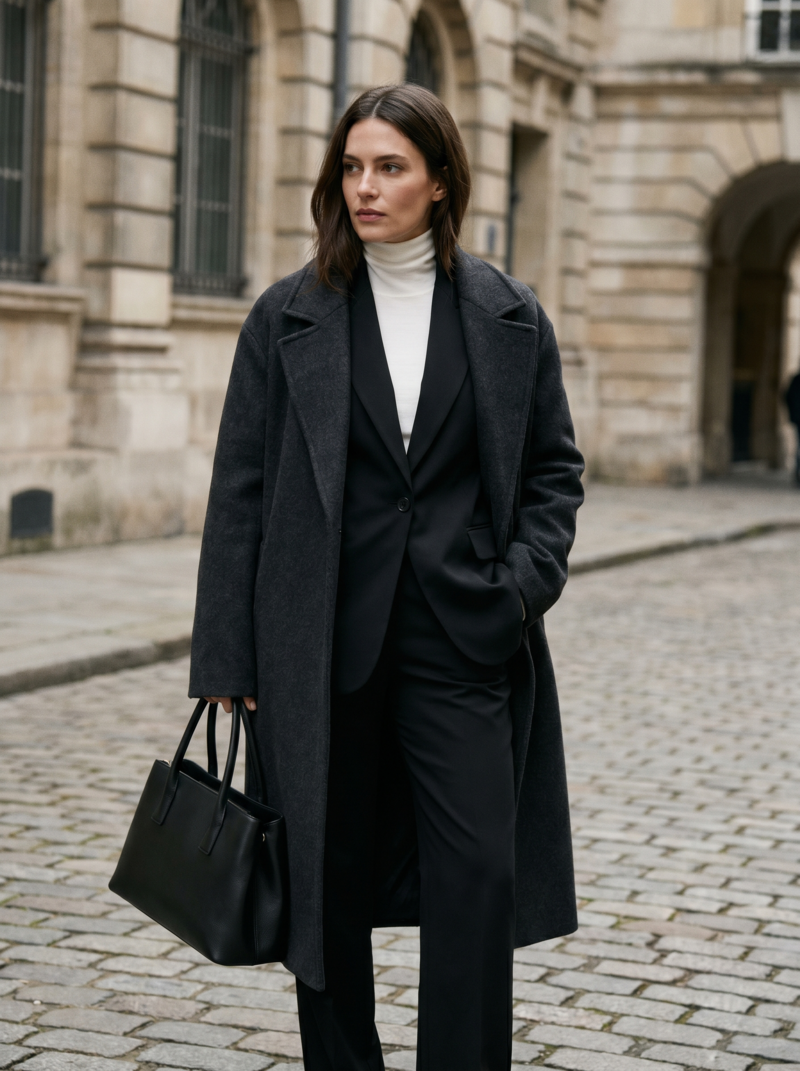
This creates depth without looking loud. The outfit feels cohesive, calm, and intentionally put together.
Compared to high-contrast styling, tonal dressing feels more refined and effortless, which is why it’s so closely tied to no-logo fashion, both rely subtlely rather than attention-grabbing elements.
Fabric Matters
In quiet luxury, fabric does most of the talking. Since there are fewer visual distractions (like prints or logos), the material itself becomes the focus.
Common fabric choices include:
- Cashmere — soft, lightweight, and instantly elevates basics
- Wool — structured yet breathable, ideal for tailoring
- Silk — fluid and understand, adds quiet elegance
- Linen — relaxed but still refined when well-cut
- Cotton(high-quality) — clean and versatile
What matters most is how the fabric behaves:
- Does it drape well?
- Does it hold its shape?
- Does it look better over time?
Texture Over Print
Instead of bold patterns, quiet luxury relies on texture variation to create interest.
For example:
- Pairing a soft knit with structured wool trousers
- Mixing matte and slightly glossy finishes
- Layering heavier and lighter fabrics
This keeps the outfit visually engaging without breaking the overall calm aesthetic.
Why It Works
Quiet luxury doesn’t remove detail, it just shifts where the detail lives.
By focusing on tonal color palettes and high-quality fabrics, the style:
- Feels more timeless
- Looks more expensive without trying
- Allows small differences to stand out
In a way, it trains the eye to notice the things that are usually overlooked, and that’s exactly what defines the appeal of quiet luxury.
Quiet Luxury Outfit Ideas
Quiet luxury isn’t a single look, it’s a range of subtle moods built around the same principles: restraint, clean silhouettes, and intentional styling. Below are a few distinct outfit directions that show how flexible this aesthetic can be in practice.
1. Effortless Old Money Look
This is the most classic interpretation of the old money aesthetic, refined, understated, and slightly heritage-inspired without feeling costume-like.
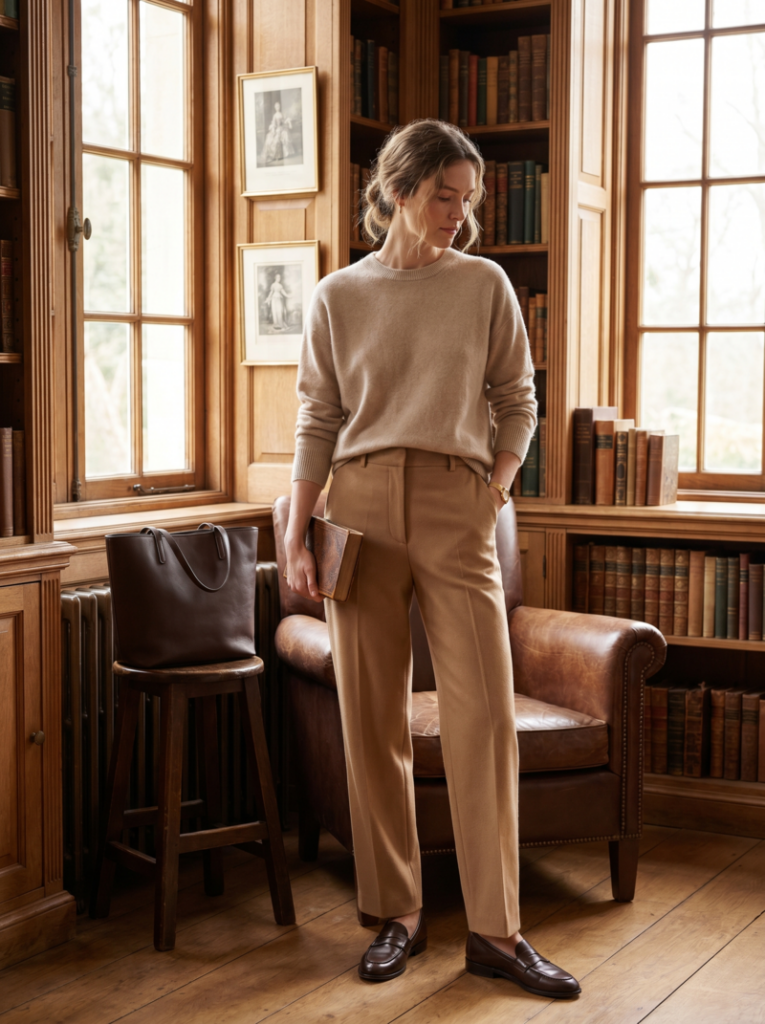
Key Characteristics:
- Neutral layering (beige, ivory, camel)
- Soft knitwear paired with tailored trousers
- Loafers or minimal leather flats
- Relaxed but polished silhouette
2. Modern Minimalist City Look
This version leans more urban and structured, closer to contemporary minimalist wardrobe essentials.
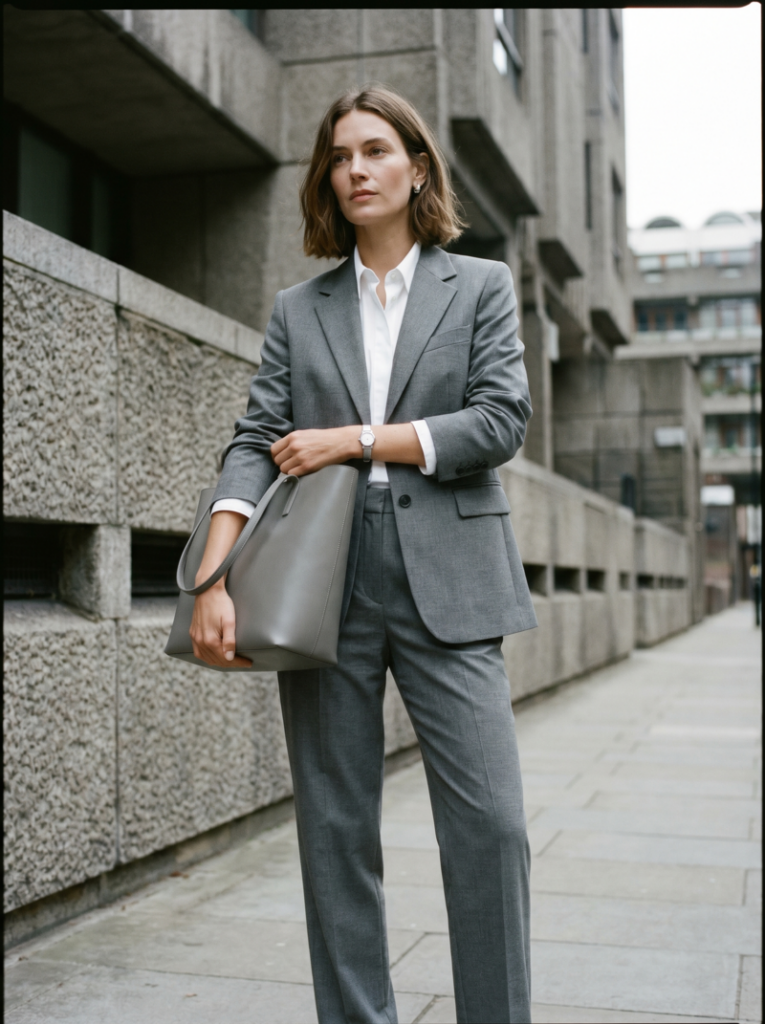
Key Characteristics:
- Monochrome or near-monochrome palette (grey, black, navy)
- Sharp tailoring with clean lines
- Structured blazer or coat
- Minimal accessories
3. Soft Feminine Quiet Luxury
A more delicate and fluid interpretation of quiet luxury, focused on softness rather than structure.
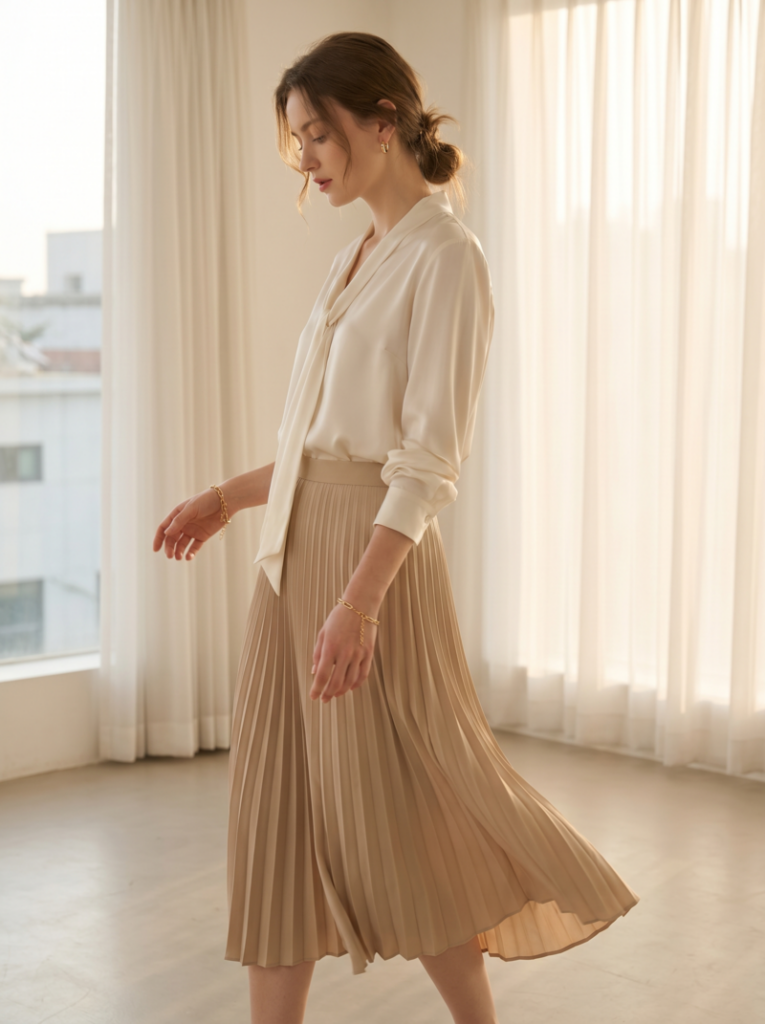
Key Characteristics:
- Flowing skirts or silk trousers
- Light neutral tones (ivory, soft beige, pale blush)
- Silk or lightweight fabrics
- Gentle silhouettes with movement
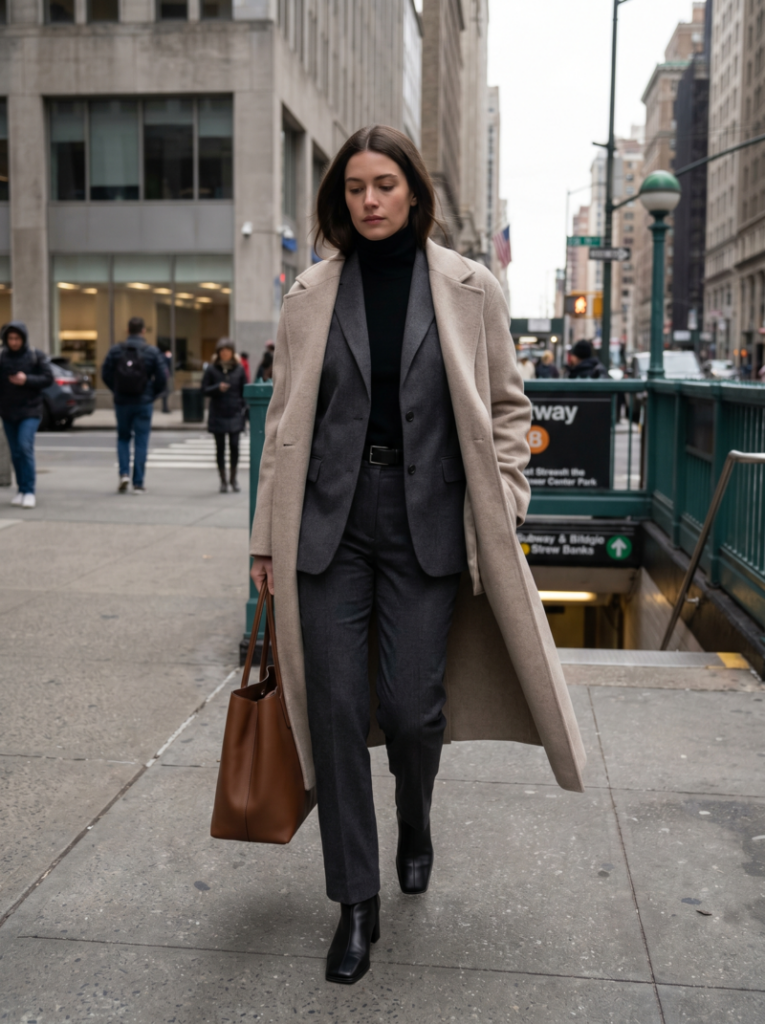
4. Urban Quiet Luxury Layered Look
A slightly more styled version, combining structure and layering for a city-ready aesthetic.
Key Characteristics:
- Layered blazer + coat combinations
- Neutral tonal palette with texture contrast
- Straight trousers or wide-leg pants
- Structured leather accessories
How Brands Are Designing Quiet Luxury Fashion
As quiet luxury fashion 2026 continues to evolve, brands are no longer designing for immediate attention, they’re designing for longevity. The shift is subtle but significant: instead of creating pieces that stand out instantly, the focus is on garments that reveal their value over time.
No-Logo Fashion
One of the most visible changes is the move toward no-logo fashion. Branding hasn’t disappeared, but it has become far less obvious. Logos are either removed entirely or reduced to nearly invisible details, allowing the product itself to take center stage.
This approach changes how consumers perceive value. Instead of relying on brand recognition, the emphasis is placed on craftsmanship, fabric quality, and overall finish. In many ways, it reflects a more mature kind of luxury, one that doesn’t need validation through visibility.
Precision in Tailoring and Construction
Another defining aspect is the increased focus on precision. Quiet luxury pieces are often built around clean lines, balanced proportions, and careful construction. Small details, like how a sleeve falls, how a shoulder is structured, or how a fabric drapes, become the defining featured of the design.
Because the aesthetic is so minimal, there’s little room for error. Every cut and seam matters, which is why many brands are investing more in pattern-making and material development rather than surface-level design elements.
Material-Led Design
In quiet luxury, fabric is not just a component, it’s the foundation. Many brands are now designing collections starting from the material itself, choosing textiles that naturally convey quality and depth.
This is why we see a consistent use of wool, cashmere, silk, and other natural fibers. These materials don’t need heavy embellishment; their texture and movement already communicate a sense of refinement. It’s a shift from decorative design to material-driven design.
From Trend-Driven to Timeless
Perhaps the biggest industry shift is moving away from fast-changing trends. Quiet luxury aligns more with a long-term wardrobe mindset, where pieces are designed to last across multiple seasons, both in durability and style.
For brands, this means rethinking their design cycles. Instead of constantly introducing new silhouettes, they refine existing ones, adjusting proportions, improving fabrics, and evolving details gradually. The result is clothing that feels consistent, rather than seasonal.
A Response to Overexposure
This entire movement can also be seen as a response to the oversaturation of fashion in the digital space. With social media constantly pushing new trends and visuals, quiet luxury offers an alternative: something calmer, more grounded, and less reactive.
In this context, quiet luxury becomes more than just an aesthetic. It represents a shift in how both brands and consumers approach fashion, less about standing out instantly, and more about building a lasting sense of style.
How to Style Quiet Luxury Outfits with Fashion Diffusion
Styling a quiet luxury outfit may look effortless on the surface, but it actually follows a very specific set of rules. The difference is that these rules are subtle, focused on balance proportion, and restraint rather than obvious styling choices. Once you understand these principles, the process becomes much easier to replicate, especially with tools like Fashion Diffusion.
1. The Core Styling Rules of Quiet Luxury
At the foundation of quiet luxury fashion 2026 is control—over color, silhouette, and visual noise. One of the most important techniques is tonal dressing, where outfits are built around one or two closely related shades. This creates a cohesive look without relying on contrast, allowing the outfit to feel calm and intentional.
Another key element is embracing no-logo fashion. Without visible branding, attention naturally shifts to fit and material. This is why well-tailored pieces are essential—clean lines and proper proportions will always elevate a look more than added design details.
Texture also replaces pattern in quiet luxury styling. Instead of bold prints, combining materials like wool, silk, and cashmere adds depth in a more understand way. The goal isn’t to make the outfit stand out immediately, but to make it feel refined the longer you look at it.
2. Applying These Rules with Fashion Diffusion
Understanding these principles is one thing—applying them consistently is where it usually gets difficult. This is where Fashion Diffusion becomes especially powerful.
Using its AI outfit generator, you can quickly translate abstract styling ideas into visual outputs. For example, instead of imagining how a tonal outfit might look, you can generate multiple variations instantly by adjusting prompts like “beige tonal dressing” or “soft neutral palette with tailored silhouette”.
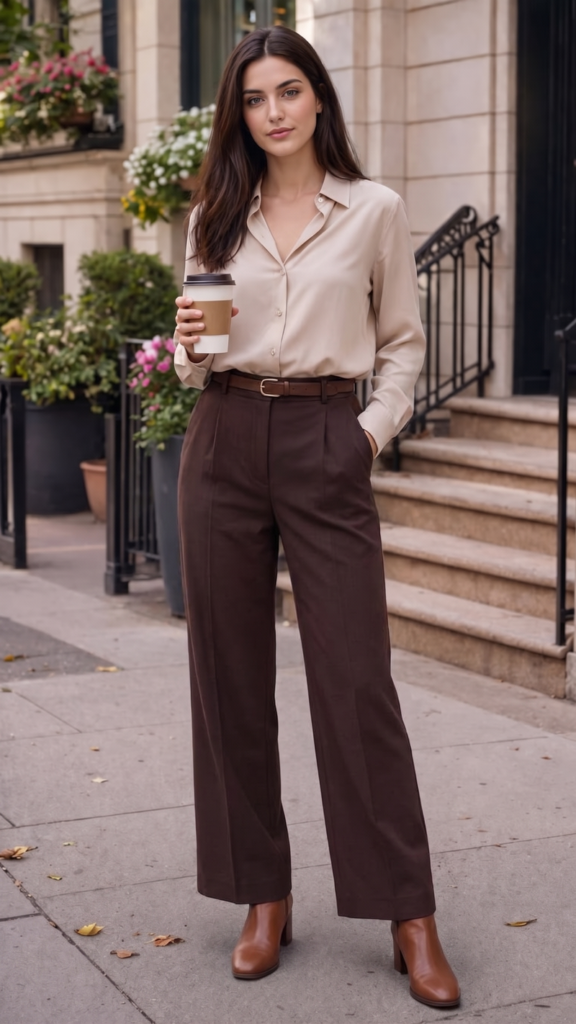
This make it much easier to experiment with:
- Different tonal combinations within the same color family
- Variations in fabric (structured wool vs soft cashmere)
- Subtle changes in fit (relaxed vs sharp tailoring)
Rather than starting from scratch every time, you’re refining, moving step by step toward a more precise result.
3. From Outfit Ideas to a Complete Wardrobe
One of the biggest advantages of using Fashion Diffusion is the ability to think beyond single outfits. Quiet luxury is not about isolated looks, but about building a cohesive system of minimalist wardrobe essentials.
With AI, you can:
- Generate multiple outfits from the same base pieces
- Test how different items work together visually
- Build a capsule wardrobe with consistent tone and structure
Beyond that, Fashion Diffusion’s sketch-to-render feature adds another layer to the process. Instead of starting only from text prompts, you can upload a rough sketch or line drawing and instantly convert it into a refined, realistic design. This is especially useful for quiet luxury, where small silhouette decisions, like the cut of a blazer or the drape of trousers, can define the entire look.
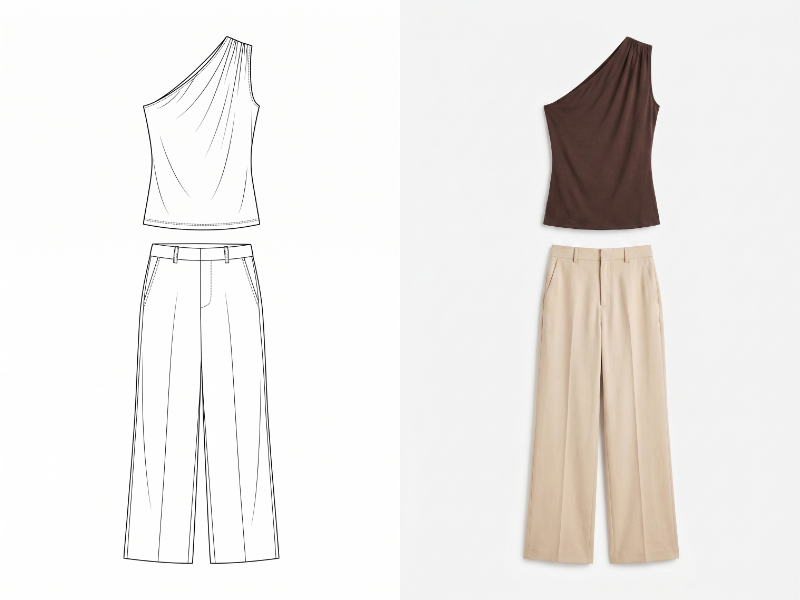
By combining generating outfit ideas with sketch-based inputs, you move from inspiration to a more design-driven workflow, making it easier to develop a complete and consistent wardrobe system.
4. Refining the Details That Matter
Quiet luxury is often defined by small differences, which can be difficult to visualize through traditional methods. With Fashion Diffusion, you can iterate quickly by slightly adjusting prompts and comparing results.
For example, a single change from “oversized blazer” to “relaxed tailored blazer” can shift the entire feel of an outfit. The same goes for fabric descriptions, color temperature, or styling context. These micro-adjustments are exactly what define quiet luxury, and AI allows you to explore them without the usual time cost.
In addition, the style innovation feature makes this refinement process even more precise. Instead of generating entirely new designs, it allows you to build on an existing look and introduce subtle variations, whether it’s adjusting proportions, refining details, or slightly evolving the overall aesthetic.
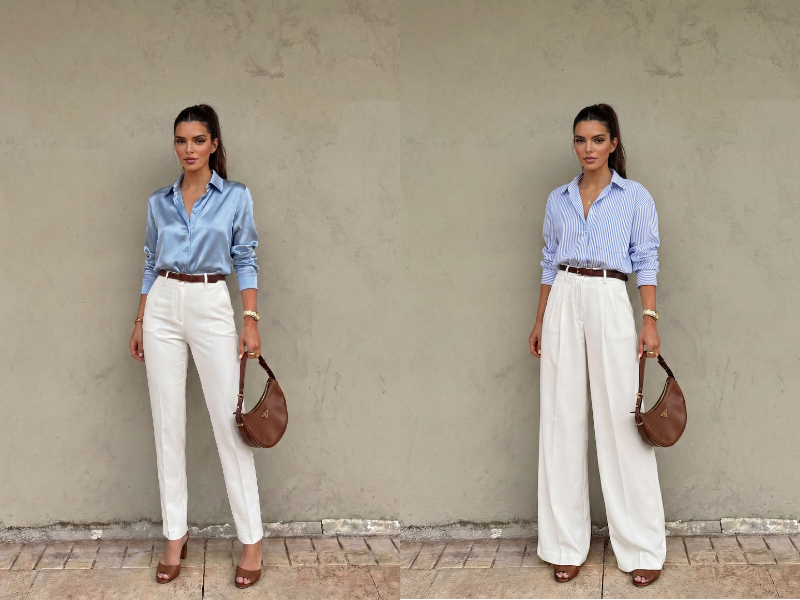
This is particularly valuable for quiet luxury, where the goal isn’t drastic change, but controlled improvement. By working iteratively on a base design, you can achieve a more polished and cohesive result without losing the original direction.
5. Why This Approach Works
Quiet luxury is not about complexity, it’s about precision. By combining clear styling principles with Fashion Diffusion, the process becomes more structured and repeatable.
Instead of relying on instinct alone, you’re able to:
- Visualize ideas instantly
- Refine them with intention
- Build a consistent aesthetic over time
In that sense, AI doesn’t change what quiet luxury is, it simply makes it easier to achieve.
Embrace Quiet Luxury with Fashion Diffusion
Quiet luxury is more than just a style; it’s a mindset—a shift toward intentional, timeless fashion that values quality, simplicity, and craftmanship. In 2026, this aesthetic is becoming the foundation of a more thoughtful approach to personal style. Whether you’re building a minimalist wardrobe or experimenting with subtle outfit variations, achieving that perfect quiet luxury look doesn’t have to be overwhelming.
Fashion Diffusion empowers you to effortlessly design quiet luxury outfits by providing the tools to experiment with fabric, color, and silhouette variations, all without the need for complex manual designs. Whether you’re a designer looking to refine your collection or someone seeking to enhance your personal wardrobe, this AI tool makes it easier than ever to achieve the perfect balance of elegance, quality, and simplicity. Try it today and take the guesswork out of creating refined, timeless looks.


