

Generating the perfect AI fashion image starts long before you hit “create” — it starts with the prompt. If you’ve ever typed “woman in a modern dress” and gotten something flat, generic, or off-brand, the problem usually isn’t the AI model. It’s the prompt.
This guide breaks down what makes a great modern dress prompt for women, with real example prompts you can copy, tweak, and use to generate the outfit right away, plus the underlying structure and techniques that make them work.
15 Modern Dress Prompts You Can Use Today
Here are 15 ready-to-use prompts spanning everyday, going-out, trending-material, and editorial styles, so there’s something to copy no matter the look you’re after.
1. Minimalist Office Wear
Prompt: Young woman standing confidently in a tailored midi dress with a structured blazer collar, ivory color, straight silhouette, subtle wool texture, minimal gold jewelry, sleek low bun. Standing in a bright modern office with floor-to-ceiling windows, soft natural daylight, shot on 50mm lens, editorial fashion photography style.
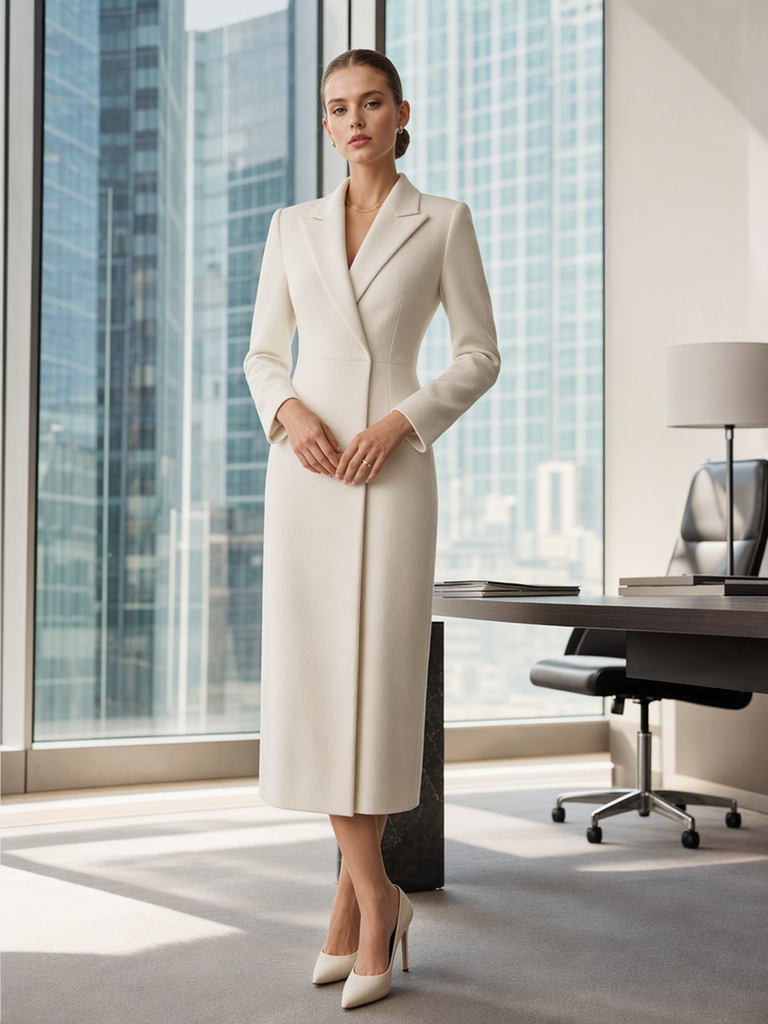
Why it works: It defines a clear silhouette, a specific fabric cue, and pairs the minimalist mood with a matching environment instead of leaving the setting generic.
2. Flowy Summer Dress
Prompt: Woman walking along a sunlit street in a flowing floral midi dress. Lightweight cotton fabric, cinched waist, short puff sleeves, wavy loose hair, straw tote bag, golden hour lighting, warm tones. Candid street style photography, shallow depth of field.
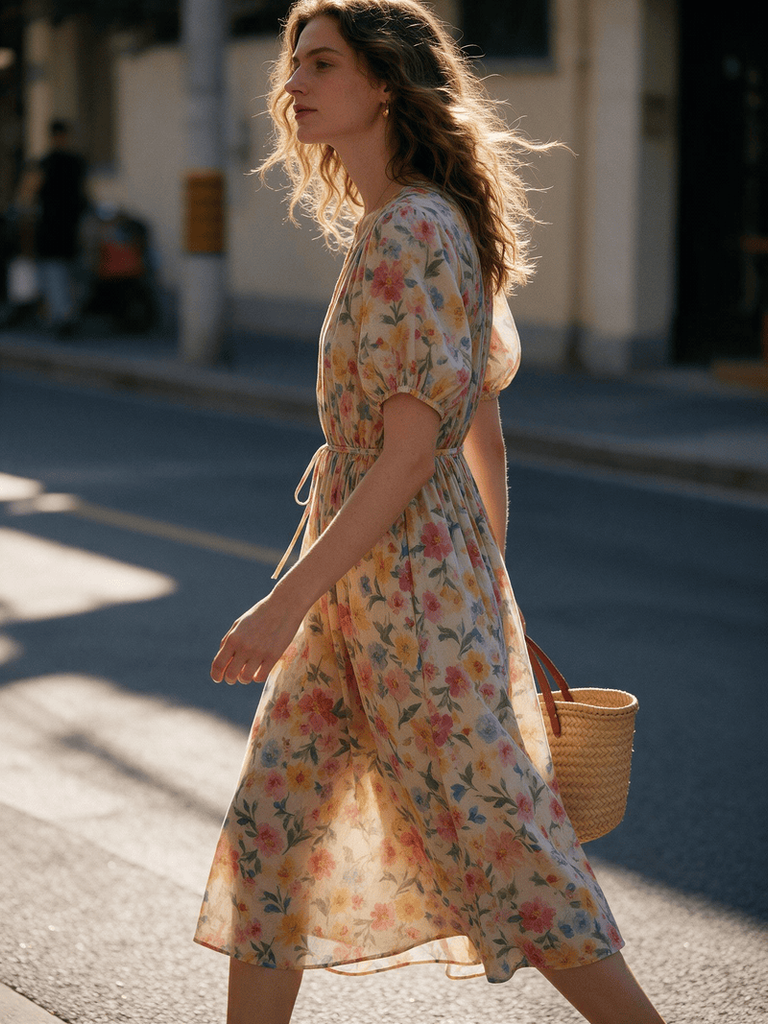
Why it works: Movement words like “walking” and “flowing” tell the model to render fabric with motion, which is essential for lightweight materials.
3. Evening Cocktail Dress
Prompt: Elegant woman in a fitted satin cocktail dress. Deep emerald green, one-shoulder design, knee-length hem, soft glam makeup, sleek straight hair, standing against a dark moody background with dramatic side lighting, high-fashion studio photography, glossy finish.
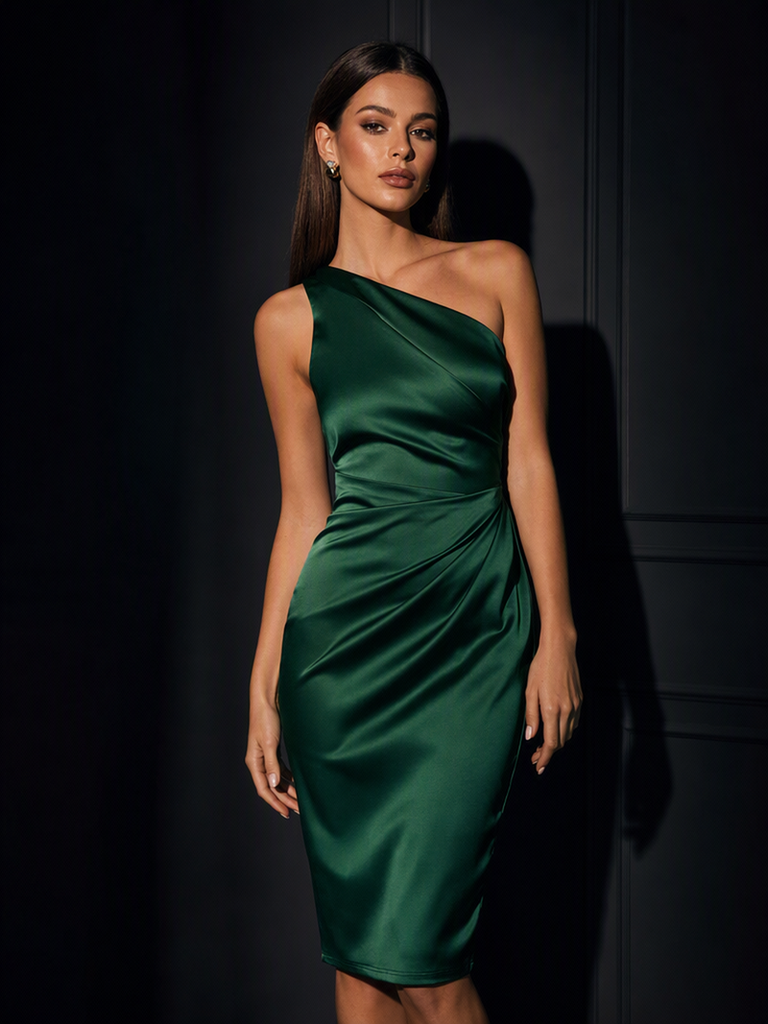
Why it works: Color and fabric are named together since sheen and color interact visually, and the lighting direction is specified because studio shots depend heavily on it.
4. Streetwear-Inspired Dress
Prompt: Confident woman wearing an oversized denim shirt dress, cinched with a wide belt, chunky white sneakers, layered necklaces, urban rooftop background, city skyline in soft focus, natural daylight, casual editorial photography, Gen Z fashion aesthetic.
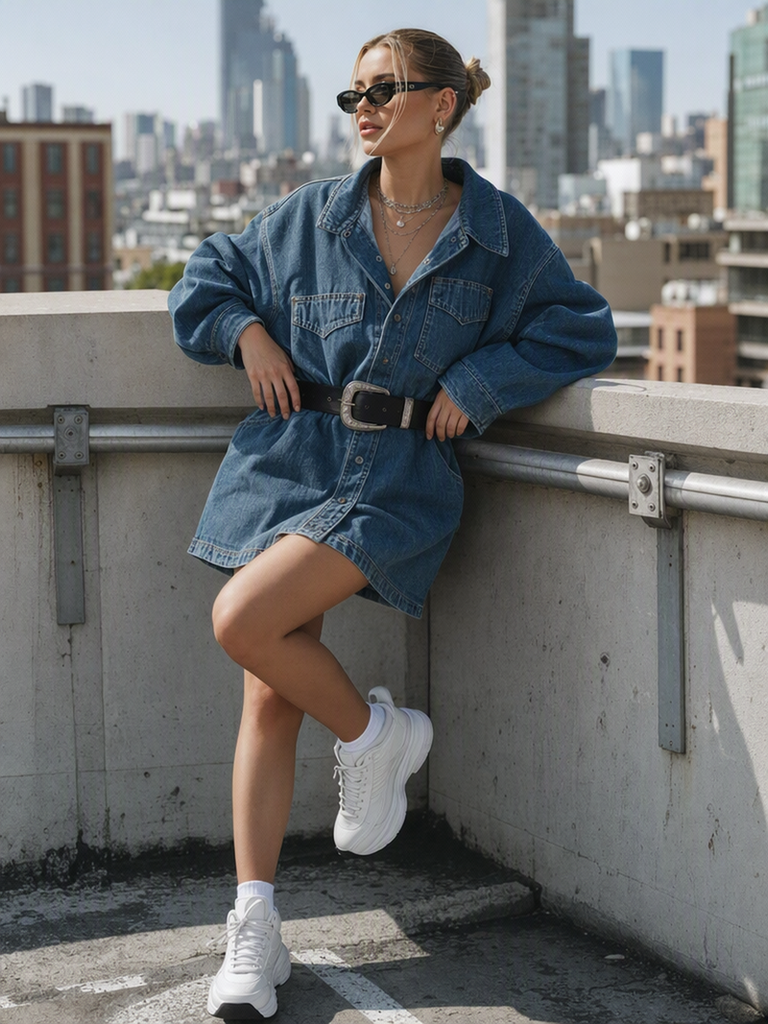
Why it works: Naming an aesthetic category helps the model pull from a consistent visual vocabulary rather than mixing unrelated style cues.
5. Quiet Luxury Brunch Dress
Prompt: Woman seated at a sunlit outdoor café table, wearing a relaxed linen shirt dress in a soft oatmeal tone, oversized collar, rolled sleeves, tied waist, minimal gold jewelry, natural loose waves, soft neutral makeup, warm morning light, shallow depth of field, quiet luxury lifestyle photography, calm and understated mood.
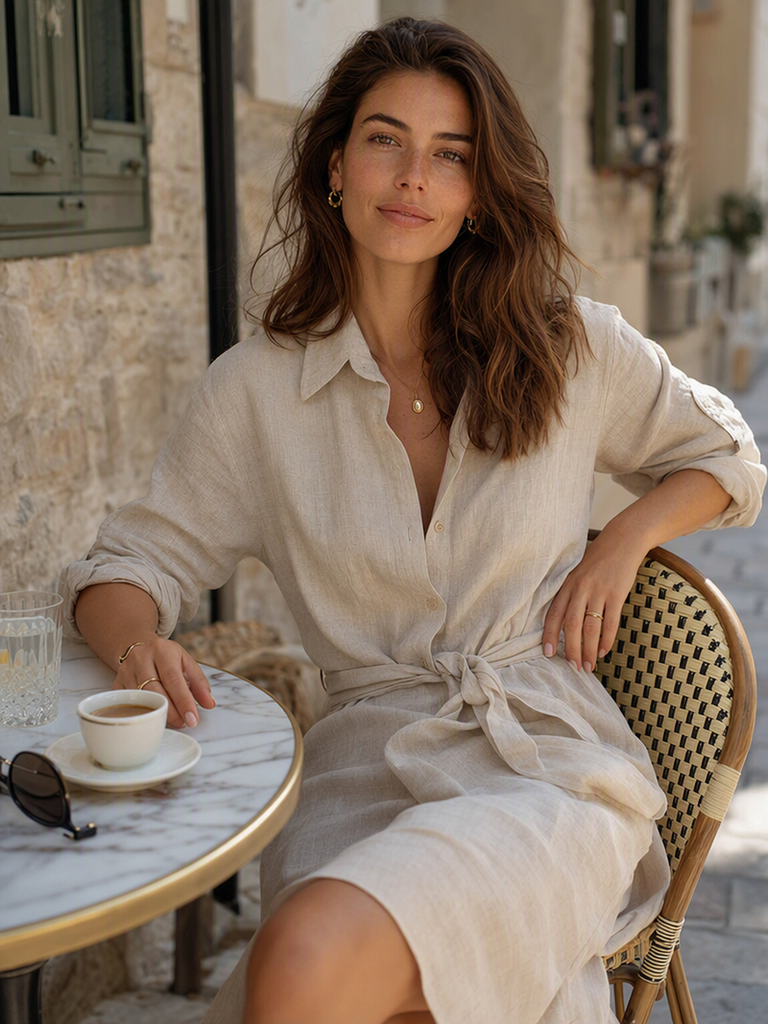
Why it works: Naming the “quiet luxury” aesthetic directly steers the model away from logos or flashy details, while pairing “linen” with a specific tone (“oatmeal”) keeps the fabric read as relaxed rather than stiff.
6. Sheer Organza Dress
Prompt: Elegant woman in a sheer silk organza dress, beige nude tone, voluminous puffed sleeves, layered translucent fabric with a subtle sheen, delicate slip lining underneath, soft romantic makeup, loose waves. Standing in a light-filled minimalist studio, diffused window light, high-fashion editorial photography, dreamy and airy mood.
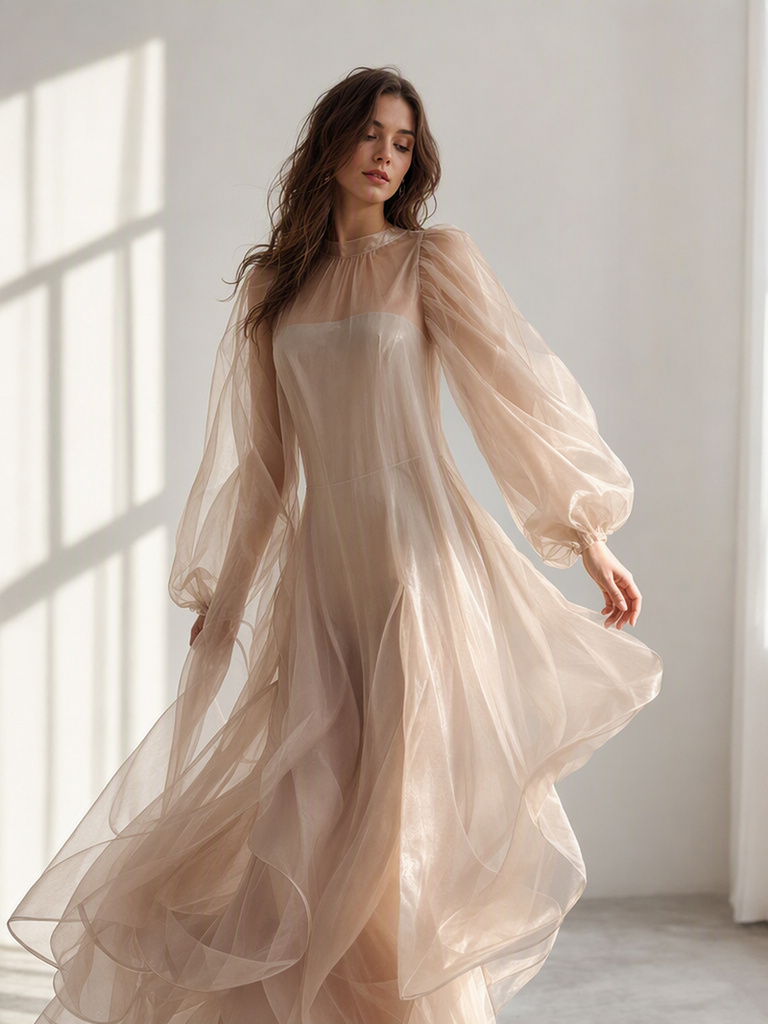
Why it works: Sheer fabric is tricky to render, so the prompt separates the translucent outer layer from the slip lining underneath instead of describing one ambiguous garment.
7. Lace-Trim Silk Slip Dress
Prompt: Woman in a vintage-inspired silk slip dress, champagne color, delicate lace trim along the neckline and hem, bias-cut silhouette, thin adjustable straps, soft glossy finish, natural tousled hair, minimal jewelry. Standing against a warm beige backdrop, soft diffused lighting, retro-glam editorial photography.
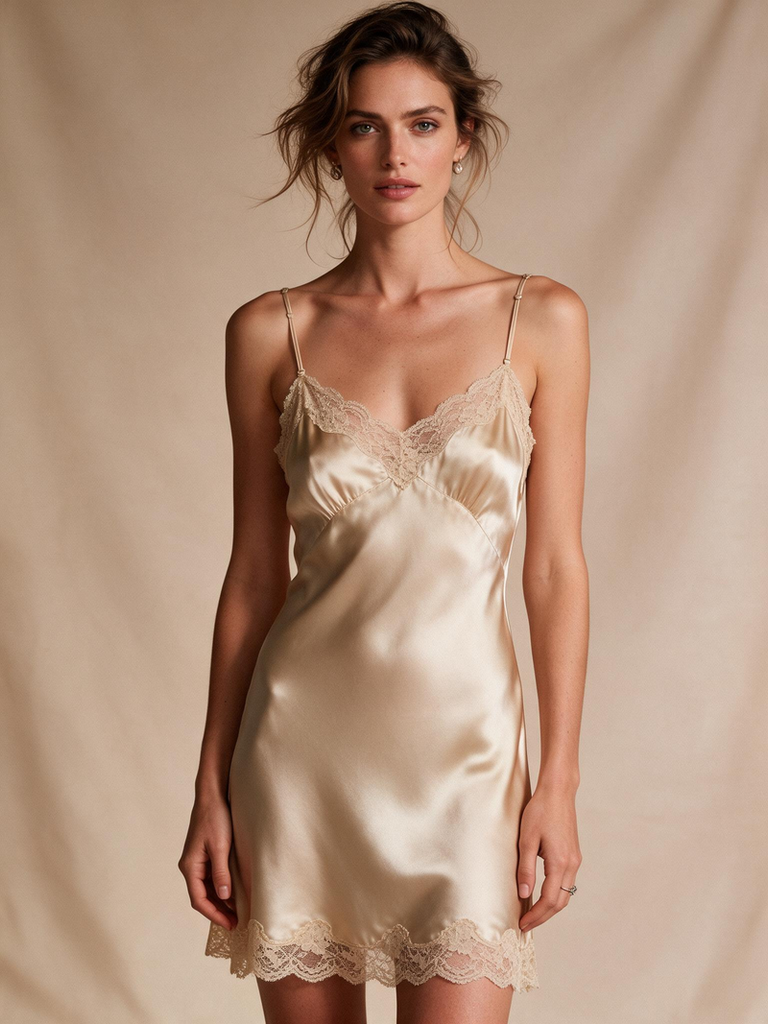
Why it works: Naming the construction detail “bias-cut” tells the model how the fabric should fall and cling, which gives slip dresses their signature drape.
8. Velvet Evening Dress
Prompt: Woman in a deep olive green velvet dress, fitted long sleeves, plunging V-neckline, floor-length column silhouette, rich matte-to-shadow texture, sultry smoky-eye makeup, sleek center-part hair. Standing in a dimly lit lounge setting, warm ambient lighting with deep shadows, luxury editorial photography, moody atmosphere.
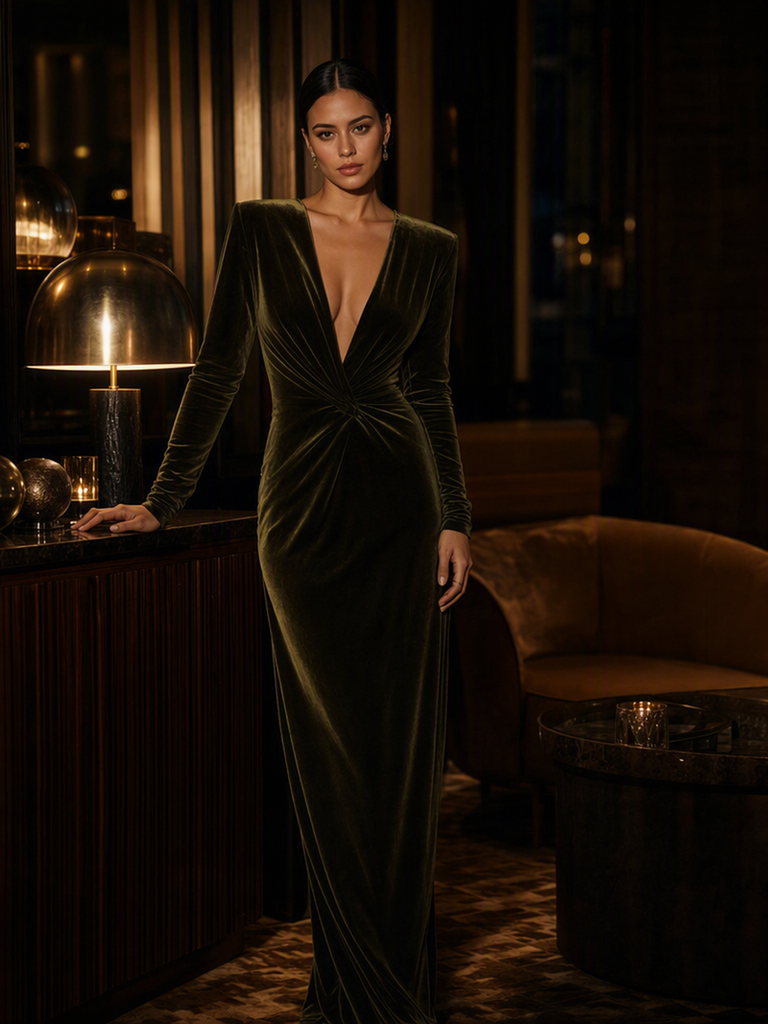
Why it works: Describing velvet’s matte-to-shadow texture and pairing it with deep shadows helps the model render the fabric’s light absorption instead of defaulting to a shiny finish.
9. Balletcore Corset Mini Dress
Prompt: Young woman in a soft pink balletcore corset mini dress, structured bodice with visible boning seams, ribbon lace-up back detail, a sheer tulle underlay peeking beneath the hem, delicate ribbon straps, soft glowing skin, loose face-framing curls. Standing in a sunlit room with sheer curtains, warm soft natural light, dreamy Pinterest-aesthetic photography, high-detail fabric texture, youthful and romantic mood.
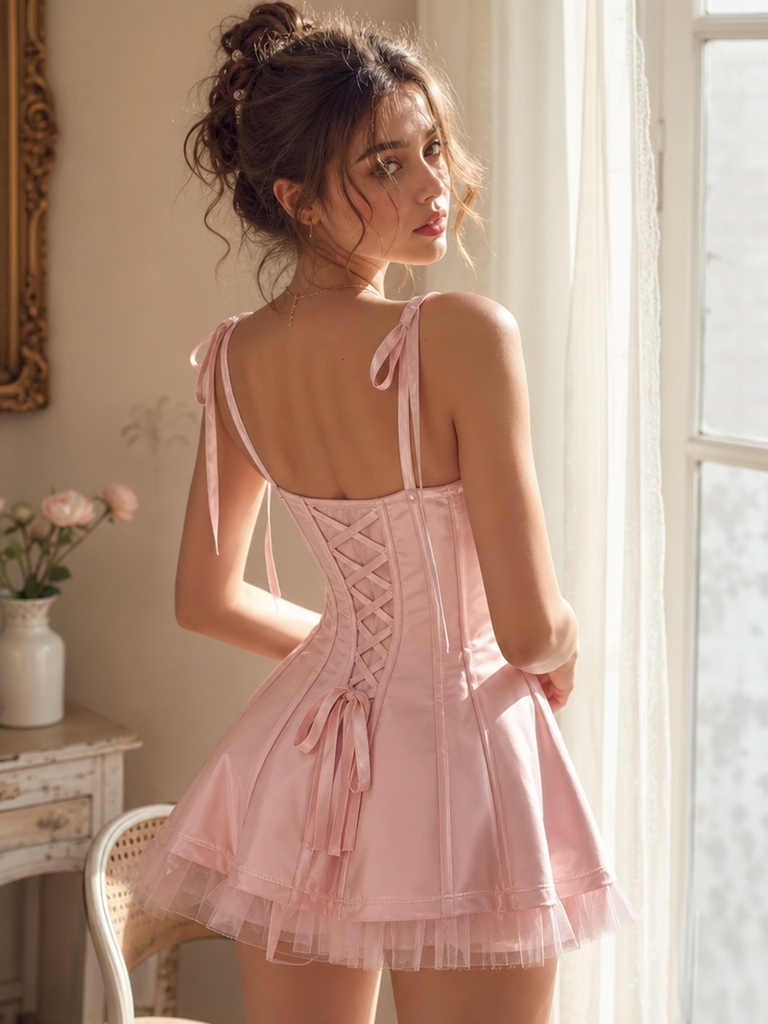
Why it works: Naming precise construction details like “visible boning seams” and “ribbon lace-up back” gives the model concrete garment structure to render instead of a generic “corset dress,” while the soft natural light keeps the mood dreamy and youthful rather than harsh or clinical.
10. Sheer Slip Dress Over Denim
Prompt: Sheer ivory slip dress with an uneven asymmetric strap, layered over wide-leg jeans with a loose stacked pooling effect, tucked into brown suede ankle boots. Walking down a sunlit city sidewalk, tousled beachy waves, soft dewy makeup, golden hour light, candid Pinterest-style photography, effortless youthful mood.
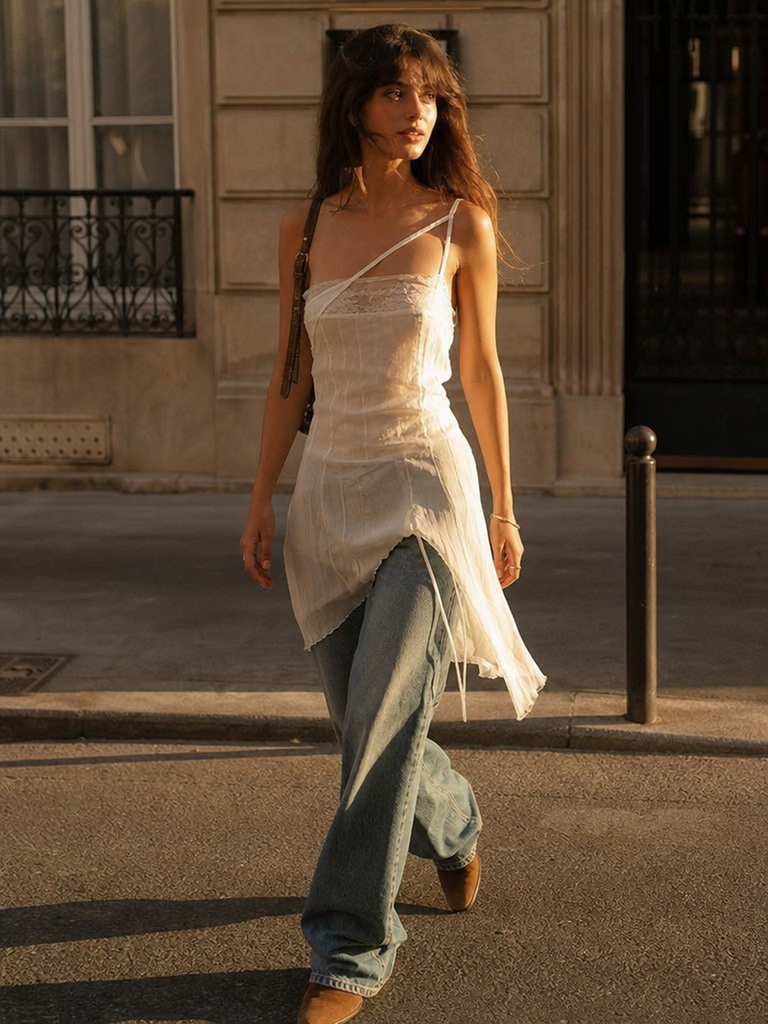
Why it works: Naming the dress-over-jeans pairing directly, rather than just describing the dress alone, tells the model this is an intentional styling combination and keeps the sheer fabric from getting lost against denim.
11. Wedding Dress
Prompt: Bride in an elegant modern wedding dress, ivory silk with a fitted bodice and flowing A-line skirt, delicate lace appliqué along the neckline, sheer long sleeves, soft cathedral-length veil, natural bridal makeup, loose romantic updo, standing in a light-filled venue with large arched windows, soft golden backlighting, romantic bridal editorial photography, dreamy and elegant mood.
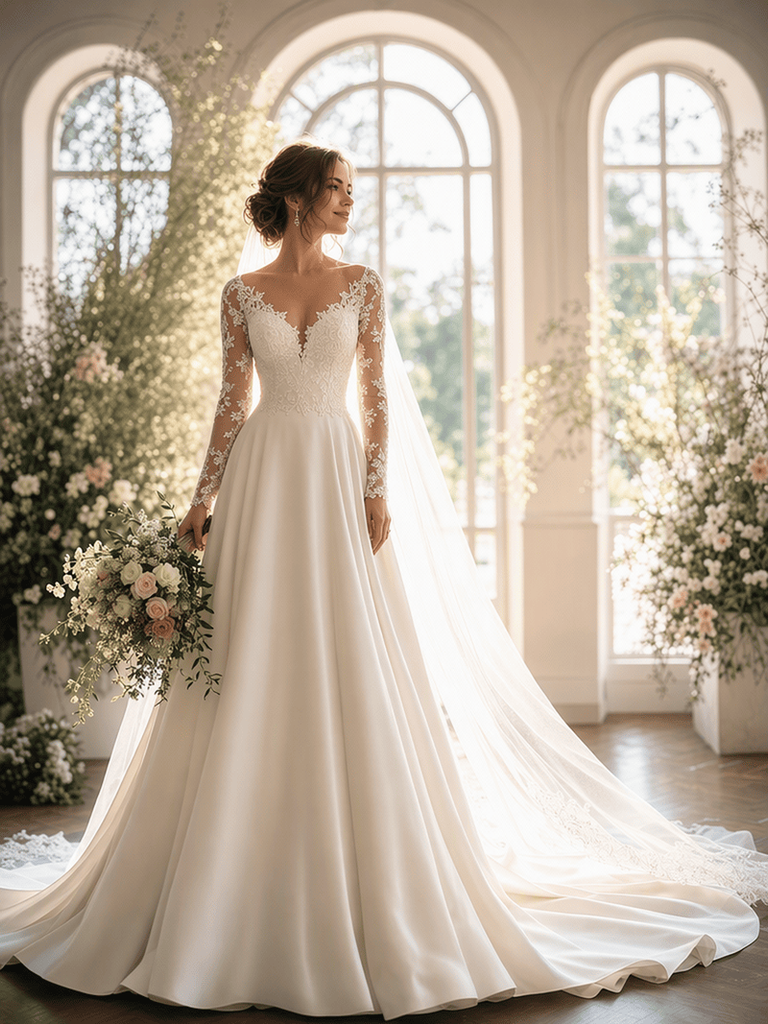
Why it works: Separating structural elements like the fitted bodice from decorative ones like the lace appliqué keeps the model from blending them into one vague “lacy dress.” Want more wedding-specific styling combinations? Check out our full guide on virtual wedding dress try-on styles.
12. Denim Maxi Dress
Prompt: Woman in a relaxed denim maxi dress, medium-wash blue, drop-waist silhouette, button-front detailing, frayed hem, tucked-in fitted white tank underneath, gold hoop earrings, straight center-part hair. Standing in a sunlit outdoor courtyard, warm natural daylight, laid-back editorial photography, effortless everyday-luxury mood.
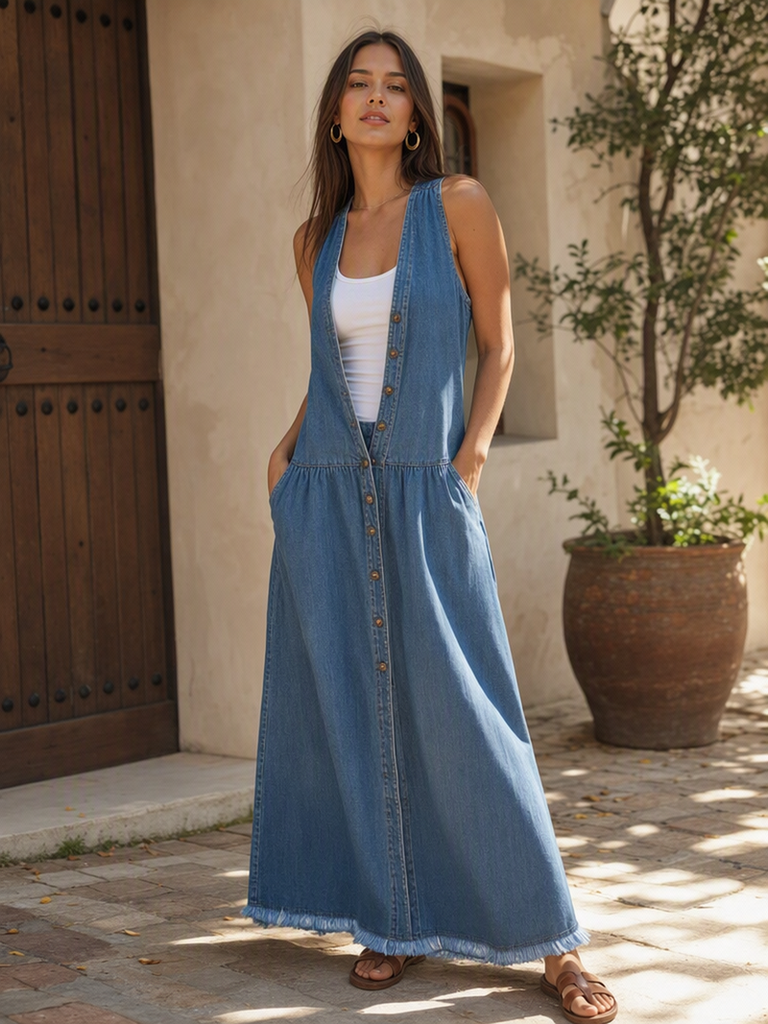
Why it works: Naming construction details like “button-front” and “frayed hem” gives the model concrete cues instead of leaving “denim” to be interpreted as a flat color block.
13. Asymmetric Cut-Out Dress
Prompt: A sculptural black cut-out dress with an asymmetric hem and a single waist cut-out, worn by a confident woman with slicked-back hair, minimal silver jewelry, sharp contour makeup, standing against a raw concrete wall, hard directional lighting, high-contrast fashion photography, avant-garde mood.
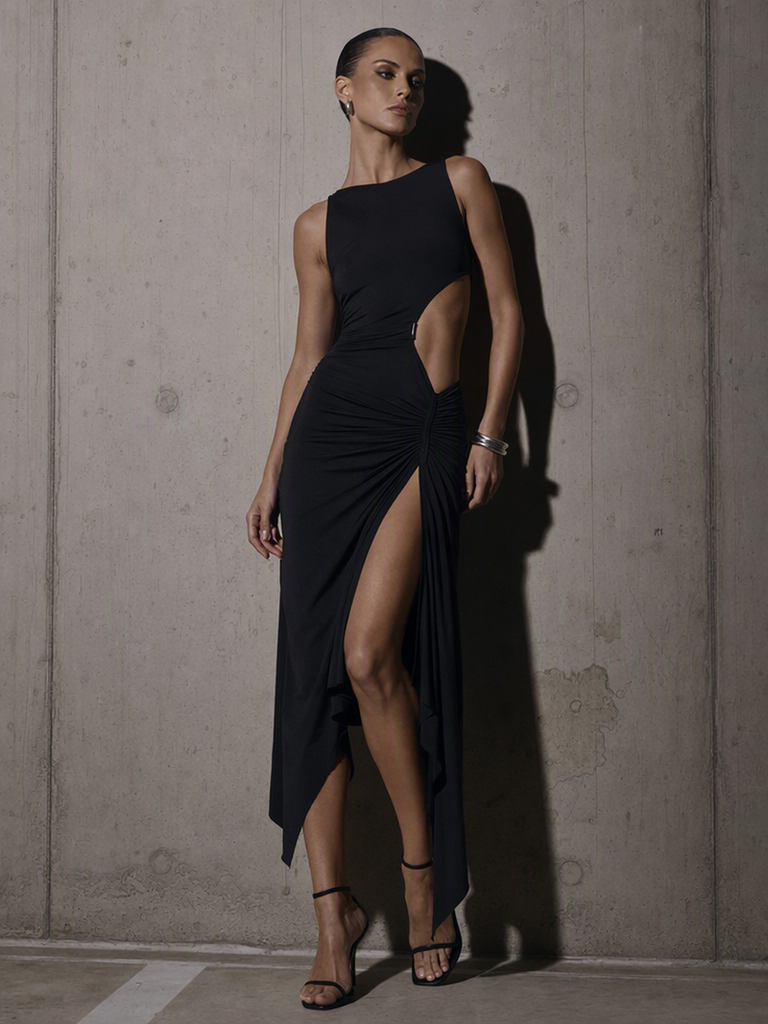
Why it works: Leading with the garment instead of the subject puts the design detail front and center, which helps when the cut-out or asymmetry is the whole point of the look.
14. Modern Halter Mini Dress
Prompt: Candid street-style photograph of a woman crossing a city intersection in a fitted ivory halter mini dress with a low back, structured neckline, strappy heels, oversized sunglasses, soft afternoon light, slight motion blur in the background, downtown fashion week energy.
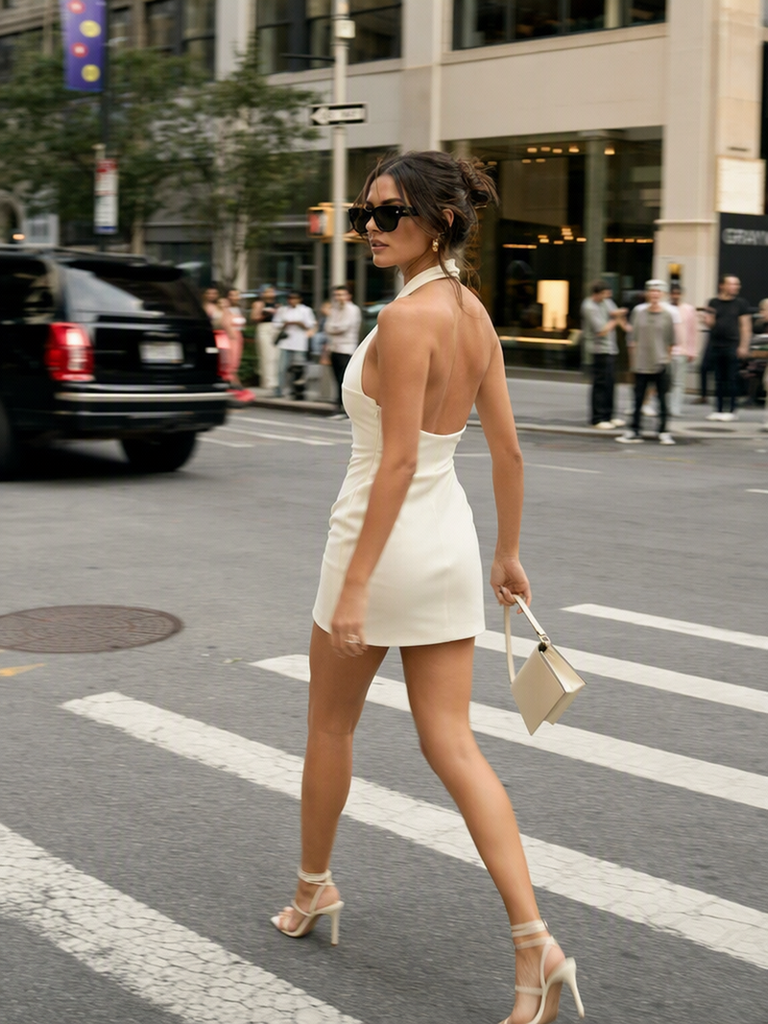
Why it works: Opening with the photography style and scene rather than the subject sets the energy of the whole shot before a single garment detail is introduced.
15. Sculptural Editorial Column Dress
Prompt: Full-body fashion photograph showcasing a contemporary ivory column dress with architectural pleating along one shoulder, worn by a poised model with a slicked-back ponytail and no visible jewelry, set against a plain white cyclorama background, bright even studio lighting, minimalist quiet-luxury aesthetic.
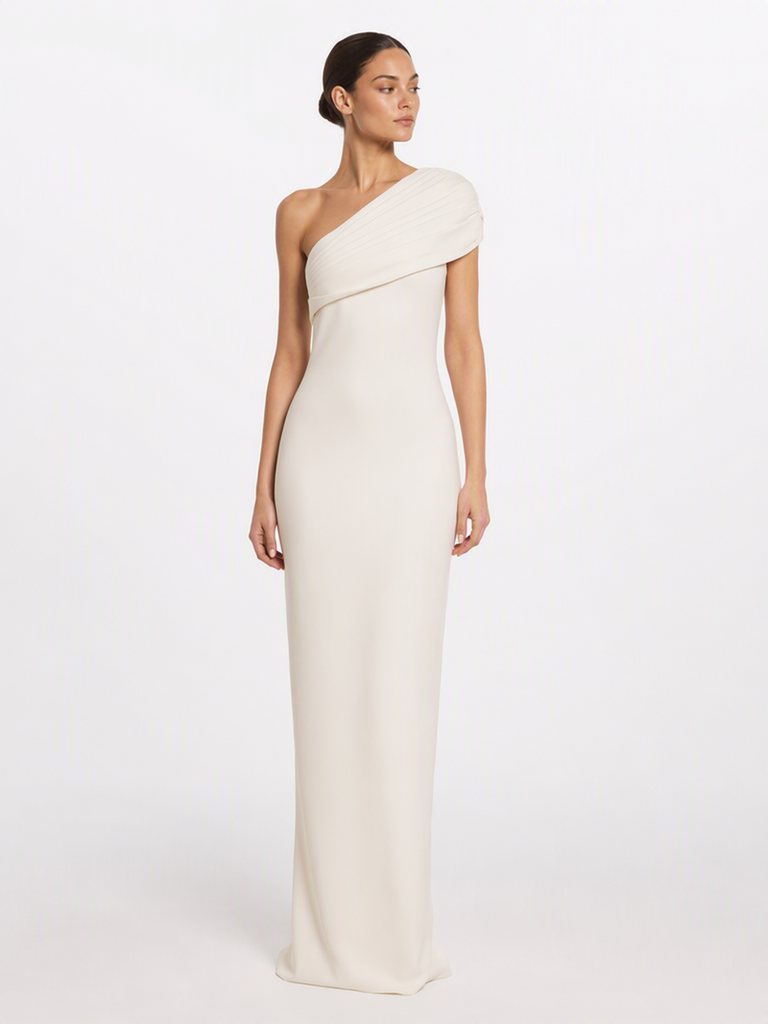
Why it works: Framing the prompt as a “photograph showcasing” the dress, rather than a woman wearing it, shifts focus toward the garment’s construction, which suits product-style editorial shots.
How to Write a Modern Dress Prompt
Not every well-written prompt reads as current. Modern results tend to favor clean silhouettes, asymmetric or sculptural details, understated colors, minimal styling, and an editorial photography style over busy, predictable ones. The steps below turn that idea into a repeatable process, from structure to vocabulary to a ready-to-use template.
Layer your prompt in the right order
A strong dress prompt usually layers information in a consistent order, which makes it easier to edit later without rewriting the whole thing:
- Subject & pose — who, and what they’re doing
- Garment details — silhouette, fabric, color, construction
- Styling — hair, accessories, makeup
- Setting & lighting — where the shot takes place and how it’s lit
- Camera & photographic style — lens, angle, mood, reference aesthetic
You don’t have to start with the subject every time. As examples 13 to 15 show, leading with the garment or the scene instead can work just as well, especially when the design detail or the setting is the main point of the image.
Apply a few key techniques
Once that order feels familiar, a handful of techniques separate a decent prompt from one that reads as modern and editorial:
- Anchor with a photography style. Terms like “editorial fashion photography,” “studio photography,” or “candid street style” do more work than any single adjective. They tell the model how to frame, light, and compose the whole image at once.
- Be specific about fabric behavior, not just fabric name. “Satin” alone is ambiguous. “Satin with a glossy finish” or “lightweight cotton with natural drape” gives the model a texture and movement cue to work from.
- Pair color with material. Color reads differently on different fabrics. Specifying both, such as “deep emerald satin” instead of “deep emerald” alone, produces more predictable results.
- Use silhouette vocabulary deliberately. Words like “fitted,” “A-line,” “straight,” “oversized,” and “cinched waist” define shape far more reliably than vague terms like “flattering” or “stylish.”
- Match lighting to mood, not just to time of day. “Golden hour” suggests warmth and softness, while “dramatic side lighting” suggests contrast and edge. Choose lighting language that supports the emotional tone you want.
- Keep one clear focal point. Avoid stacking too many competing style keywords, such as minimalist and boho and streetwear at once. One dominant aesthetic per prompt produces a cleaner, more coherent result.
Pull from a modern vocabulary
With the order and techniques in place, building new prompts is mostly a matter of swapping in different descriptive words within each category below.
| Category | Examples |
| Silhouette | fitted, column, A-line, oversized |
| Neckline | square, halter, asymmetric |
| Fabric | satin, silk, linen, organza |
| Details | draping, pleats, cut-outs |
| Color | ivory, burgundy, chocolate brown |
| Aesthetic | minimalist, editorial, quiet luxury, balletcore, Pinterest-aesthetic |
Put it all together with a template
[Subject + pose], wearing a [silhouette] [dress type] in [color], made of [fabric/texture], with [notable design detail]. [Hair/makeup/accessories]. Set in [location/background], with [lighting description]. Shot in [photography style], [camera/lens detail if desired].
Fill in each bracket using the vocabulary above, and you’ll consistently produce prompts with the structure that modern dress generation responds to best. For more ready-to-use ideas beyond dresses, our trending prompt collection is also worth a look.
Create Your Own Modern Dress Designs
Reading through prompt examples is a great starting point, but the fastest way to find your own style is to experiment directly. Take any of the prompts above, swap in your own colors, fabrics, or settings, and see how small wording changes shift the final look.
Ready to turn these prompts into real images? Head over to Fashion Diffusion and start generating your own modern dress looks today.
FAQ
The strongest ones pair a clear silhouette and fabric with a defined color and a specific photography style, covering looks like sculptural editorial dresses, halter minis, and structured column silhouettes rather than relying on vague style words alone.
Start with the garment’s silhouette and fabric, add one strong design detail such as a cut-out or pleating, then specify lighting and a photography style. This structure consistently produces sharper, more editorial-looking results.
A modern dress prompt combines a clear silhouette, a named fabric with texture cues, and a specific photography style instead of vague words like “trendy” or “stylish.”
Not always. Lens details help with close-up portraits, but for full-body looks, naming a photography style like “editorial fashion photography” is usually enough.
This usually happens when fabric behavior isn’t described. Adding a texture cue, such as “glossy finish” for satin or “soft drape” for chiffon, gives the model a clearer target.
It’s best to keep one dominant aesthetic per prompt. Mixing several strong style keywords together tends to produce a less coherent image than focusing on one clear direction.
Pairing a color with its material, such as “deep emerald satin” instead of just “green dress,” produces more predictable results, since the same color reads differently on different fabrics.


