

Most brides arrive at their first boutique appointment with a vague Pinterest board and limited time. You try on six dresses in an hour, the samples are rarely your size, and you leave more uncertain than when you arrived. The styles that looked stunning on the model don’t always translate — because that model has a completely different figure, height, and proportions.
A virtual wedding dress try-on changes the starting point. Upload a photo of yourself and an image of any dress you want to try, and the AI places the gown on your actual figure in seconds. Before booking a single appointment, you can work through every major silhouette and find what suits your shape.
This article walks through 8 wedding dress styles — what each one looks like, who it suits, and what to expect when you try on wedding dresses virtually on your own photo.
What Is a Virtual Wedding Dress Try-On
The traditional dress shopping process works like this: you make an appointment, try on whatever samples are available, and hope one of them gives you a clear enough sense of the style. The problem is that boutique samples are usually one size, on one hanger, and look nothing like the finished gown on your body.
A virtual wedding dress try-on reverses that sequence. You explore styles at home, on your own photo, before any appointment is booked. The AI shows you what different silhouettes actually look like on your figure — your height, your proportions, your specific shape.
No more imagining it from a model who looks nothing like you. By the time you walk into a boutique, you are not starting from zero. You already know which direction you are going.
How to Try On Wedding Dresses Online with AI
Fashion Diffusion’s try on wedding dress online AI doesn’t require a bridal catalog or a specific dress library. Use any image you already have — a screenshot from a designer’s website, a photo saved from Instagram, a picture from a bridal magazine. The process is the same regardless of where the dress image comes from.
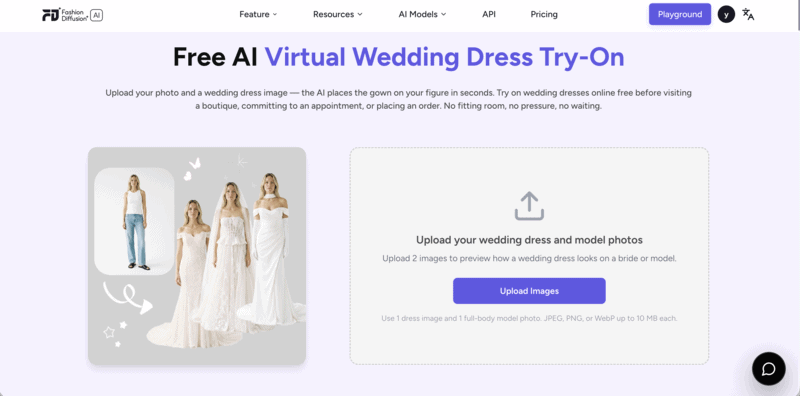
Step 1: Find a Dress Image to Try
Before opening the tool, source the dress images you want to test. Designer websites, bridal blogs, and Pinterest boards all work. Aim for images where the full dress is visible and the fabric details are clear — cropped or partially obscured images produce less accurate results.
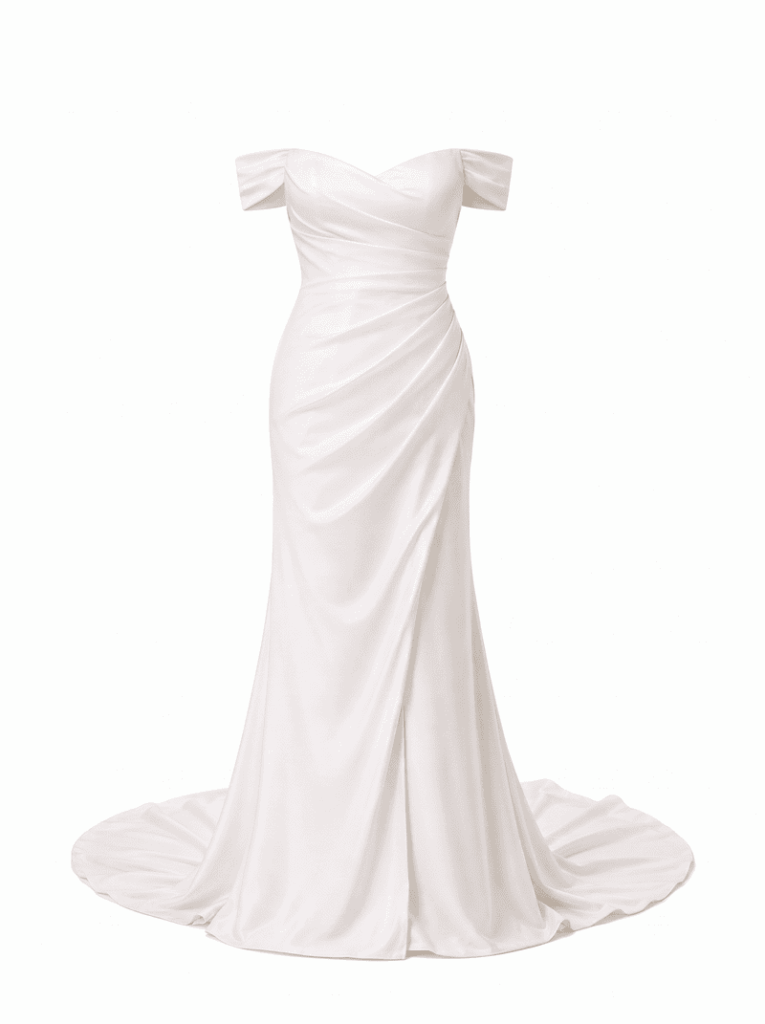
Step 2: Prepare Your Own Photo
Your photo matters more than the dress image. Wear something fitted — leggings and a close-fitting top — so the AI can read your actual silhouette. A plain background and even lighting (natural light works well) help the AI separate you from the scene. Full body, front-facing, standing straight.
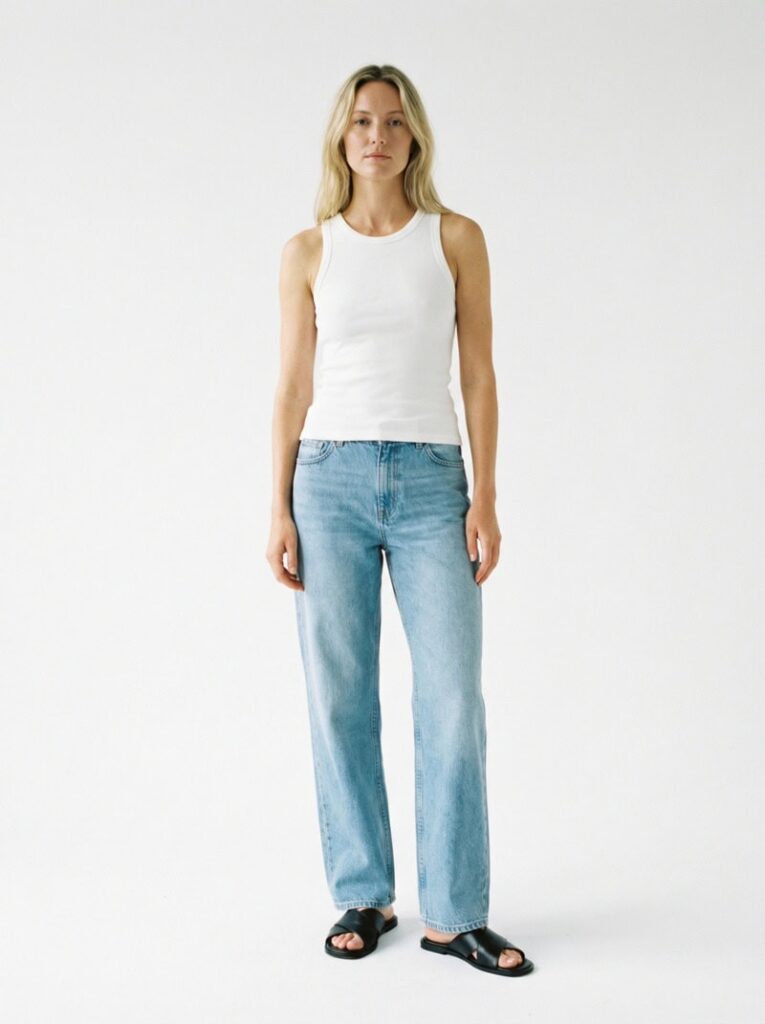
Step 3: Generate and Compare Styles
Upload both images and generate your preview. The result shows the dress on your figure — neckline placement, waist fit, skirt proportion. If the first result isn’t quite right, adjust your photo or try a cleaner dress image. The real value is in generating multiple styles on the same photo so you can compare silhouettes directly, side by side, on your own figure.
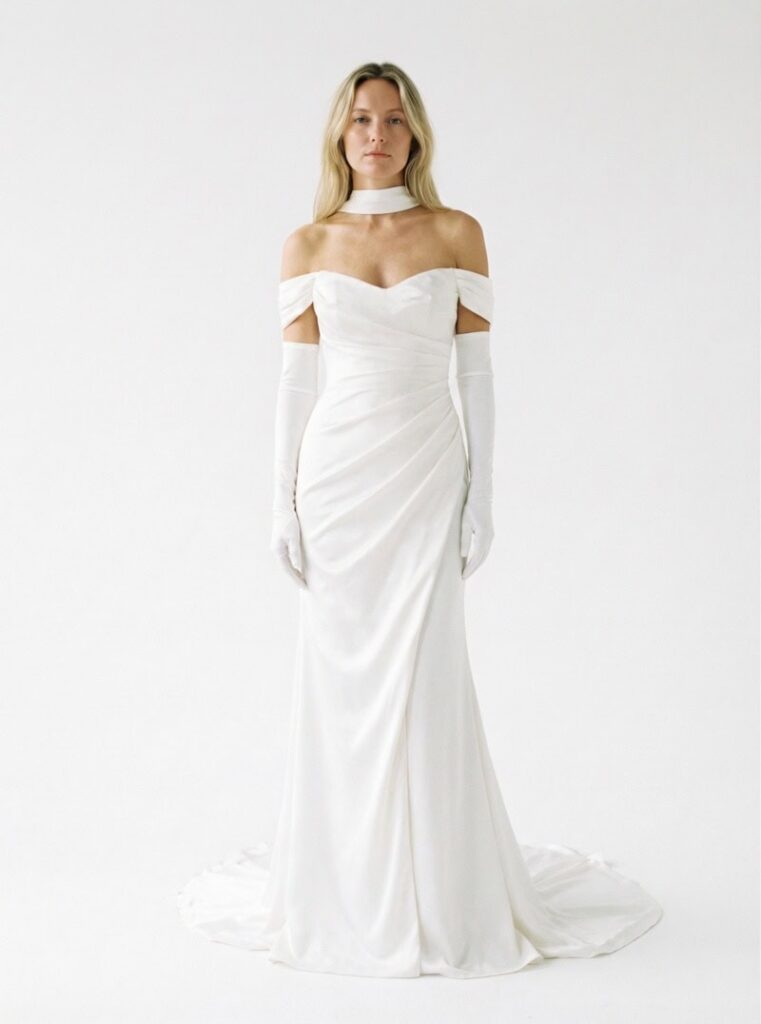
Step 4: Save and Share Before Your Appointment
Save the results that feel right and share them before your boutique visit — with your partner, your bridesmaids, or anyone whose opinion matters. Walking into a fitting with a clear shortlist changes the appointment from exploratory to decisive.
If you want to show the same dress from different angles, Fashion Diffusion’s AI Lookbook generates multiple poses from a single result — useful when you are trying to communicate a silhouette to someone who isn’t in the room with you.
8 Wedding Dress Styles Tested Virtually
Each of the following styles has a distinct silhouette and suits a different combination of body shape, wedding setting, and personal aesthetic. Here’s what to know about each one before you try it on.
A-Line
The A-line is consistently the most popular wedding dress silhouette. It fits at the bodice and gradually flares from the waist downward, creating the shape of the letter A. The skirt flows away from the hips rather than hugging them, which flatters almost every body type by creating visual proportion without restriction.
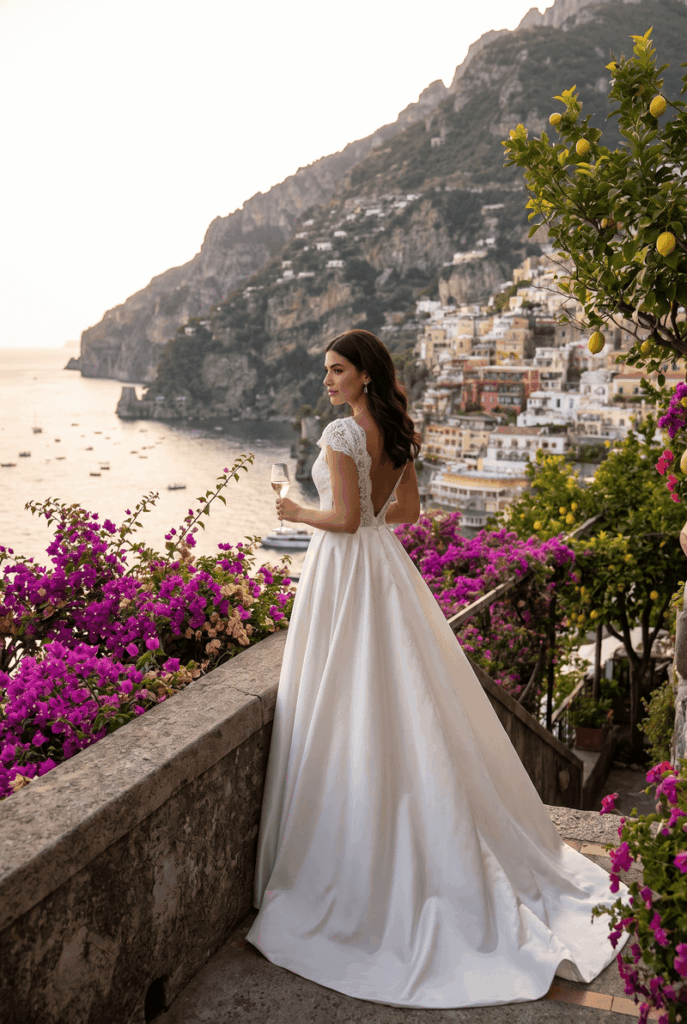
- Who it suits: Almost everyone. The A-line balances wider hips on pear shapes, elongates petite frames, and allows full freedom of movement throughout the day.
- What to expect virtually: The flare starts at the waist, so the transition on your figure reads clearly even in a preview image. Pay attention to where the skirt volume begins relative to your natural waist.
Ball Gown
The ball gown is the most dramatic bridal silhouette — a fitted, structured bodice and an extremely full, voluminous skirt. If the words princess, cathedral, or fairytale are on your mood board, this is the style you are thinking of. The contrast between the cinched waist and the skirt volume creates a strong visual effect.
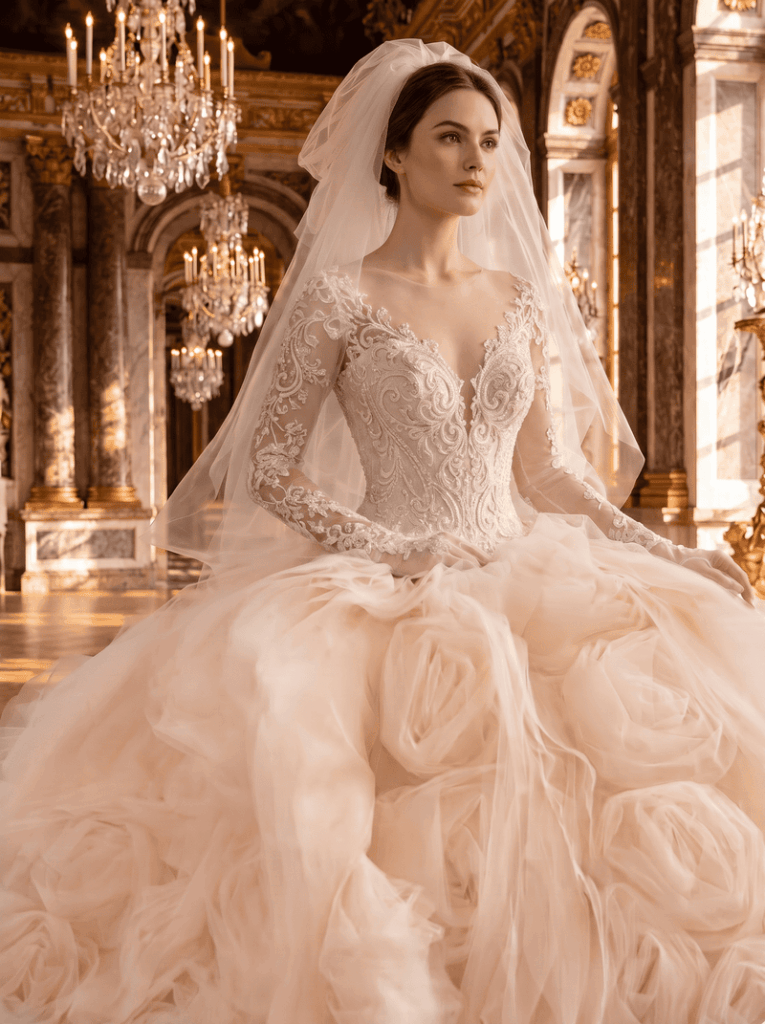
- Who it suits: Hourglass and rectangle figures benefit most. The full skirt adds volume to the lower half, balancing a broader shoulder or bust. Best suited to formal indoor venues with space for the skirt.
- What to expect virtually: Ball gown volume is dramatic even in a preview. The key detail to check is how the bodice fits relative to your torso — that fitted upper half is what makes the silhouette work.
Mermaid
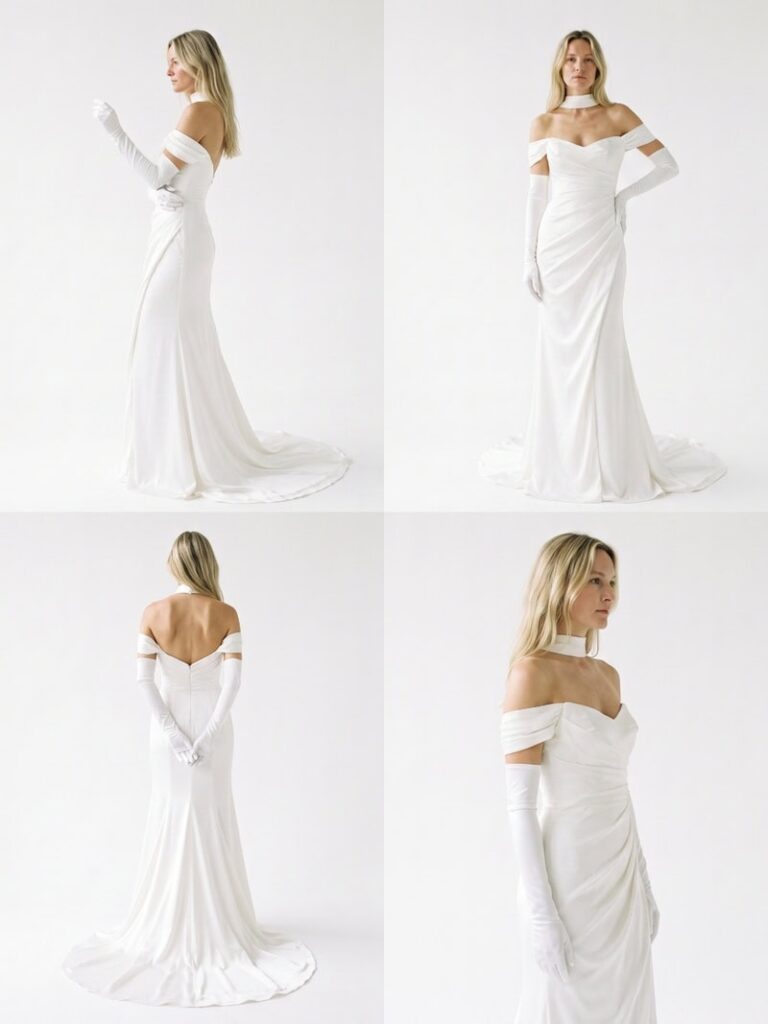
The mermaid dress is fitted from the chest all the way down to the knee, then flares out below into a dramatic tail. It’s the most body-conscious silhouette in bridal fashion. The full outline of the figure is visible from shoulders to mid-thigh before the skirt releases into the flare.
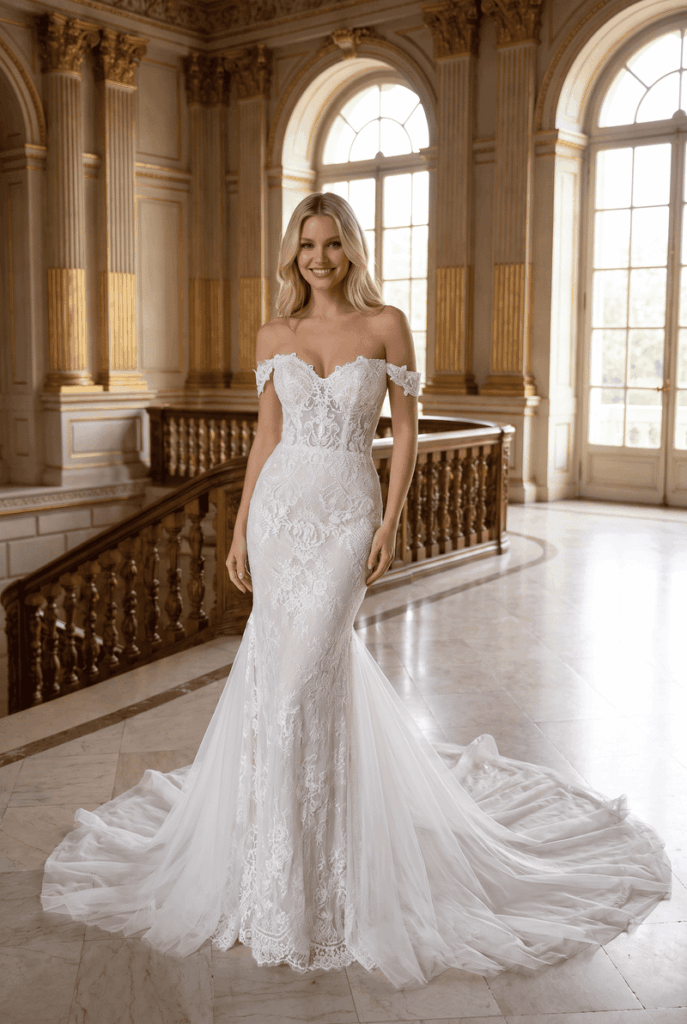
- Who it suits: Hourglass figures and brides who are comfortable in a fitted garment throughout the day. The mermaid requires confidence in movement — the skirt limits stride length significantly.
- What to expect virtually: The virtual try-on will show clearly how the dress sits along your natural curves. This is one of the styles where seeing it on your own photo is most useful — it’s hard to predict from a model how a mermaid will follow your specific proportions.
Trumpet
The trumpet is often described as the mermaid’s more wearable sibling. It’s fitted through the bodice and hips, but the flare begins higher — at mid-thigh rather than the knee. The result is a slightly less restrictive skirt and a smoother overall line.
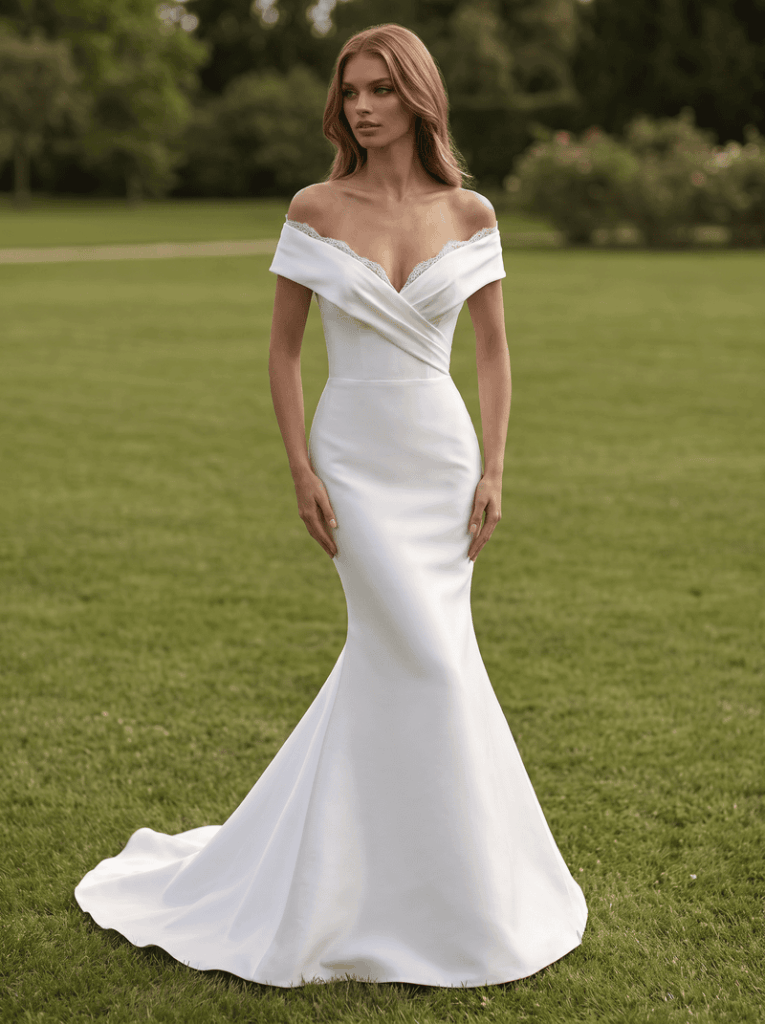
- Who it suits: Similar to the mermaid but more forgiving in movement. Works particularly well for brides who love the mermaid look but want more ease when walking. Suits hourglass and athletic body types.
- What to expect virtually: The higher flare point is the key difference from mermaid. In a virtual preview, compare the two directly by uploading the same photo with both styles — the difference in where the skirt opens will be clear.
Sheath / Column
The sheath (also called a column) is the most minimal bridal silhouette. It falls straight from the neckline or bust to the hem, skimming the body without dramatic flare or volume. There’s no defined waist seam — the dress follows the body’s natural line throughout.
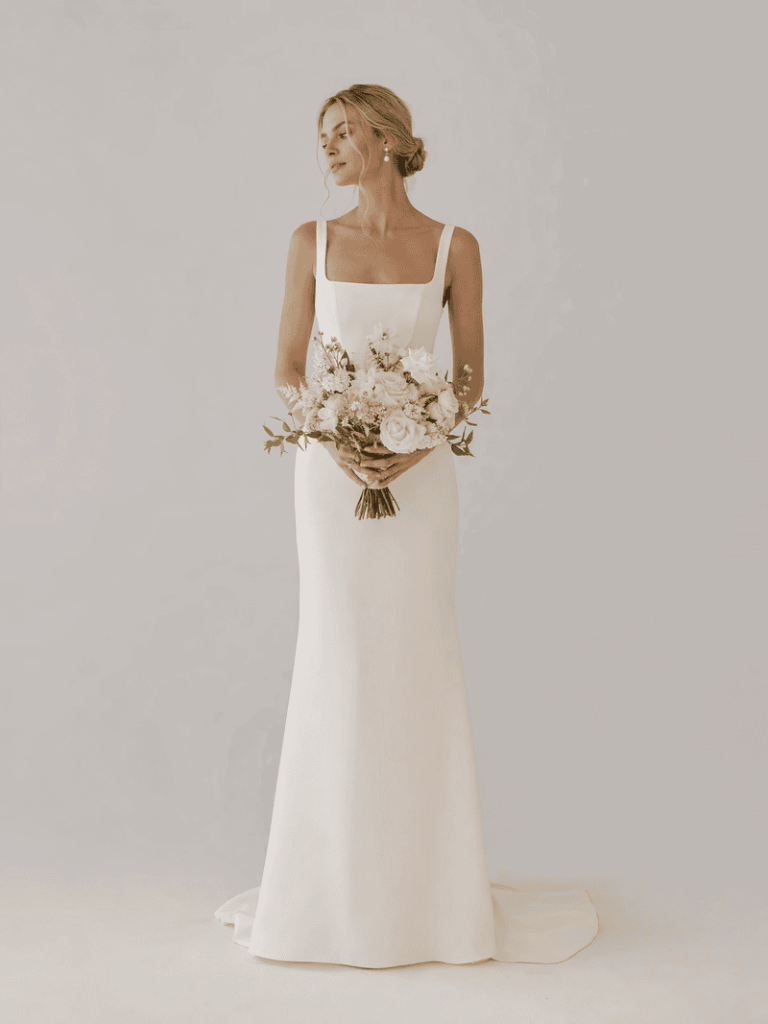
- Who it suits: Lean frames and athletic body types. Also flattering on hourglass figures looking to show their natural shape without added structure. Well-suited to less formal weddings, civil ceremonies, and smaller or outdoor settings.
- What to expect virtually: The sheath reads differently on different figures. It elongates a lean frame but can read flat on bodies that need structural contrast. Seeing it on your own photo makes this one of the clearer style decisions to test.
Empire Waist
The empire waist gown has a high seam — usually just below the bust — with the skirt flowing loosely from that point downward. The waist seam sits above the natural waist, which draws the eye upward and lets the skirt fall freely without any emphasis on the hips.
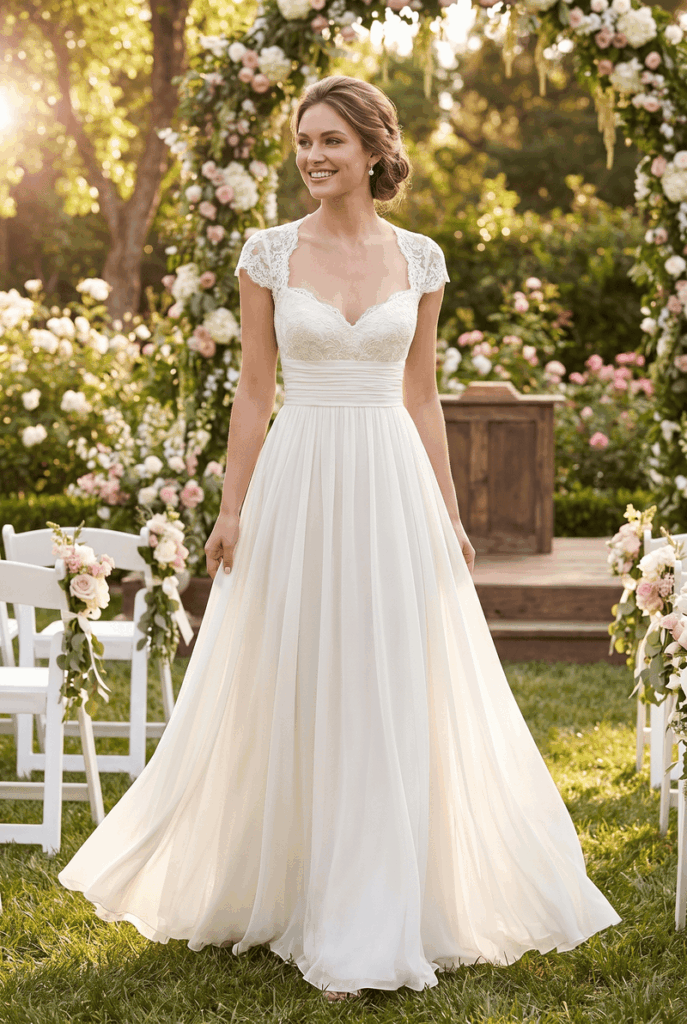
- Who it suits: Petite frames benefit from the elongating effect. Also a practical choice for brides who want a relaxed, unconstructed feel — or who are earlier in pregnancy and prefer a forgiving silhouette.
- What to expect virtually: The high seam is the defining feature. In a virtual preview, check where the empire seam falls in relation to your bust. Fit and placement at this point determines whether the style reads as elegant or shapeless.
Slip Dress
The slip dress has become increasingly popular at smaller, more intimate weddings. Inspired by lingerie silhouettes, it’s typically minimal in construction — often with spaghetti or thin straps, a bias-cut or straight-cut fabric, and minimal embellishment. It’s the anti-ballgown.
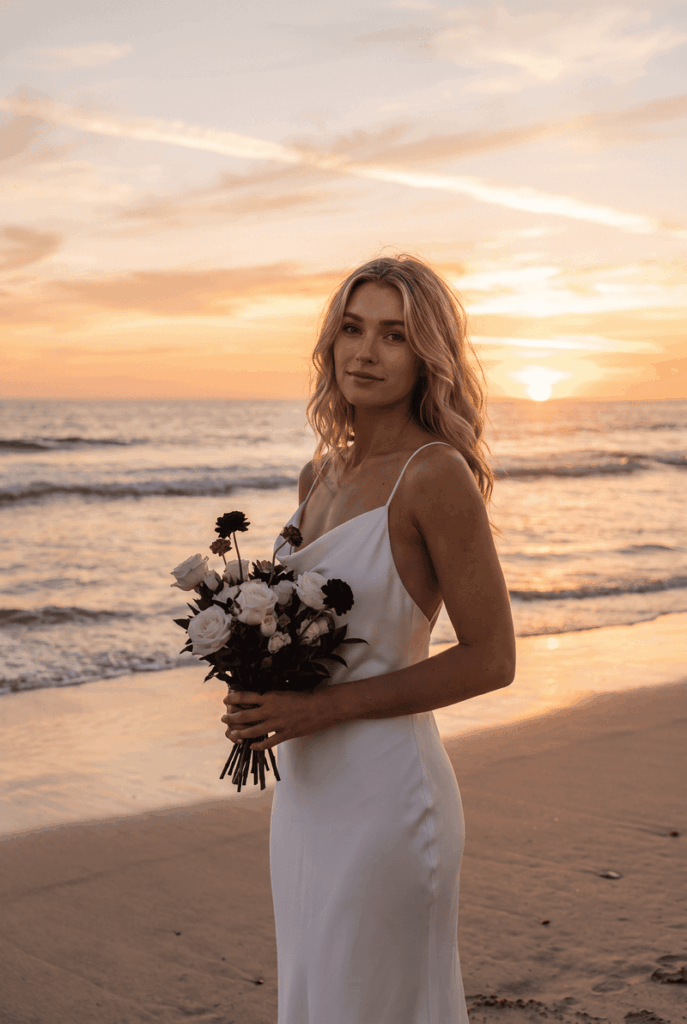
- Who it suits: Brides going for a modern, understated, or non-traditional aesthetic. Works best on lean or athletic frames where the minimal fabric has a shape to follow. Suits elopements, city hall ceremonies, garden parties, and beach weddings.
- What to expect virtually: The slip dress lives and dies by its fabric drape. In a preview, pay attention to how the fabric falls from the shoulders and whether the overall line feels balanced on your frame. This is one of the harder styles to evaluate from a model photo.
Mini / Tea-Length
Not every bride wants floor-length. A mini or tea-length wedding dress hits above the knee or at mid-calf. The aesthetic is completely different — more playful, more contemporary, and significantly more practical for dancing.
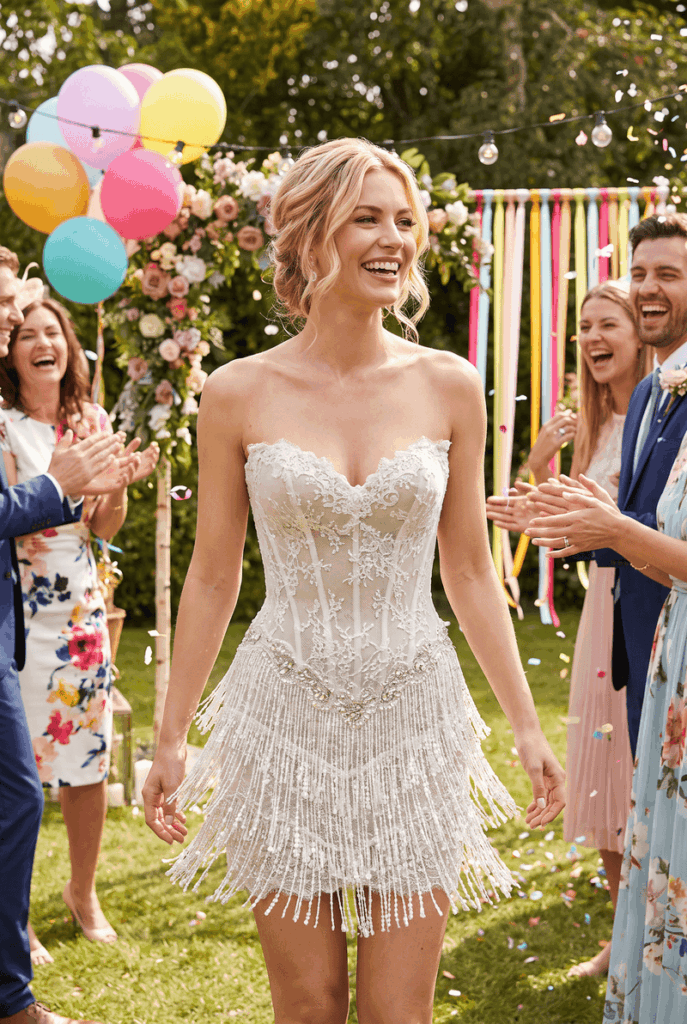
- Who it suits: Brides going for a fun, non-traditional look. Particularly effective on petite frames where a full-length dress can feel overwhelming. Also a strong choice for second weddings, elopements, rehearsal dinners, or any setting where comfort and freedom of movement matter.
- What to expect virtually: The hemline placement is the critical detail. Try the same style at different lengths to see what hits best on your specific frame before committing.
Tips for Getting the Best Results from Your Virtual Try-On
When you try on wedding dresses online with AI, the quality of your result depends more on your input photo than on the dress image. A few habits make the difference:
- Wear fitted clothing in your photo. Loose or baggy clothes obscure your figure and make it harder for the AI to map the dress accurately. Leggings and a close-fitting top are ideal. Full body, front-facing, even lighting.
- Generate multiple styles on the same photo. The differences between A-line and trumpet, or sheath and slip, are much clearer when you’re comparing two results side by side on your own figure — not imagining them separately.
- Treat the result as a shortlisting tool, not a final fitting. The virtual preview shows silhouette and proportion accurately. Fabric drape and exact fit still require a boutique visit — but arriving with a clear shortlist makes that appointment significantly more productive.
Try on Wedding Dresses Virtually with Fashion Diffusion
The boutique appointment isn’t going anywhere — but it works better when you’ve already done the exploratory work at home. Knowing you are an A-line bride, or that mermaid doesn’t suit how you move, or that slip dresses feel most like you — that clarity is worth arriving with.
Fashion Diffusion is where that clarity comes from. Work through all eight styles, compare them on your own photo, and come to your first fitting with a shortlist rather than an open question. New accounts start with free credits.
FAQ
A virtual wedding dress try-on uses AI to place a wedding dress onto a photo of you, producing a realistic preview of how a specific gown looks on your actual figure. You upload your own photo and a dress image, and the AI generates the result in seconds.
You can use any dress image, from a bridal brand’s website, a saved screenshot, a Pinterest save, or your own photo library. There’s no requirement to use a specific catalog, which means you can test any dress you find online.
The AI generates a realistic visualization showing the dress’s silhouette, neckline, waist placement, and hem on your figure. Fabric hand feel, exact measurements, and the experience of wearing the dress still require a boutique appointment. The value is in using it to shortlist styles and arrive at your fitting with a clear direction.
Yes. Virtual try-on shows how the dress looks on your photo. If you want to see multiple pieces together, Fashion Diffusion’s Mix & Match feature lets you layer several items onto your photo at once, giving you a fuller picture of the complete look.
Yes. Signing up for Fashion Diffusion gives you free credits to try on wedding dresses online with AI. If you need to generate a higher volume of results, paid plans are available.


