

From swatch books to instant visualisation — how one of London’s most celebrated custom outerwear designers brought the fabric selection process into the digital age with Fashion Diffusion AI.
What Is Katherine Hooker?
Katherine Hooker London is a British luxury fashion house specialising in custom-made coats and jackets, handcrafted one at a time in an East London studio. The brand has built its reputation on exceptional natural materials — British wool, Italian cashmere, washed linen, and silk — sourced from small-batch mills and selected by hand each season. Every piece is cut and tailored by the same small team who have worked with Katherine for over twenty years. It is a brand defined by a timeless, fabric-led aesthetic — structured, considered, and built to last.
The business runs on consultation. Clients visit the studio or attend one of the brand’s trunk shows — held across the UK and the United States — where they choose from over 150 fabric swatches and work with the team to design a coat that reflects their personal style. There is no off-the-shelf equivalent. Each garment is made once, for one person, from first appointment to delivery in four to six weeks.
The Challenge: Clients Are Choosing a Fabric They Can’t Yet See on a Coat
The custom clothing process is built on trust. A client selects a style and a fabric, agrees on trimmings, and then waits four to six weeks for a garment they have never seen on a body. Unlike ready-to-wear, where a customer can see a garment on a body before buying, bespoke clients are committing to a finished piece they can only imagine. That gap between decision and delivery is where client uncertainty lives — and managing it is one of the central challenges of any made-to-order fashion business.
Fabric Is the Design — But a Swatch Can’t Show the Full Picture
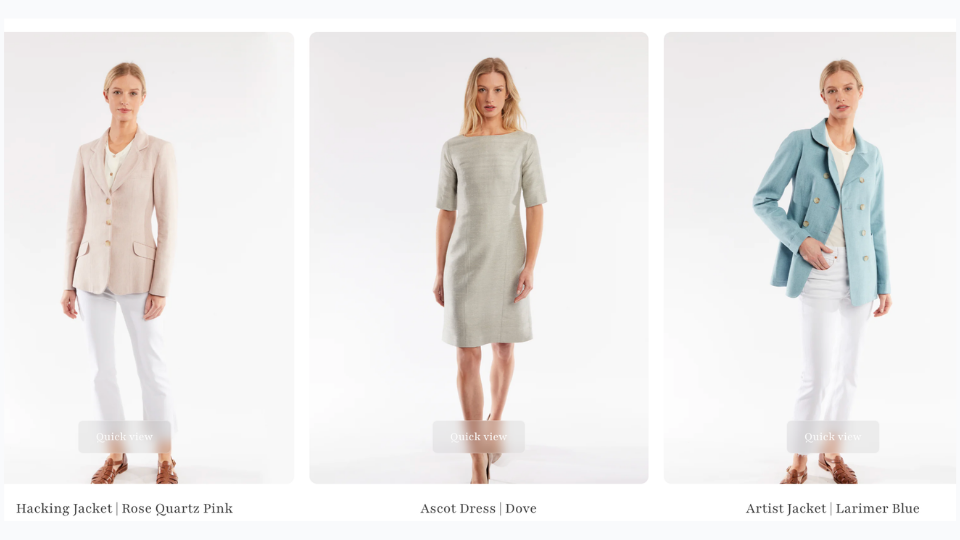
At Katherine Hooker, fabric choice isn’t a finishing detail. It defines the entire character of a coat. A structured tweed reads formal and architectural. A draped cashmere feels entirely different on the body. A washed linen has its own weight and movement. None of that comes through in a swatch.
When a client is choosing between two similar fabrics — two wools, two tweeds — the decision often comes down to instinct rather than a clear visual reference. Some clients walk away confident. Others don’t, and that uncertainty sits with them for the full four to six weeks until their coat arrives.
Remote Clients Make High-Stakes Decisions Without Physical Reference
The challenge is sharper still for clients who order online or attend trunk shows in the US. They may never have visited the London studio or handled the physical swatches. They are committing to a significant investment based on digital images and a designer’s guidance alone. The higher the price point, the more that gap between selection and delivery matters.
A Visual Library That Traditional Photography Can’t Solve
The natural fix would be a comprehensive sample archive — every fabric photographed on every coat style. But with 150+ fabrics and multiple coat styles, the permutations are too many and the costs too high. And any archive would be outdated the moment a new fabric arrived. What the brand needed was a way to show any fabric — and any colorway variation — on any coat style, on demand, without making the garment first.
How Katherine Hooker Uses Fashion Diffusion AI
Katherine Hooker uses a single Fashion Diffusion AI feature — Apply Fabric — with a clarity of purpose that reflects how the brand operates: one tool, used precisely, in service of a well-defined problem.
The Tool: AI Apply Fabric
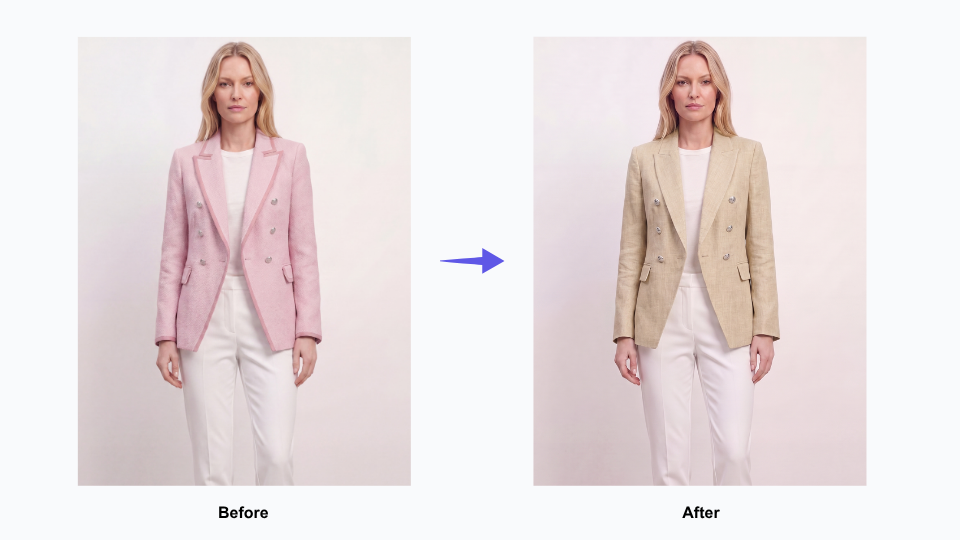
Apply Fabric takes an existing garment image and renders it in a different fabric. The output isn’t a flat colour overlay — it shows the texture, drape, and weight of the chosen material on the actual coat silhouette. The way a tweed sits at the shoulder. The way cashmere falls at the hem. The way linen creases at the sleeve. It is part of Fashion Diffusion’s broader AI Design capability — a set of tools designed to help brands experiment with fabric, colour, and style without making physical samples.
For a brand whose entire process hinges on fabric selection, this is a direct answer to the most consequential step in the consultation.
Before: What the Consultation Used to Rely On
Previously, the team worked with what bespoke fashion has always used: physical swatches, reference photographs of past garments, and years of expertise guiding clients toward the right choice. This worked — but it asked clients to make a leap. From a fabric square on a table to a finished coat on their body. For confident clients, that leap is manageable. For those who were less certain, or ordering remotely, it was a real source of doubt.
The New Workflow: Building a Visual Reference Library
Rather than generating visualisations reactively per client, the Katherine Hooker team used Apply Fabric to build a reference library — systematically applying the full range of available fabrics to their core coat styles. The usage data reflects this: multiple sessions over several weeks, each applying a different fabric to the same base garment, working through the entire material palette.
The result is a growing set of images that shows the same coat in navy tweed, olive cashmere, rust linen — each rendered with enough fidelity to make a genuine comparison. A resource that simply didn’t exist before, and couldn’t have been built through traditional photography at any reasonable cost.
In the Consultation: From Description to Demonstration
With this library in place, the consultation shifts. When a client hesitates between two fabrics, the team can show both — side by side, same style, same scale. When a remote client asks what a particular tweed looks like on the Braid coat, the answer is an image. Not a description, not a reassurance — an image.
The conversation moves from “I think you’d love how this tweed looks on the coat” to showing the client the coat in that tweed. That’s a meaningfully different kind of conversation.
What Changes When Clients Can See Before They Commit
The impact here isn’t measured in units or cost savings. It shows up in the quality of the moment when a client says yes.
Clients Decide With Confidence, Not Hope
A client who has seen a rendered image of their coat — in their exact fabric, on their exact style — arrives at their decision differently. The uncertainty that normally sits between selection and delivery narrows. They have a visual reference they can return to during the four to six weeks of production. What they receive feels like what they chose, because they actually saw it first.
Remote Consultations Become Genuinely Visual
For international clients, the shift is more significant. A client in New York who can see a rendered image of their coat, shared digitally before the order is placed, has a very different experience from a client working from swatches alone. The distance between London studio and US client shrinks. The investment feels better-anchored.
The visualisation doesn’t replace the consultation — it deepens it. It gives the team a shared visual language with clients who can’t be in the same room.
The Website Gains a New Kind of Content
The library built through Apply Fabric isn’t just a consultation tool. It’s content. A potential client browsing the Katherine Hooker website who can see the same coat rendered across multiple fabrics — navy tweed, ivory cashmere, sage linen — has a richer experience of the brand’s range. Images that start as studio reference assets become part of the full customer journey, from first discovery to order confirmation. And with Upscale, those assets can be brought to full web-ready resolution before they go live — making them ready for the kind of AI fashion photography workflow that high-end brands now use to produce professional imagery at scale.
Bring Your Custom Fabric Consultations to Life
Katherine Hooker is one of a growing number of bespoke and made-to-order fashion brands using Fashion Diffusion AI to help clients visualise custom orders before production begins.
Whether you run studio appointments, trunk shows, or an online custom order process, Apply Fabric gives you a way to show every client what their garment will look like in their chosen material — before the first stitch is made.
Try Fashion Diffusion AI free →
Some details have been presented as representative of typical use patterns and may not reflect the full scope of Mayo Chix’s operations. If you have questions about the content of this article or would like to clarify any information, please contact us at support@fashiondiffusion.ai.


