

When it comes to fashion e-commerce, if your product images aren’t converting, your image format might be the reason.
Most fashion sellers struggle with the same question: should you use flat lay images or on-model photos? The answer directly affects click-through rate, conversion rate, and even return rates.
Flat lays are fast, clean, and scalable—especially with an AI flat lay generator. On the other hand, on-model visuals build trust and help customers understand fit, which is why many brands now rely on AI virtual try-on to create realistic on-model fashion photos without the cost of traditional shoots.
But here’s the real problem: choosing the wrong format can quietly hurt your sales.
In this guide, we break down what actually works—based on conversion data, product types, and real e-commerce use cases—so you can choose the right strategy and start creating the best product photos for clothing immediately.
Flat Lay vs. On-Model Photos: Key Differences
Before diving into performance, it’s important to understand what each format does best.
- Flat lay photography presents clothing laid out on a surface, focusing on shape, texture, and details.
- On-model photos show garments worn by a person, highlighting fit, movement, and styling.
In terms of fashion product photography types, flat lays are typically used for clarity and efficiency, while on-model images are used for emotional connection and context.
This distinction is key when thinking about on-model photos vs flat lay performance in e-commerce.
What the data says about conversion rates
When comparing flat lay vs on-model photos in fashion e-commerce, multiple industry studies show a consistent pattern:
On-model images tend to increase conversion rates for apparel, while flat lay images perform better in browsing and discovery contexts.
According to BigCommerce, 78% of online shoppers want photographs that bring products to life, such as images showing items in use or on a model, as these visuals help them better understand the product before purchasing.
Similarly, research cited by Shopify shows that high-quality product images are one of the most important factors influencing purchase decisions, with better visual presentation directly impacting conversion rates and reducing hesitation.
User behavior data from Salsify further reinforces the importance of product imagery: consumers say product content is extremely or very important when deciding to buy, with 61% of them considering images and videos ranking as the most influential elements on product pages.
Category Differences
While the impact of flat lay and on-model photography varies across fashion e-commerce, the effectiveness of each format largely depends on the product type. Different categories require different levels of context, fit visibility, and detail emphasis to maximize conversion.
Here’s how performance typically breaks down:
- Dresses and fit-dependent apparel: On-model photos perform best because customers need to evaluate fit, silhouette, and movement. These products rely heavily on visualizing how the item behaves on a real body, making contextual imagery essential for conversion.
- Tops and everyday apparel: A combination of flat lay and on-model images works best. Flat lays help users quickly compare styles and details, while on-model photos provide clarity on fit and styling, supporting final purchase decisions.
- Accessories and detail-focused products: Flat lay images often perform equally well or better. Since these products are less dependent on fit, customers focus more on design, texture, and visual details, making clean, distraction-free imagery more effective.
When Flat Lay Photos Win
Flat lay photography conversion rate is most effective when the priority is clarity, scalability, and fast visual understanding rather than emotional or lifestyle storytelling. It is widely used in catalog-heavy and browsing-driven environments where users need to quickly compare products.
Detail-Focused Products (Texture, Print, Pattern)
Flat lay images work particularly well for showcasing fabric quality, surface detail, and print accuracy without visual distraction from styling or environment.
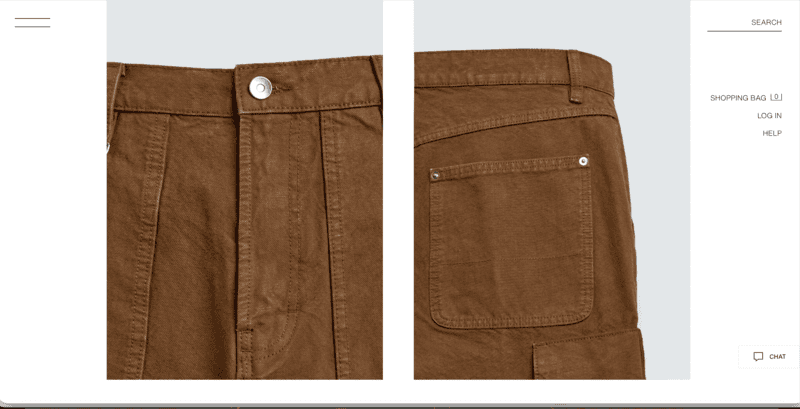
This is especially useful in categories like basics, streetwear, or textile-driven designs where material clarity influences purchase decisions more than fit visualization.
Marketplace Thumbnail Optimization
In grid-based environments such as Amazon, Etsy, or search result pages, products are often first evaluated at very small sizes. Flat lay or clean product-centered images improve readability and help products stand out during fast scanning behavior.
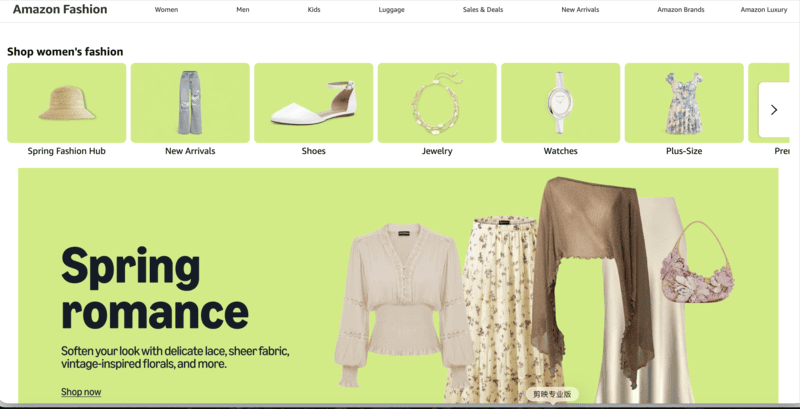
This aligns with general e-commerce image guidelines that emphasize clarity and simplicity for small-format product discovery.
Cost Efficiency for Large Catalogs
Flat lay photography is widely used in large-scale product catalogs because it significantly reduces production complexity, time, and cost compared to model-based shoots.
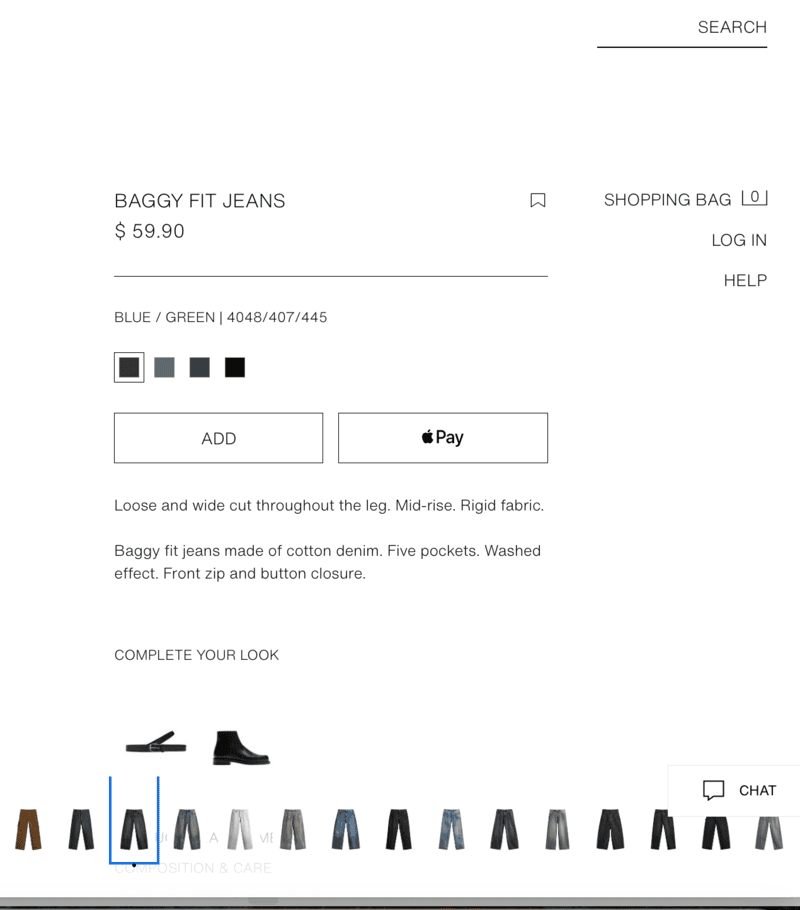
This makes it a practical choice for brands managing high SKU volumes where consistency and operational efficiency are more important than lifestyle storytelling.
When On-Model Photos Win
On-model photography becomes more effective when the goal is to increase purchase confidence, communicate fit, and create emotional or aspirational context around the product.
It is the dominant format in most modern fashion product detail pages.
Fit and Proportion Communication
On-model images help customers understand how clothing behaves on the body, including silhouette, length, drape, and proportion, which are key factors that cannot be communicated through flat lay alone.
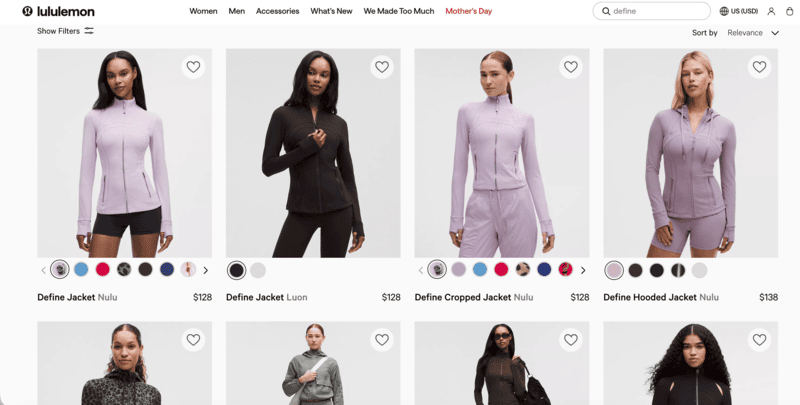
This reduces uncertainty, which is one of the primary drivers of hesitation in fashion e-commerce.
Lifestyle and Brand Storytelling
Many fashion brands use on-model photography to create a visual identity and emotional connection beyond the product itself.
Brands such as Everlane, COS, and Reformation consistently rely on model-based imagery across their product pages to reinforce brand positioning and styling context.
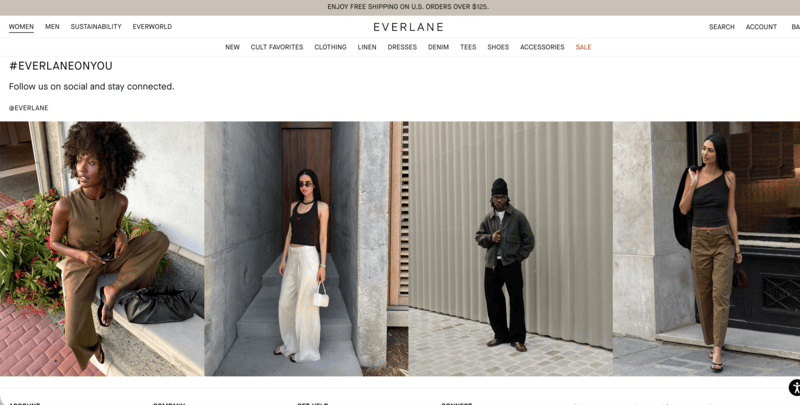
This approach shifts the product from a standalone item to part of a broader aesthetic narrative.
Higher-Ticket Items
For premium or higher-priced fashion products, on-model imagery plays a critical role in reducing perceived purchase risk and increasing conversion confidence.
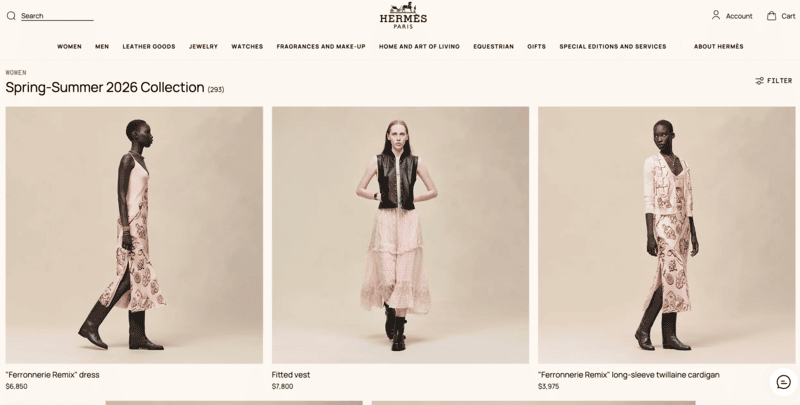
Customers are more likely to convert when they can clearly visualize how a high-value item looks in real-world usage conditions.
A High-Converting Product Image Strategy for Fashion E-Commerce
Instead of choosing between flat lay and on-model photos, the highest-performing fashion e-commerce brands structure their product images to guide users through the buying journey.
That is, on-model images attract and convert, while flat lays and detail shots support evaluation and decision-making.
This layered approach is widely used across modern product pages, where the first image captures attention, and subsequent images provide clarity and reassurance.
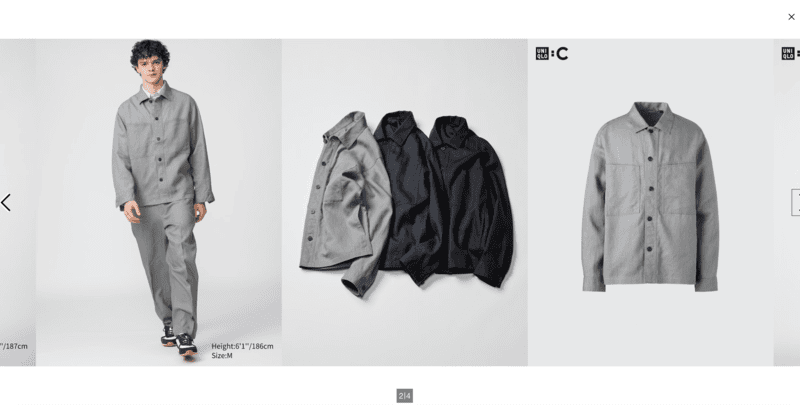
Use On-Model Images as Your Primary Visual
Your primary image should focus on immediate impact and clarity.
On-model photos work best here because they:
- Show fit and proportion instantly;
- Create a stronger first impression;
- Help users visualize the product in real life.
This is especially important in feeds, ads, and product listings where users decide in seconds whether to click.
Support with Flat Lay and Detail Images
After the initial click, users shift from browsing to evaluating. This is where flat lay and detail images play a critical role.
They help:
- Highlight fabric, texture, and construction;
- Provide clean, distraction-free views;
- Reinforce product quality and accuracy.
Together, these images reduce uncertainty and support the final purchase decision.
Make It Scalable with AI
One of the biggest barriers to implementing this strategy has always been cost and production complexity.
Now, AI makes it practical.
With an AI flat lay generator, you can produce consistent flat lay images across large catalogs without manual setups. And with AI virtual try-on, you can generate realistic on-model fashion photos without organizing photoshoots or hiring models.
This allows brands to build a complete, conversion-focused image system—without the traditional overhead.
How to Generate High-Converting Product Images with AI
Creating both flat lay and on-model product images used to require separate photoshoots, multiple teams, and significant production time.
Now, with AI fashion design tools like Fashion Diffusion, you can generate both formats from a single product image, reducing production time from days to minutes.
Step 1: Generate Flat Lay Images for Catalog and Detail Views
Start by creating clean, high-quality flat lay images that can be used for product galleries, marketplace listings, and detail-focused views.
With Fashion Diffusion, there are two practical ways to generate flat lay visuals depending on your needs.
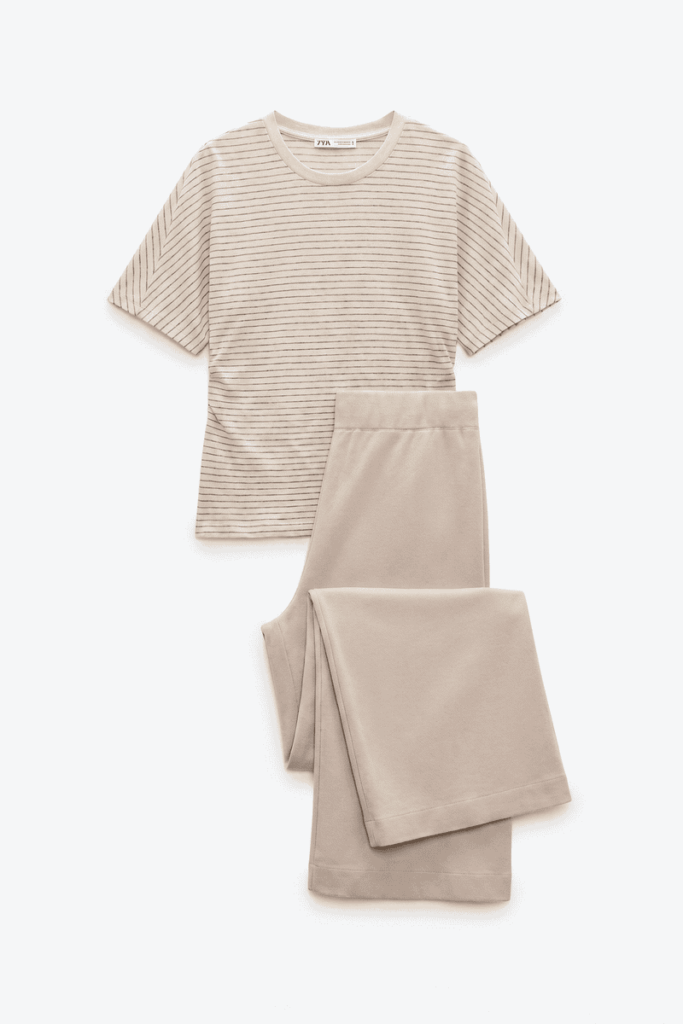
Option 1: Generate Clean White-Background Flat Lays Instantly
Use the AI flat lay generator to quickly convert your original product image into a clean, white-background flat lay.
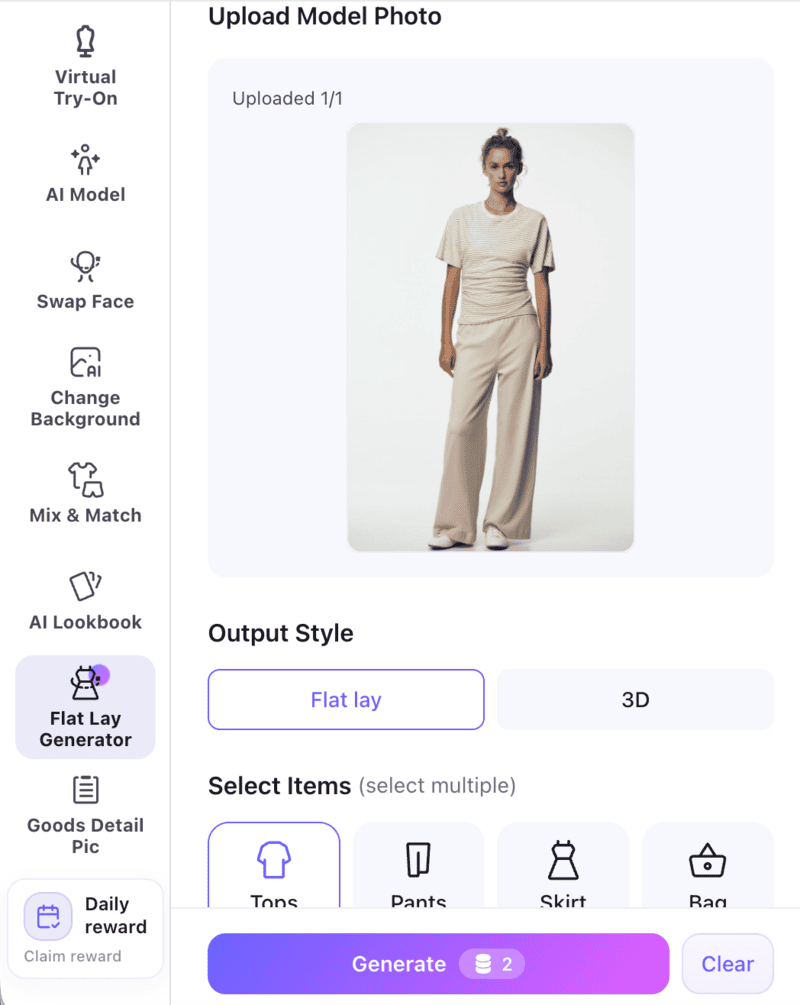
This approach is ideal for:
- Marketplace listings (Amazon, Etsy);
- Standardized product catalogs;
- Bulk image generation.
Time Consumption: about 40 seconds per image.
Option 2: Create Flat Lay + Detail Shots with AI Lookbook
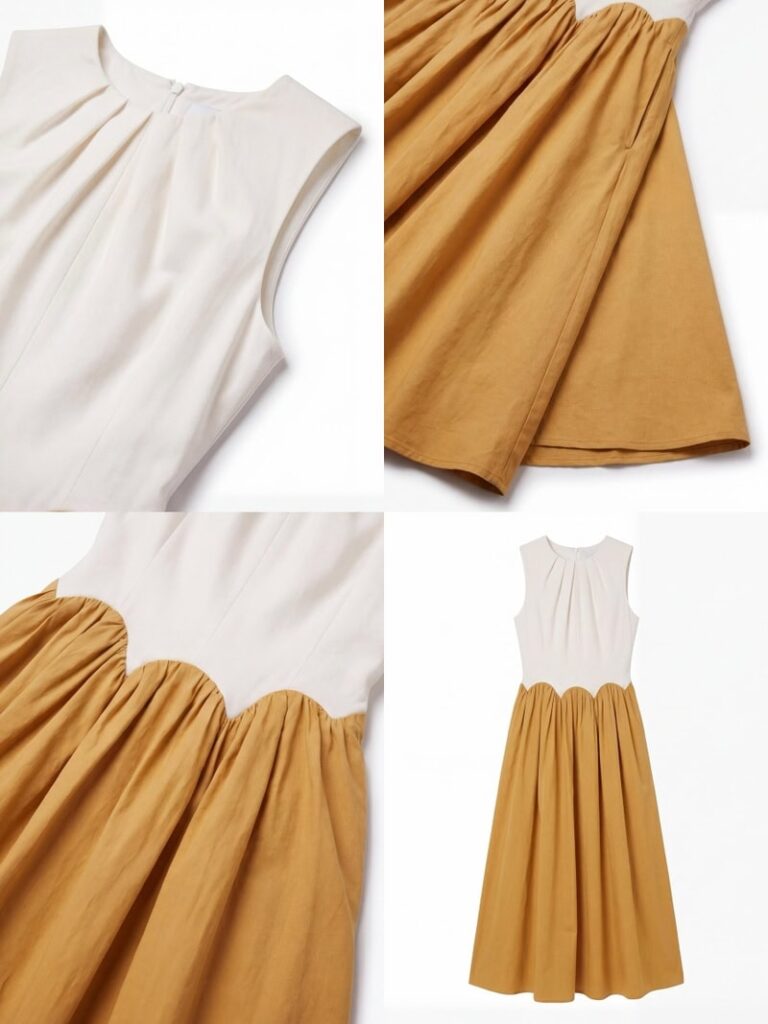
For more visually rich outputs, you can use the AI Lookbook feature in Fashion Diffusion.
Simply select the Flat Lay with Detail Shots template and upload a product image to generate a set of flat lay visuals along with close-up detail images.
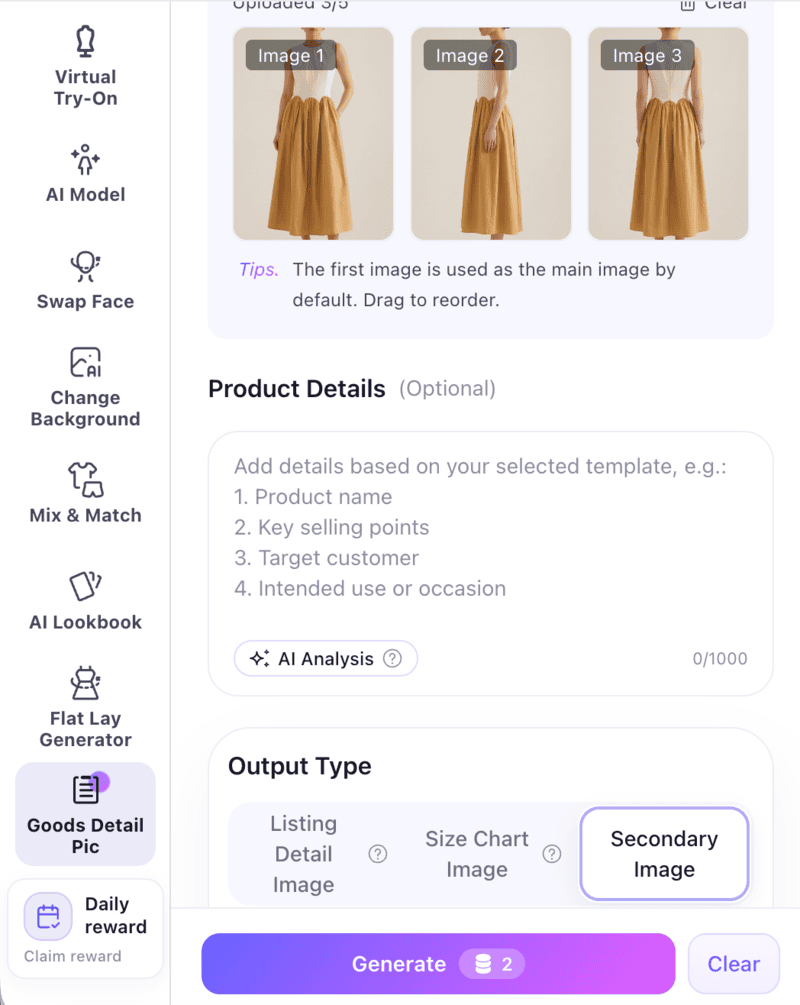
This approach works best for:
- Product detail pages;
- Marketing visuals;
- Showcasing texture and craftsmanship.
Time consumption: 1 to 2 minutes per image.
Step 2: Create On-Model Photos with AI Virtual Try-On
Next, generate on-model images to support conversion-focused use cases such as product detail pages, ads, and hero visuals.
Using AI virtual try-on, you can place your product onto a model and generate realistic on-body images that show fit, proportion, and styling.
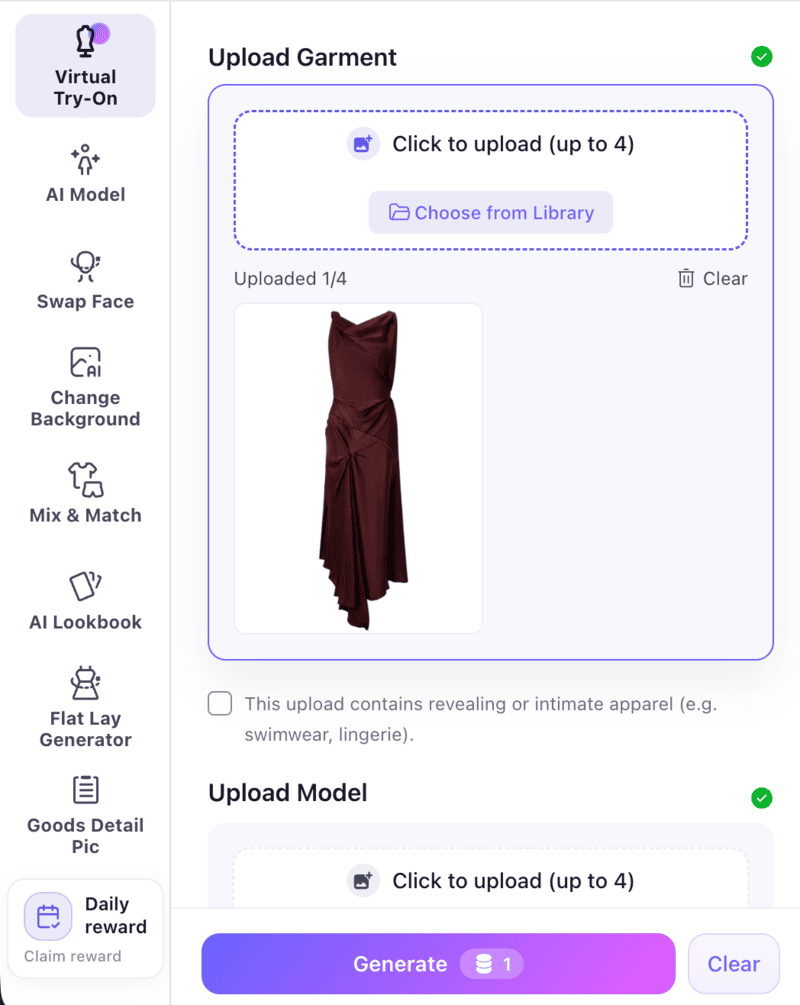
Time comparison:
- Traditional model shoot: 1–2 days (casting, shooting, coordination);
- AI virtual try-on: about 1 minute per image.
This eliminates the need for reshooting across different models, poses, or variations.
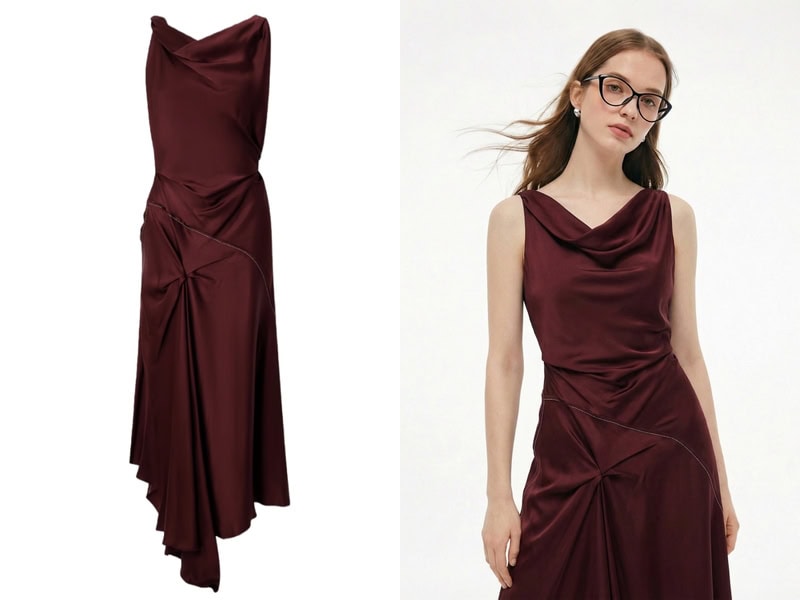
Step 3: Combine Both into a High-Converting Product Page
Once both image types are generated, structure them strategically to guide users through the buying journey.
- Primary image → on-model (for clicks and conversion);
- Secondary images → flat lay + detail shots (for evaluation).
Time impact:
- Traditional workflow (planning + shooting + editing): several days;
- AI workflow: complete image set in under an hour.
This makes it possible to test, iterate, and scale visual content much faster.
Start Creating High-Converting Product Images Today
Choosing between flat lay and on-model photos isn’t really the goal.
The most effective fashion e-commerce brands combine both—using on-model visuals to capture attention and drive conversions, and flat lay images to provide clarity, detail, and product understanding.
The challenge has always been production—until now.
With tools like an AI flat lay generator, you can quickly create clean, consistent product images for catalogs and listings at scale. And with AI virtual try-on, you can generate realistic on-model fashion photos that help customers better understand fit and styling.
Instead of choosing one format over the other, you can now build a complete, high-performing product image system—faster, more affordably, and at scale.
Start generating your first flat lay or on-model image today and see the difference it makes!
FAQ
The best-selling photos online often feature authentic, high-quality images of people in candid, emotional, or diverse scenarios, alongside versatile business, technology, and lifestyle content. Popular stock often features authentic, high-quality images.
The 20-60-20 rule in photography, popularized by wildlife photographer Paul Nicklen, is a time-management and creative strategy designed to maximize the quality and artistic value of a photoshoot. It involves spending the first 20% of time getting safe, technically perfect shots, the middle 60% exploring creative experiments, and the final 20% taking high-risk, artistic risks.
Common flatlay mistakes include using harsh, direct lighting, overcrowding the frame, and neglecting to create a clear focal point or narrative. Other errors, as outlined in some e-commerce clothing photo guides, involve poor focus, distracting background clutter, and improper editing (e.g., over-sharpening or wrong white balance).
The two primary types of e-commerce photography are studio (white background) shots and lifestyle photography. These approaches cover both practical product clarity and emotional, brand-driven storytelling, essential for enhancing sales.


