

In 2026, the “click and pray” era of online shopping—where you buy a shirt and hope it actually fits—is officially over. The fashion industry has undergone a massive digital transformation, and at the heart of it is AI Virtual Try-On.
Whether you are a consumer looking for the perfect fit or a brand aiming to slash return rates, these tools have become the gold standard. Here is your comprehensive guide to the top virtual try-on tools dominating the scene in 2026.
Why Virtual Try-On Tool is a Must-Have in 2026
The shift from 2024’s “clunky 3D avatars” to 2026’s “hyper-realistic generative AI” has made virtual try-on indispensable for three main reasons:
- Sustainability & Reduced Returns: “Bracketing” (buying multiple sizes to return most) is a thing of the past. VTO reduces return rates by up to 40%, significantly cutting down the carbon footprint of logistics by ensuring the first choice is the right one.
- Fabric Physics: Modern AI now understands how silk drapes versus how heavy denim structures itself. You aren’t just seeing a “sticker” on a photo; you’re seeing a physics-based simulation of fit that reacts to movement and body contours.
- Hyper-Personalization: Shoppers can now use their own selfies to create their own style fashion, allowing them to see exactly how a silhouette complements their specific body type. This is especially useful when experimenting with vibrant trends, as it allows users to visualize how bold colors cuts harmonize with their unique skin tone and personal aesthetic before committing to a bold new look.
Top 8 Virtual Try On Tools
Navigating the landscape of AI fashion in 2026 can be overwhelming given the sheer pace of innovation. To help you find the right fit for your needs—whether you are a brand looking to scale your catalog or a shopper refining your personal style—we have curated the eight most influential tools currently defining the industry.
These platforms represent the pinnacle of generative AI, offering everything from hyper-realistic textures to dynamic video simulations.
1. Fashion Diffusion
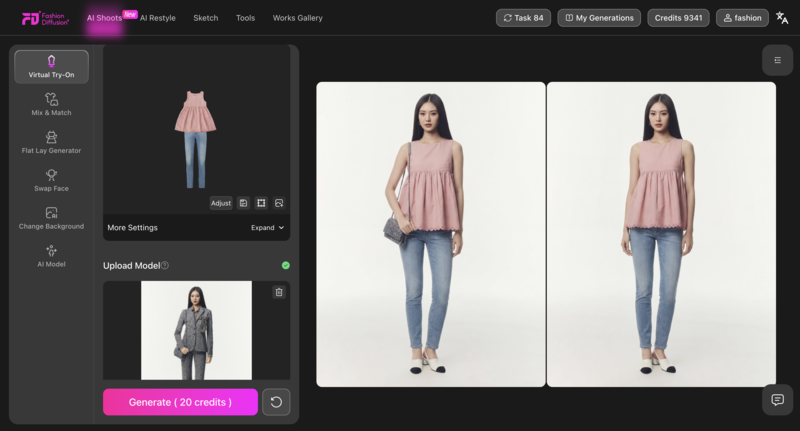
Fashion Diffusion is a powerhouse in generative image synthesis, specifically designed for high-fidelity garment swapping. Its standout feature is the ability to maintain texture and lighting consistency.
When you swap a silk blouse onto a model, the AI calculates how the surrounding light would naturally reflect off the fabric’s sheen. This makes it ideal for brands that need their digital assets to look indistinguishable from traditional studio photography.
2. FASHN.ai
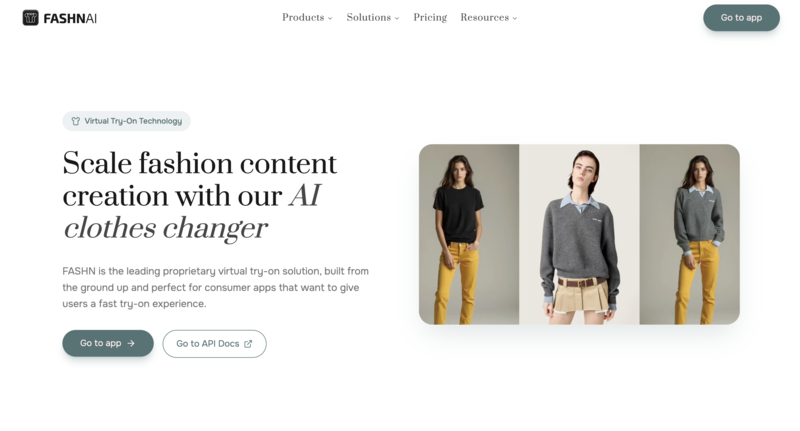
Fashn.ai is highly regarded for its segmentation-free processing and pixel-perfect accuracy. Unlike older tools, it processes the model and the garment in a single step, which significantly improves the fit of complex items like baggy jeans or layered outerwear.
It is particularly strong at handling fine details and occlusions, such as hair strands falling over a shoulder or cultural garments like hijabs. This makes it a top choice for developers and agencies that require high-resolution (up to 4K) outputs and diverse model representation.
3. Kolors Virtual
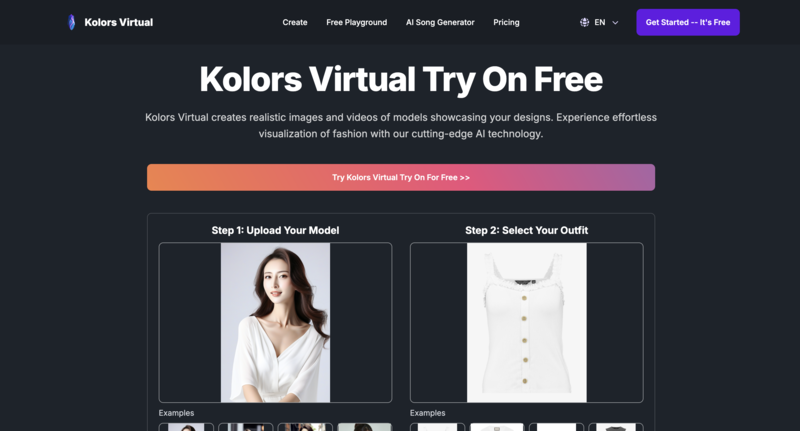
Powered by the advanced Kolors image generation model, this tool is the gold standard for SKU preservation. Unlike many AI tools that “hallucinate” or simplify patterns, Kolors excels at keeping intricate details like brand logos, complex embroidery, and specific textile prints perfectly intact.
It uses sophisticated human-pose adjustment algorithms, ensuring that even if the source image has a challenging angle, the garment will wrap realistically around the body while retaining every stitch of the original design.
4. Bandy AI
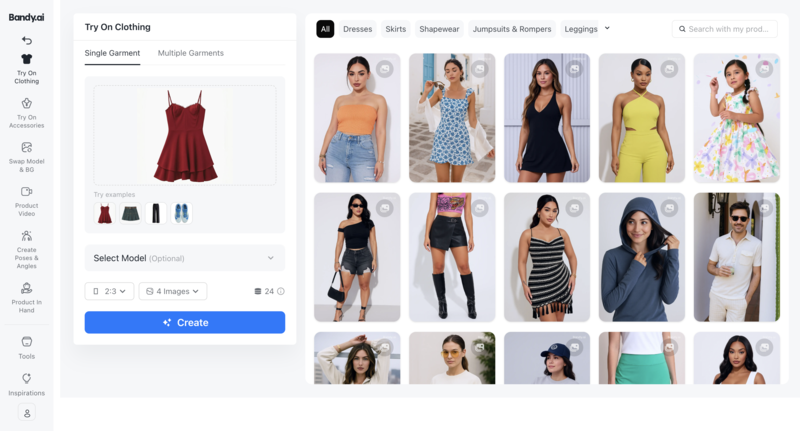
Bandy AI is essentially a conversational creative studio for fashion. Its unique “Chat-to-Image” feature allows users to refine results using natural language, such as “make the pose more relaxed” or “change the background to a minimalist studio.”
Beyond just shirts and dresses, it offers specialized modules for accessory try-ons (bags, sunglasses, hats) and “Mannequin-to-Model” conversion, which breathes life into flat product shots by mapping them onto dynamic AI-generated models with realistic drape and movement.
5. FitRoom
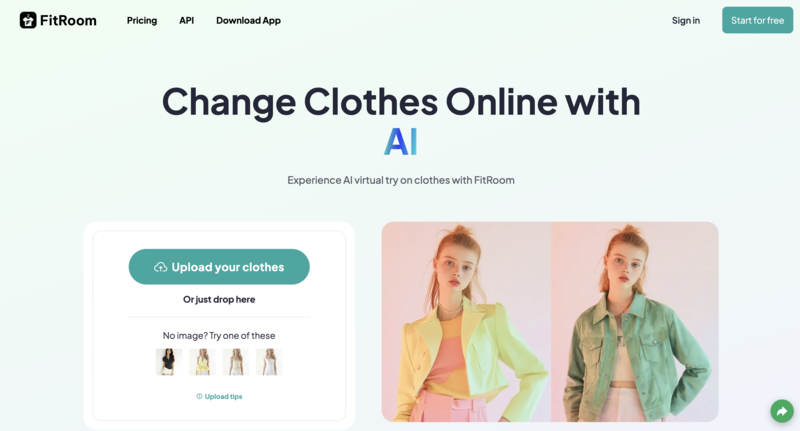
FitRoom shifts the focus toward the personal digital wardrobe. Available as a mobile-first platform, it allows users to build a “Smart AI Closet” by uploading their own photos to see how new items pair with their existing collection.
Its core technology focuses on accurate body-mapping; by analyzing a single selfie, the AI creates a virtual twin that helps shoppers understand how specific silhouettes—like oversized vs. tailored fits—will actually look on their unique frame before they hit the “buy” button.
6. WeShop AI
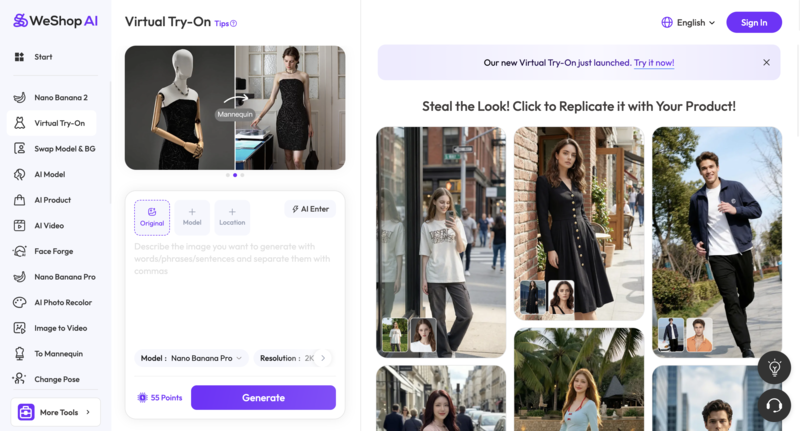
Specifically engineered for e-commerce efficiency, WeShop AI is the go-to tool for cross-border sellers and small brands. It can transform a simple “flat-lay” or mannequin photo into a professional campaign featuring diverse AI models of different ages, genders, and ethnicities.
This eliminates the need for expensive location shoots and model hiring, allowing brands to generate hundreds of high-quality marketing assets for their entire SKU catalog in just a few clicks.
7. Kling AI
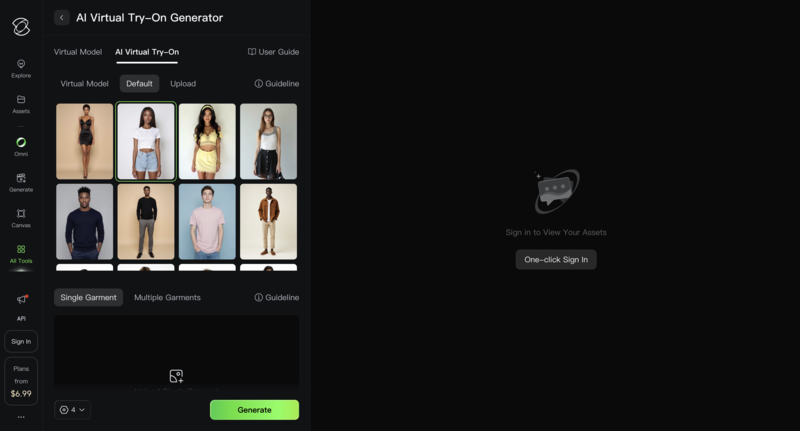
Kling AI represents the “next frontier” by moving from static images to Dynamic Video Try-On. Leveraging its powerful image-to-video capabilities, it can generate short clips of a model moving, walking, or turning while wearing the garment. This is crucial for high-fashion items where the “swing” of a skirt or the “flow” of a trench coat is a key selling point. It provides a level of fabric physics that static images simply cannot match, offering a 360-degree look at the garment in motion.
8. Camclo
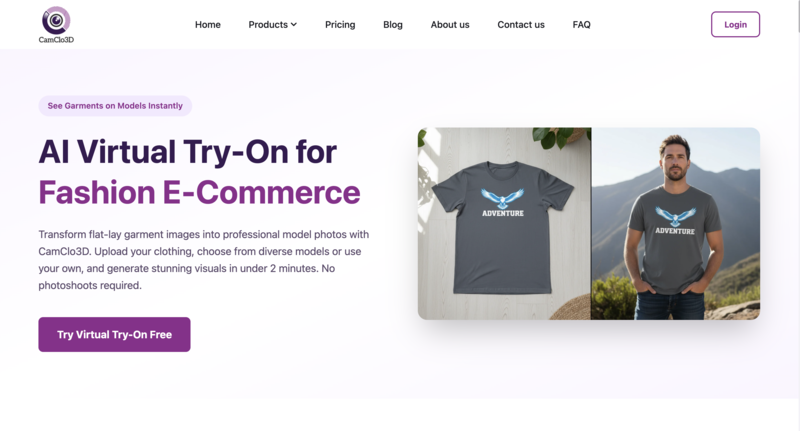
Camclo is an emerging leader focused on brand consistency and video versatility. One of its most impressive features is “Consistent Models,” which allows a brand to use the same AI-generated face and body type across an entire product catalog for a unified visual identity.
Beyond static photos, Camclo integrates seamlessly with video models like Kling or Veo, allowing users to turn a single garment photo into a high-definition cinematic video. It is a favorite for e-commerce teams that need both studio-ready stills and social-ready video content.
Comparative analysis: A quick look table
Here’s a quick overview to help you identify which one best fits your needs—whether you want a professional studio-style setup or just a fast, free online solution.
| Tool | Best For | Key Feature | Output Type |
| Fashion Diffusion | Accuracy | Realistic lighting & shadows | High-Res Image |
| Kolors Virtual | Branding | Precise SKU/Logo preservation | Image |
| Bandy AI | Creativity | Conversational pose/scene editing | Image |
| FitRoom | Personal Use | Digital closet & outfit matching | Image |
| Weshop AI | B2B/Sellers | Bulk AI model generation | Image |
| Kling AI | Realism | Dynamic fabric movement | Video |
| Fits | Convenience | Integration with Google Shopping | Image |
| Vybe | Influencers | Social media trend templates | Image/Short Clip |
Virtual Try-On Tips: How to Get More Accurate Results
To ensure your virtual try-on looks like a high-end professional photoshoot rather than an AI-generated glitch, it’s important to understand how to “collaborate” with the AI. Here is how to maximize the output quality of these platforms:
Optimize Your “Base” Photo
The quality of the AI’s output is heavily dependent on the “Input” image. If you are creating a Digital Twin, stand in a space with soft, natural lighting—ideally facing a window. Shadows or harsh overhead lights can confuse the AI’s understanding of your body contours.
Additionally, wear form-fitting base layers (like a simple tank top or leggings) for your profile photo. If the AI has to “guess” your silhouette under a bulky hoodie, the resulting try-on may look distorted or unnaturally scaled.
Master the “Drape” and Material Physics
Not all garments are created equal in the digital space. When using tools like Kling AI or Fashion Diffusion, pay attention to the fabric settings. For instance, if you are trying on a heavy wool coat, ensure the AI is not treating it like thin silk.
In 2026, many of these tools allow you to toggle “Fabric Weight” or “Fit Tension.” Adjusting these settings ensures that a “Slim Fit” shirt actually looks tight around the chest, while an “Oversized” hoodie retains its characteristic bulk and drop-shoulder effect.
Leverage “Scene Fusion” for Context
Virtual try-on is no longer just about the clothes; it’s about the vibe. Use the background-swapping features in tools like Bandy AI to place yourself in a relevant context.
Trying on a cocktail dress? Switch the background to a high-end lounge. Testing out hiking gear? Swap to a mountain trail. This “contextual try-on” helps you better visualize if the garment’s color and style actually suit the environment where you intend to wear it.
The “Multi-Angle” Verification
Don’t rely on a single front-facing shot. The most sophisticated users in 2026 use 3rd-party body-mapping or upload at least three angles (front, side, and 45-degree).
This allows the AI to build a 3D understanding of how the garment wraps around your waist and shoulders. For high-stakes purchases like wedding guest attire or tailored suits, this multi-angle approach is the only way to ensure a “perfect fit” before the physical item arrives.
Finding the Most Realistic AI Virtual Try-On Experience
The fashion landscape of 2026 has proven that the gap between digital convenience and physical reality is narrower than ever. Virtual try-on technology is no longer a futuristic novelty; it is an essential tool for the modern, conscious consumer and the forward-thinking brand. By eliminating the guesswork of online shopping, we are entering an era of higher confidence, fewer returns, and a more sustainable fashion cycle.
While the market is filled with various options, Fashion Diffusion stands out as the definitive leader for those who prioritize professional-grade accuracy and stunning visual fidelity. Whether you are a creator looking to visualize a new wardrobe or a business aiming to provide customers with an unparalleled shopping experience, Fashion Diffusion’s superior lighting engine and texture mapping offer the most realistic results available today. Don’t just imagine how you’ll look—experience it with precision.
Ready to transform your digital wardrobe? Start your journey with Fashion Diffusion today and see the difference that high-fidelity AI can make.
FAQ
With the integration of generative AI and physics engines, accuracy has reached over 90%. Tools like Fashion Diffusion don’t just mimic shapes; they simulate how fabric drapes and reflects light based on the environment.
No. Most 2026 tools require only a standard 2D selfie. While wearing form-fitting clothes for your base photo helps the AI map your silhouette more accurately, advanced algorithms can now “see through” bulky clothing to estimate your true dimensions.
Yes. Modern platforms like Camclo and Fashn.ai support multi-layering. For accessories like glasses, they use real-time facial anchors to ensure items move naturally with your head.


