

Designing a garment can feel overwhelming at first—sketching, fabrics, patterns, fit… Where do you even begin? The good news is that garment design becomes much more approachable when you break it down into clear, manageable steps.
Today, many beginners also use different kind of AI fashion design tools to visualize ideas faster and reduce trial-and-error. In this guide, we’ll walk through how to design a garment step-by-step, combining classic fashion design principles with modern AI-assisted workflows.
Design a Garment Step-by-Step by using AI fashion design tools
1. Find Inspiration & Define your Concept
Every garment starts with a clear idea, but inspiration doesn’t come out of nowhere. Most designers collect references before sketching anything. Common inspiration sources include Pinterest, Instagram, runway shows, street style photos, fashion blogs, and vintage archives.
At this stage, focus on:
- What type of garment you’re designing (dress, top, jacket, etc.)
- Who it’s for and when it will be worn
- The overall mood, silhouette, and style
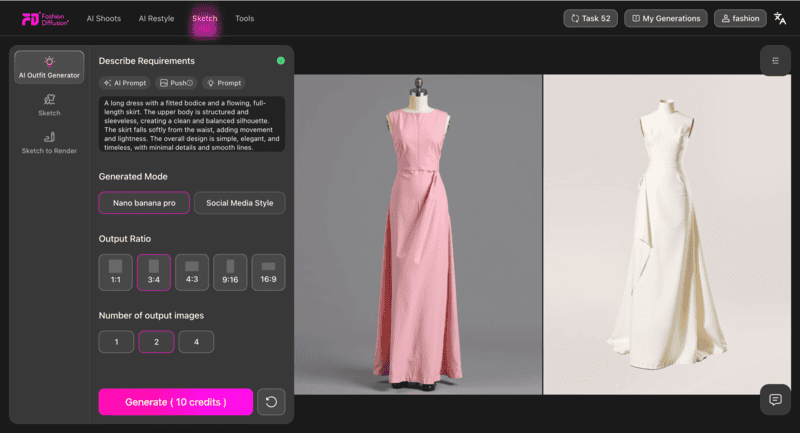
For beginners, AI tools can help organize scattered ideas into something visual. By combining reference images or keywords, Fashion Diffusion allows you to quickly explore different design directions and refine your concept before moving into sketching.
2. Sketch the Garment
Sketching transforms your concept into a visual design. You don’t need advanced drawing skills—your sketch simply needs to show shape, proportion, and key details.
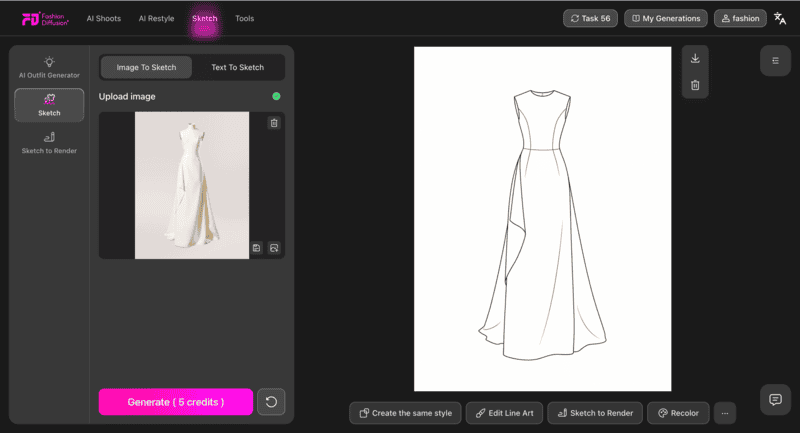
Traditionally, designers sketch on croquis templates. Today, beginners increasingly rely on AI sketch generator to speed up this process. If you’re still exploring different options, this overview of the best AI tools to design a dress online can help you understand which features matter most at this stage.
With AI-assisted tools, you can:
- Generate garment sketches from text prompts
- Convert reference images into clean fashion sketches
- Explore multiple design variations in minutes
Using an AI sketch generator reduces the pressure of hand drawing and lets you focus on design decisions rather than illustration technique.
3. Choose Fabric & Materials
Fabric choice plays a major role in how a garment looks and feels. The same design can appear structured, flowing, casual, or formal depending on the material.
When choosing fabrics, consider:
- Weight and drape
- Texture and stretch
- Comfort and seasonality
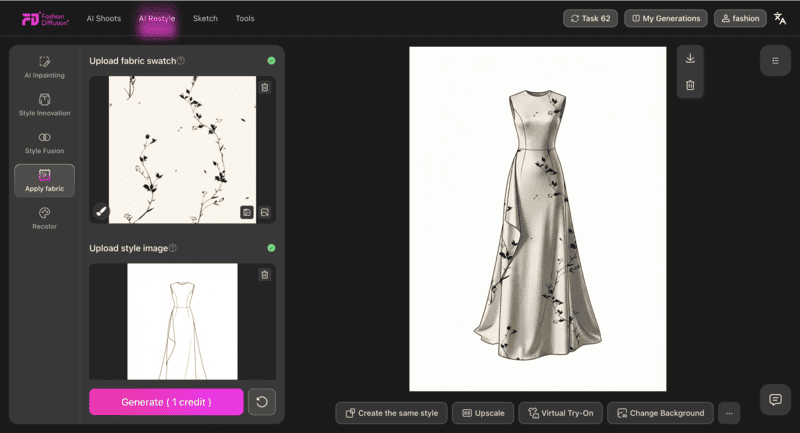
AI-powered visualization tools make this step much clearer for beginners. Instead of guessing, you can digitally apply different fabrics and colors to your design and immediately see how they affect the overall look—helping you make smarter decisions before physical sampling.
4. Develop the Pattern & Structure
Pattern making turns your design into something wearable. This step defines how flat fabric becomes a three-dimensional garment.
For beginners, pattern development often feels abstract. Having a clear digital render generated with AI tools helps bridge that gap. Visual references allow you to better understand:
- Garment structure and panel placement
- Proportions and balance
- Basic construction logic
Even if patterns are drafted manually, AI-generated visuals provide guidance and reduce trial-and-error during the technical phase.

5. Visualize Fit with Virtual Try-On
Before finalizing a garment, it’s crucial to understand how it fits on the body. Traditionally, this requires sewing a physical sample.
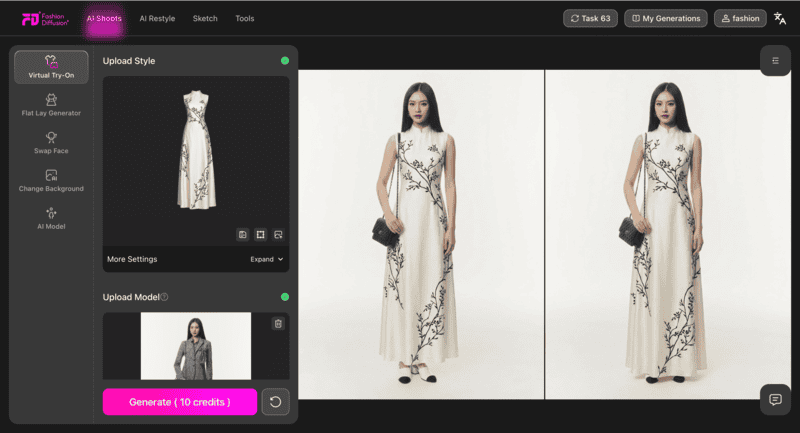
With Fashion Diffusion virtual try-on tool, designers can now preview fit and proportions digitally. Virtual try-on allows you to:
- See how the garment looks on different body types
- Evaluate length, volume, and silhouette
- Identify potential fit issues early
This step is especially valuable for beginners who are still developing an eye for fit and proportion.
6. Finalize the Garment Design
Once the design feels right, it’s time to finalize everything:
- Lock in fabric, color, and design details
- Refine construction elements
- Prepare visuals for presentation or production
High-quality AI-generated renders can be used for portfolios, lookbooks, or online showcases, making your garment design feel complete—even before physical production begins. If you’d like to see a practical example of this workflow, this guide on how to design your own dress online walks through the entire process step by step using digital tools.
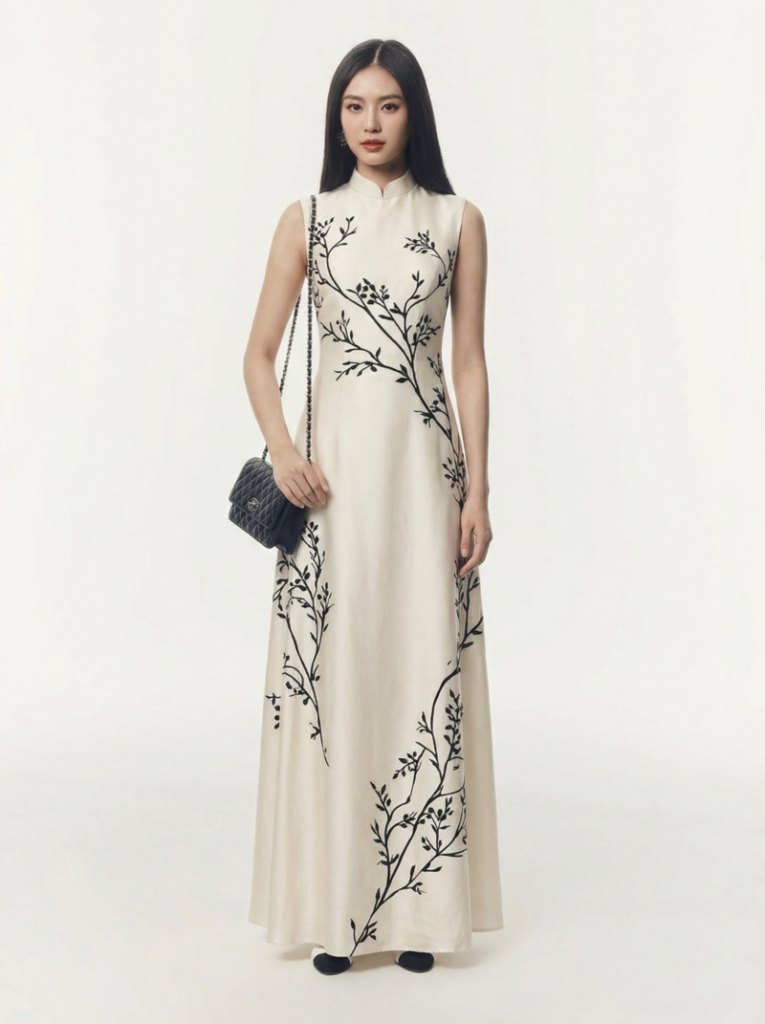
Tips for Beginners Designing Their First Garment
Start simple before attempting complex silhouettes
When designing your first garment, simplicity matters. Basic silhouettes like T-shirts, skirts, or simple dresses help you understand construction and proportion without getting lost in details. Mastering simple designs builds confidence and creates a solid foundation for more complex pieces later.
Focus on learning the process, not perfection
Beginner designers often get stuck trying to make everything perfect from the start. In reality, garment design is an iterative process. Early sketches, renders, and samples are meant to be improved, not finalized. Each version teaches you something new.
Use visual tools to test ideas quickly
Seeing a design is much more effective than imagining it. Visual tools—especially digital sketching, fabric application, and rendering—allow you to test ideas fast and make adjustments without starting over. This encourages experimentation and reduces hesitation.
Study existing garments to understand structure
Looking closely at real garments helps you understand how designs work in practice. Pay attention to seams, panels, and how fabric behaves on the body. Reverse-engineering existing pieces is one of the fastest ways to improve your design thinking.
Don’t skip fit visualization—it saves time later
Fit plays a huge role in whether a garment looks polished or unfinished. Even if you’re not sewing a physical sample yet, visualizing how a design sits on the body—through virtual try-on or renders—can reveal proportion and balance issues early on.
From Concept to Creation: Designing with Confidence
Learning how to design a garment is less about talent and more about understanding the process. By breaking garment design into clear steps, beginners can move from abstract ideas to realistic designs with much more confidence.
Today, combining traditional design thinking with digital tools makes this journey smoother. Visualizing sketches, fabrics, and fit early on helps reduce uncertainty and allows you to focus on creative decisions rather than technical roadblocks.
If you’re ready to take your first idea beyond imagination, start using Fashion Diffusion to experience your first garment design—from concept to visualization, all in one workflow.


