

A size XXXL shopper finds the perfect dress. The color is right. The silhouette looks good. But every model on the product page wears a size 6. She closes the tab.
This happens millions of times a day. The shopper wasn’t uninterested. She just couldn’t picture herself in it. For brands selling in XXXL and XXXXL sizes, that gap between what’s shown and who’s shopping is one of the most direct revenue leaks in e-commerce. The solution is a XXXL size AI model generator that reflects the actual body buying the product..
The XXXL Size Market Opportunity in 2026
The numbers make the case before anything else does. The global plus size clothing market is projected to reach $339.6 billion in 2026, expanding at a 6.2% CAGR through 2036. North America alone accounts for 44% of that figure. This is not a niche segment — it’s one of the largest and fastest-growing categories in fashion retail.
But the fashion content serving that market tells a different story. According to industry data, 58% of brand campaigns use no models above size 14. And 42% of plus size consumers say mainstream brands’ campaigns don’t represent them at all. The market exists and is growing. The content does not keep up.
That disconnect has a direct commercial consequence. Research from True Fit found that shoppers who could see accurate fit guidance converted at 7.4% from product page to cart. Those who couldn’t converted at 2.4%. The principle extends directly to body type representation. When XXXL and XXXXL size shoppers can see how a garment sits on a body like theirs, the guesswork disappears. Conversion follows.
International Size Converter: Find Your XXXL or XXXXL Size in Any Market
Size labels for XXXL and XXXXL vary significantly across US, UK, EU, CN, JP, and IN markets — the same body measurements can carry six different labels depending on where the garment was made. Use the converter below to find your size instantly across all major sizing systems.
Why Traditional Solutions Don’t Scale
Brands that recognize this gap usually try one of three approaches. The first is booking dedicated plus size model shoots — high cost, low scalability. The second is adjusting body proportions in Photoshop — faster, but prone to garment distortion. The third is generating AI visuals — accurate, scalable, and cost-efficient.
| Traditional Photoshoot | Photoshop Adjustment | AI Generation | |
| Cost per image | High | Medium | Low |
| Speed | Slow | Medium | Fast |
| Garment accuracy | High | Low (distortion risk) | High |
| Scalability | Low | Low | High |
| Size range coverage | Limited by model | Prone to warping | XXXL to XXXXL |
The fundamental problem with the first two approaches is the same. Both treat XXXL and XXXXL size content as an afterthought — handled manually, one image at a time. AI removes that constraint. The same workflow that produces a standard-size image produces a XXXL one, at the same speed and cost.
How to Generate XXXL and XXXXL Size Fashion Visuals with AI
Generating XXXL size fashion visuals with AI doesn’t require a new photoshoot or any specialist software. Just an existing product image and a few inputs. Fashion Diffusion’s XXXXL size AI model generator produces realistic XXXL and XXXXL size visuals directly from that starting point.
Step 1: Prepare your input
Start with a clear model shot. Clean product images with visible fabric detail and good lighting produce the most accurate outputs. The AI uses this as the basis for generating the plus size version, preserving garment color, texture, and construction details.
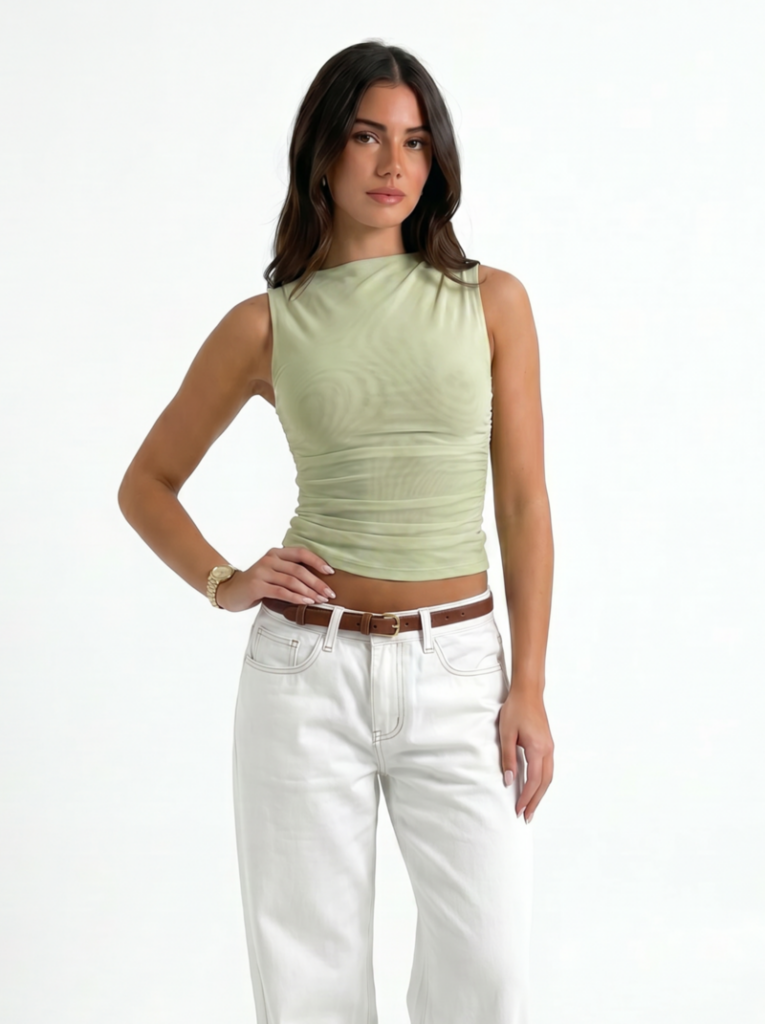
Step 2: Specify the body type and output style
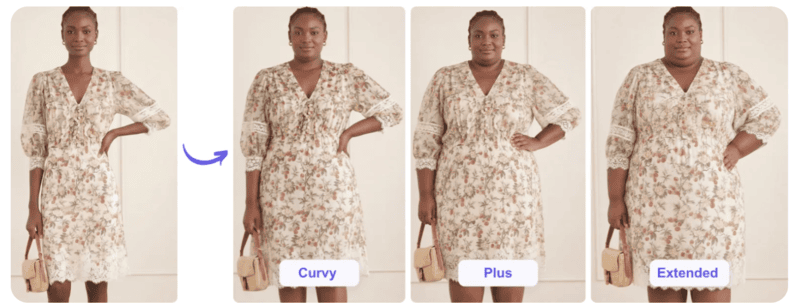
Choose a body size from three options: Curvy, Plus, or Extended. For XXXL and XXXXL size output, Plus or Extended will typically be the right fit. From there, add any extra notes to shape the result — background setting, lighting style, garment details, or any other specifics you want the AI to account for. The more precise the notes, the more consistent the output across a batch.
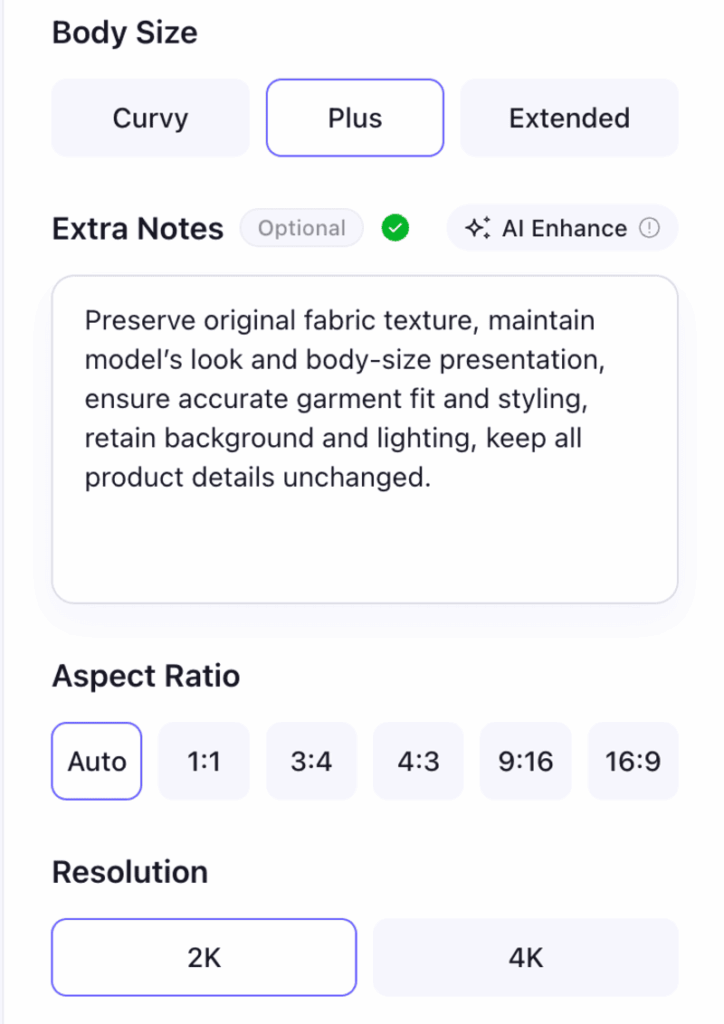
Step 3: Generate, review, and export
Results are ready in seconds. Review for garment accuracy — check that the fabric sits correctly at the waist, shoulders, and hem for the target size. Regenerate with adjusted inputs if needed. Export in high resolution for product pages, ads, or campaign materials.
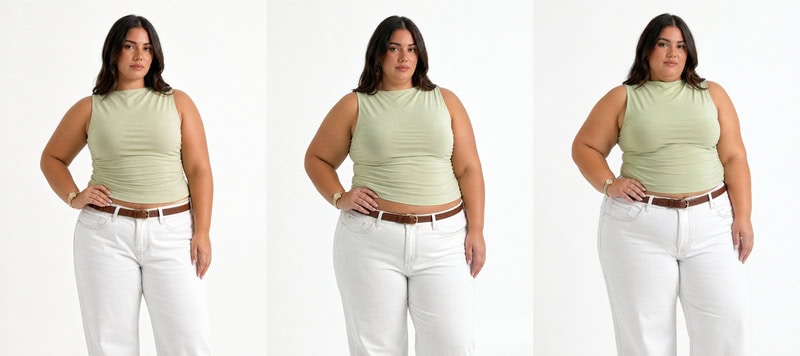
What to Look for in AI-Generated XXXL/XXXXL Size Images
Not all AI-generated plus size images are equal. Whether you are producing XXXL size 2026 campaign visuals or XXXXL size 2026 product shots, check these four things before publishing:
- Garment fit accuracy. The waistline, shoulder seams, and hem should look like the garment actually fits — not like a standard-size image that’s been scaled up. Distortion shows up at these points first.
- Fabric behavior. A structured blazer should hold its shape. A jersey dress should drape. A silk blouse should flow. If the fabric looks wrong for the material, regenerate with a more specific prompt.
- Body proportions. Shoulders, hips, and limbs should relate to each other naturally. A XXXL/XXXXL body that reads as a standard body with added volume will look off — even when the garment itself is accurate.
- Lighting consistency. If the garment and background suggest different light sources, the image loses credibility. This matters most for lifestyle outputs; studio backgrounds are usually neutral enough to avoid the issue.
A result that passes all four is ready to use.
How Brands and Shoppers Use XXXL/XXXXL Size AI
The same tools serve different needs depending on who’s using them and what they are trying to achieve.
E-Commerce Brands and Retailers
For brands managing large catalogs, the core use case is consistent size representation across product listings. Rather than shooting each SKU separately on a plus size model, brands can use Fashion Diffusion’s plus size model generator to generate XXXL/XXXXL size model images from existing product shots. Visual style stays consistent across the catalog without additional photography sessions.
The output is used on product pages, size guides, and marketplace listings. For a significant share of shoppers, seeing a garment on a XXXL or XXXXL body is the deciding factor.
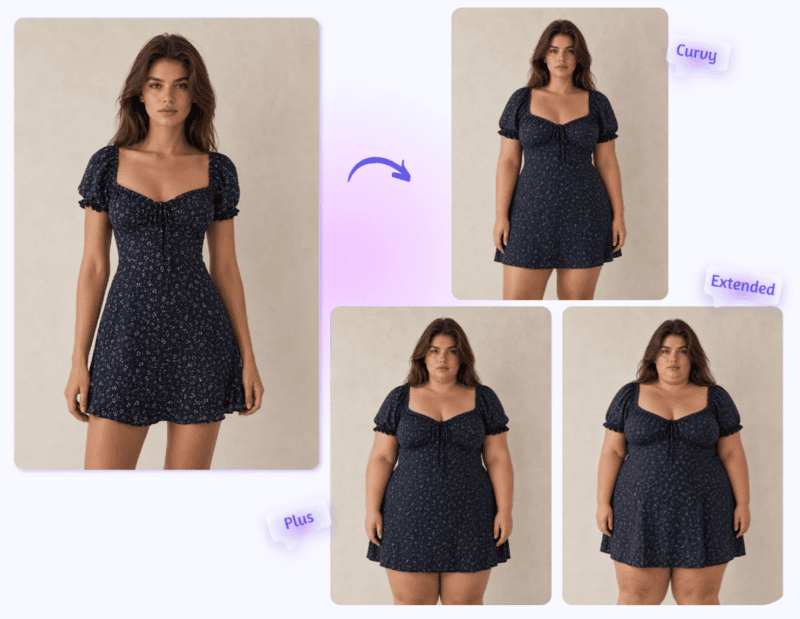
Content Creators and Social Media Teams
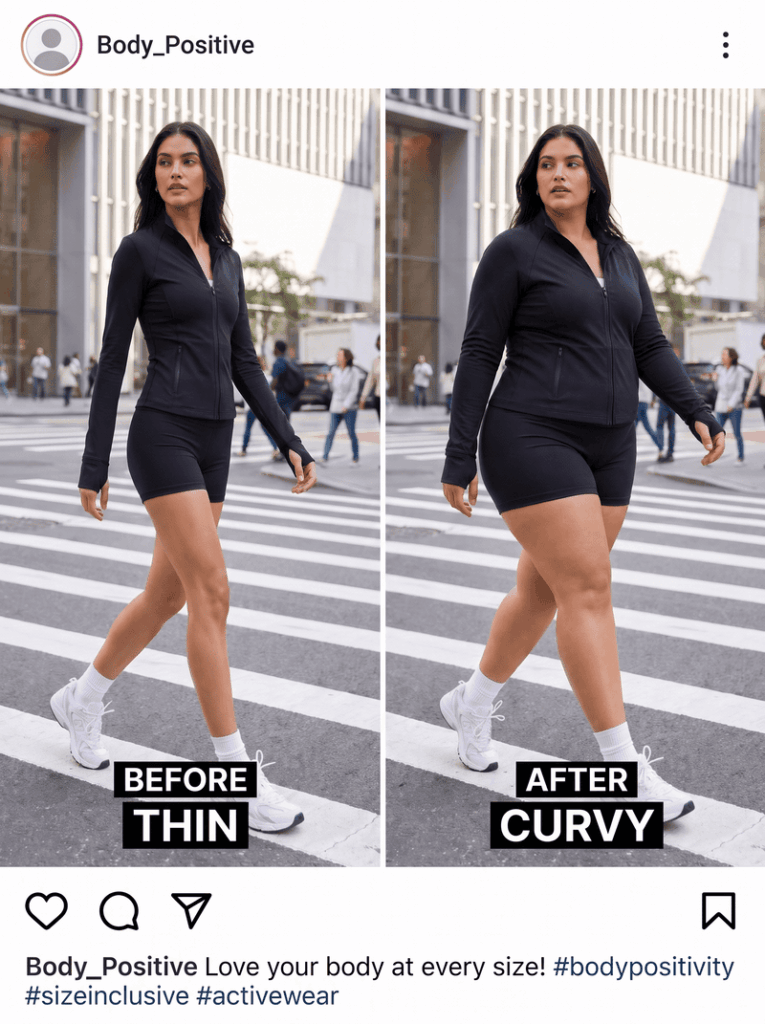
Content teams working with existing photo libraries use AI differently. They take a shoot that’s already been done — with a standard-size model — and generate XXXL and XXXXL versions of the same looks. All for inclusive content, without reshooting. Fashion Diffusion’s AI fat generator converts any existing model image into a realistic plus size version while keeping the identity, pose, and background intact.
This approach lets a team extend the reach of a single photoshoot across a much wider range of content without additional production cost.
Fashion Designers and Product Teams
In the design and development stage, AI-generated plus size visuals help teams evaluate how a garment’s silhouette translates across size ranges — before samples are produced. Seeing a design on a XXXL or XXXXL body early in the process surfaces proportion and drape issues that wouldn’t show until a physical sample is made. That means fewer revision cycles and lower sample costs.
Plus Size Shoppers
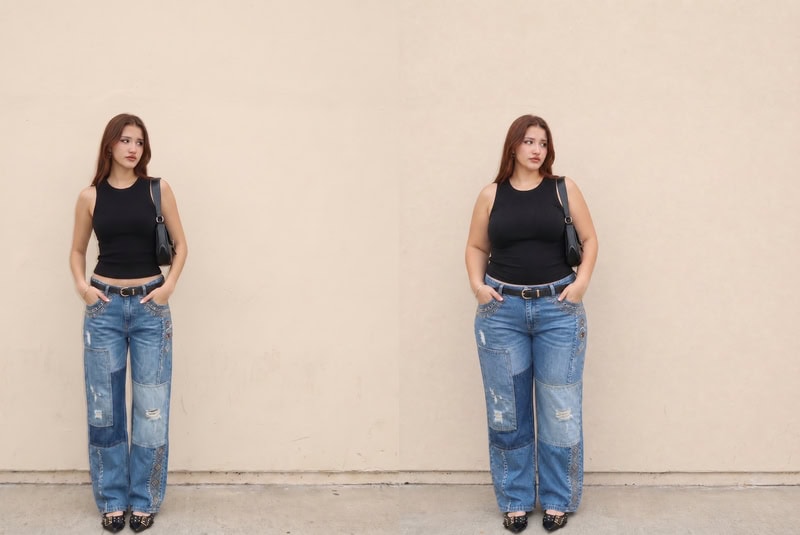
For XXXL and XXXXL shoppers, the problem is simpler and more personal. Most product pages show clothing on bodies that look nothing like theirs. AI changes that dynamic directly. Instead of guessing how a dress will sit on a size XXXL frame, shoppers can see it on their own body before they buy. The uncertainty that causes hesitation, size bracketing, and returns gets removed at the point where purchase decisions are made.
XXXL Size in 2026: Start Where the Market Already Is
The plus size market in 2026 is too large and too commercially significant to serve with one or two campaign images per season. For brands that need to show XXXL size in 2026 — and XXXXL size 2026 — at catalog scale, Fashion Diffusion’s AI tools generate realistic visuals from existing product shots. No additional photography budget required.
New accounts start with free credits. Start generating plus size AI model images on Fashion Diffusion and see what consistent size representation looks like across your product line.
FAQ
A XXXL size AI model is a digitally generated fashion model rendered at XXXL proportions. As demand for XXXL size 2026 content grows, AI tools make it possible to create these from product images or text descriptions, producing realistic visuals of how a garment looks on a larger body type. No physical model or studio session required.
XXXL (3XL) typically corresponds to US sizes 22-24, with a chest/bust measurement of approximately 50-52 inches. XXXXL size — also written as 4XL — corresponds to US sizes 26-28, or approximately 54-56 inches. Both sit within the extended plus size range that most standard fashion campaigns still don’t represent.
Any brand selling apparel in extended sizes benefits from accurate body representation. E-commerce brands with large catalogs, fast fashion retailers, and independent designers producing inclusive lines all use AI-generated plus size visuals — for sizes that would be impractical to shoot traditionally.
Yes. Images generated with Fashion Diffusion can be used commercially across product listings, advertising campaigns, social media, and marketing materials.
Yes. New Fashion Diffusion accounts include free credits that can be used across tools including the plus size model generator and AI fat generator. Paid plans are available for higher volume generation.


