

Fashion brands are rethinking their visuals as the debate between AI virtual try-on and traditional photoshoots heats up. Facing rising costs and slow production times, many clothing brands are turning to AI virtual try-on as a faster, more flexible, and cost-effective alternative. But how does it really compare to classic studio shoots in terms of cost, speed, and quality? Let’s break it down.
What is Virtual Try-On
AI virtual try-on is a technology that allows brands to create realistic on-model images without relying on a traditional photoshoot. Instead of booking models, studios, and photographers, you simply upload a garment image, and the system generates a fully styled look on a digital model.
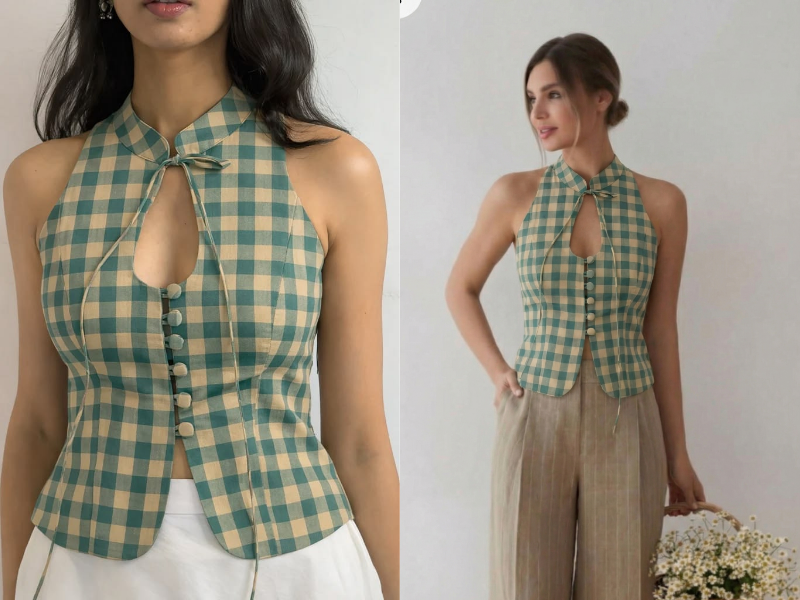
At its core, this process uses advanced image genearation (often diffusion-based) to understand how fabric fits, drapes, and interacts with lighting. The result is a visual that looks close to a real studio shot—without the usual production complexity.
In fact, many brands are already using this approach as a practical photoshoot alternative for clothing brands, especially when they need to scale content quickly. If you’re curious how this works in practice, this guide on AI fashion photos without photographer explains how to create on-model images without hiring models or setting up a shoot.
What makes AI virtual try-on so appealing is the flexibility. You’re no longer limited by model availability, location, or time—you can instantly test different body types, poses, and backgrounds, all from a single product image.
Fashion Diffusion make this even more accessible. With its virtual try-on feature, you can turn one clothing image into multiple high-quality visuals in minutes, making it easier to scale content without scaling production effort.
Cost Comparison: Virtual Try-On vs Photoshoot
Let’s start with the biggest concern for most brands: cost. When comparing virtual try-on cost comparison with traditional shoots, the gap is not just noticeable—it’s massive.
A typical studio photoshoot involves multiple layers of spending: model fees, photographer rates, studio rental, styling, makeup, lighting setup, and post-production. Even for a small shoot, costs can quickly add up to hundreds—or even thousands—per look. And if something needs to be changed? That often means reshooting.
AI virtual try-on flips this model completely. There’s no need for a physical setup, which removes most of the fixed costs. Instead, brands can generate on-model images at a fraction of the price, making it one of the most effective ways to reduce fashion photography cost.
Another hidden factor is scalability. With traditional photography, costs grow linearly with the number of SKUs. More products = more shoots. But with AI, once you have the garment image, generating additional visuals becomes significantly cheaper.
This is where tools like Fashion Diffusion become especially practical. Instead of planning multiple shoots, you can create different model looks, backgrounds, and variations instantly—without increasing your budget.
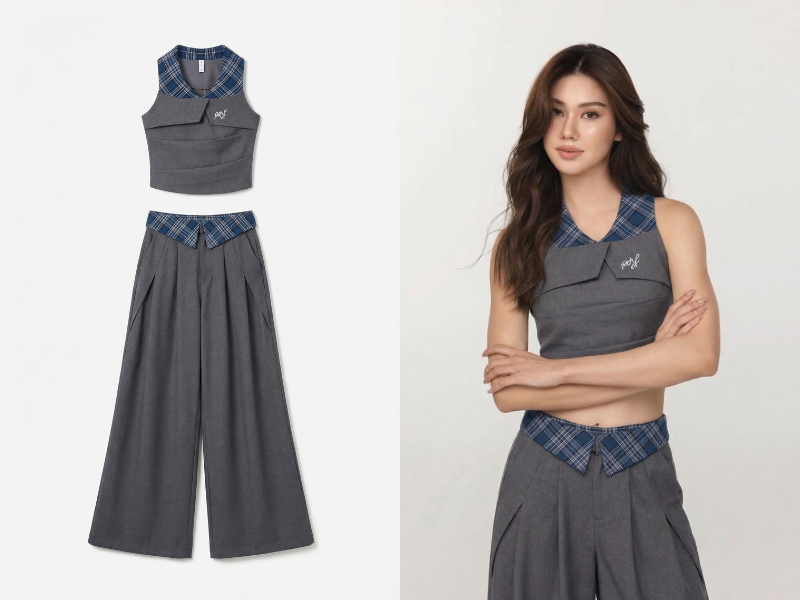
Here’s a simple breakdown:
| Factor | Traditional Photoshoot | AI Virtual Try-On |
| Cost per image | $150 – $500+ | $0.5 – $2 |
| Setup costs | High (studio, team, logistics) | None |
| Reshoot cost | Expensive | Minimal |
| Scaling (more SKUs) | Cost increases linearly | Low incremental cost |
| Flexibility | Limited | High |
In short, if your goal is to reduce fashion photography cost while still producing high-volume content, AI virtual try-on offers a much more scalable solution.
Speed Comparison: From Weeks to Minutes
If cost is the biggest concern, speed is a close second—especially for brands operating in fast-moving markets. When looking at AI virtual try-on vs traditional photoshoot, the difference in turnaround time can directly impact how quickly you go to market.
A traditional photoshoot is rarely “just a shoot”. It involves planning, casting models, booking studios, preparing samples, and coordinating teams. Even under ideal conditions, the full process—from concept to final edited images—can take anywhere from 2 to 4 weeks.
And delays are common. A missed delivery, a scheduling conflict, or a last-minute change can easily push timelines further.
AI virtual try-on, on the other hand, removes most of these bottlenecks. Once you have a garment image ready, you can generate on-model visuals in minutes. There’s no need to wait for availability, no logistics to manage, and no post-production queue.
This speed doesn’t just save time—it changes how brands operate. You can launch products faster, respond to trends in real time, and continuously update your visuals without slowing down your workflow.
With Fashion Diffusion, this process becomes even more seamless. You can upload a single item and instantly generate multiple variations—different models, poses, or backgrounds—within the same session.
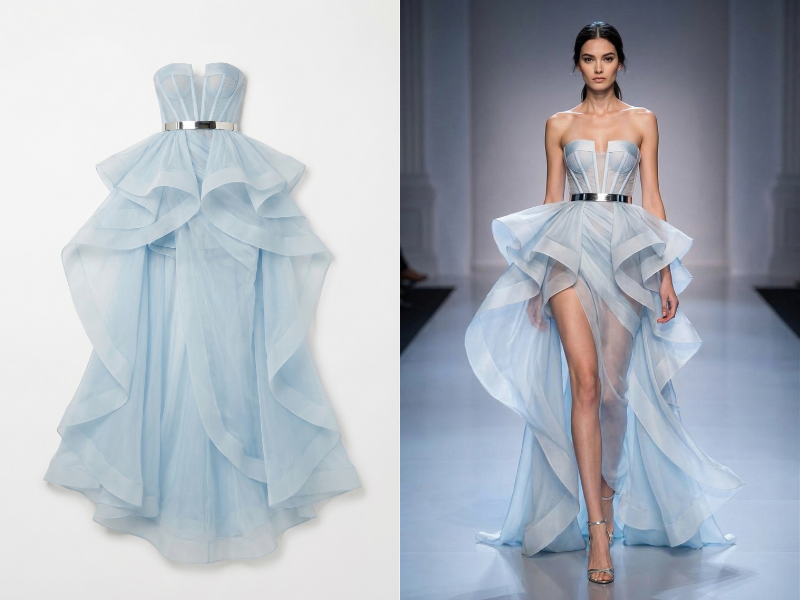
Here’s how it compares:
| Factor | Traditional Photoshoot | AI Virtual Try-On |
| Time to plan & prepare | Several days to weeks | None |
| Shooting & production | 1–3 days | Minutes |
| Editing & delivery | Several days | Instant / near-instant |
| Total turnaround time | 2–4 weeks | Minutes to hours |
| Speed for new variations | Requires reshoot | Instant regeneration |
In a landscape where timing can define success, AI virtual try-on offers a clear advantage. It’s not just faster—it enables a completely different, more agile way of creating fashion content.
Quality Comparison: Can AI Replace Studio Photography?
Cost and speed are easy wins—but quality is where most brands hesitate. When discussing AI vs studio photography fashion, the real question is: can AI-generated images truly match the visual standards of a professional shoot?
Traditional photoshoots still set the benchmark for high-end visuals. You get full control over lighting, styling, art direction, and model performance. For campaigns, editorials, or luxury branding, that level of control is hard to fully replace.
That said, AI virtual try-on has improved dramatically. Modern systems can now generate highly realistic fabric draping, lighting consistency, and natural-looking poses. For most e-commerce use cases, the difference is becoming harder to notice—especially at standard viewing sizes.
Another advantage of AI is consistency. Instead of dealing with variations across different shoots, you can maintain a unified look across all product images. This is especially useful for brands managing large catalogs.
Of course, AI isn’t perfect. Complex garments, intricate textures, or avant-garde designs may still require real photography to capture every detail accurately. But for everyday fashion items, AI is already covering a large portion of visual needs.
Fashion Diffusion are pushing this even further. With more advanced rendering of fabric behavior and lighting, the results feel closer to studio-quality outputs—without the need for physical production.
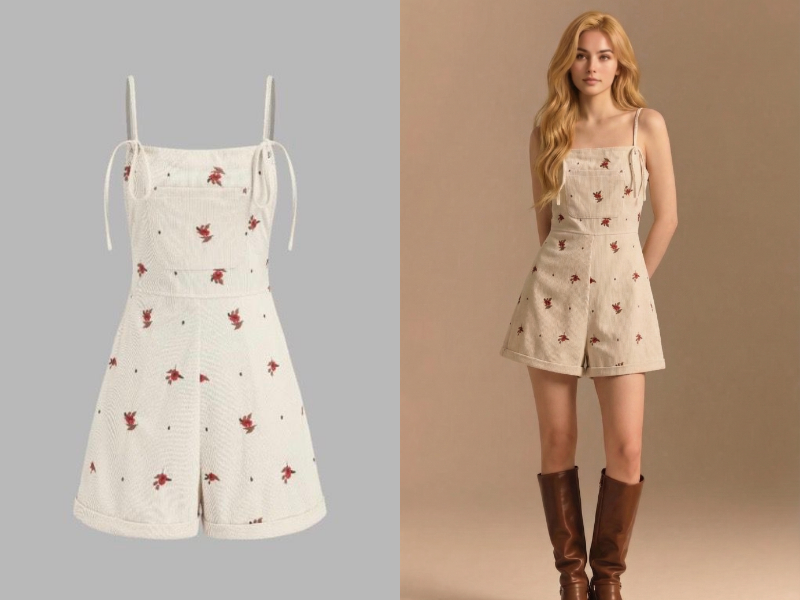
Here’s a side-by-side comparison:
| Factor | Traditional Photoshoot | AI Virtual Try-On |
| Visual realism | Excellent (human-level) | High (near-realistic) |
| Lighting control | Full manual control | AI-generated, increasingly accurate |
| Fabric & texture detail | Highly accurate | Good, improving rapidly |
| Consistency across images | Can vary by shoot | Highly consistent |
| Creative control | Unlimited | Flexible, but tool-dependent |
In reality, AI isn’t fully replacing studio photography—it’s redefining where it’s necessary. For many brands, especially in e-commerce, AI virtual try-on already delivers “good enough” quality at a fraction of the cost and time.
Use Cases: When to Use AI and Traditional?
By now, it’s clear that both approaches have their strengths. The real question isn’t AI virtual try-on vs traditional photoshoot—it’s knowing when to use each.
For most fashion brands, AI virtual try-on works best in high-volume, fast-paced scenarios. If you’re running an e-commerce store with dozens (or hundreds) of SKUs, creating visuals through traditional shoots quickly becomes expensive and slow. This is where AI becomes a practical photoshoot alternative for clothing brands.
It’s especially useful for:
- Product listing images
- Social media content (frequent posting)
- Testing different styles, models, or backgrounds
- Launching new collections quickly
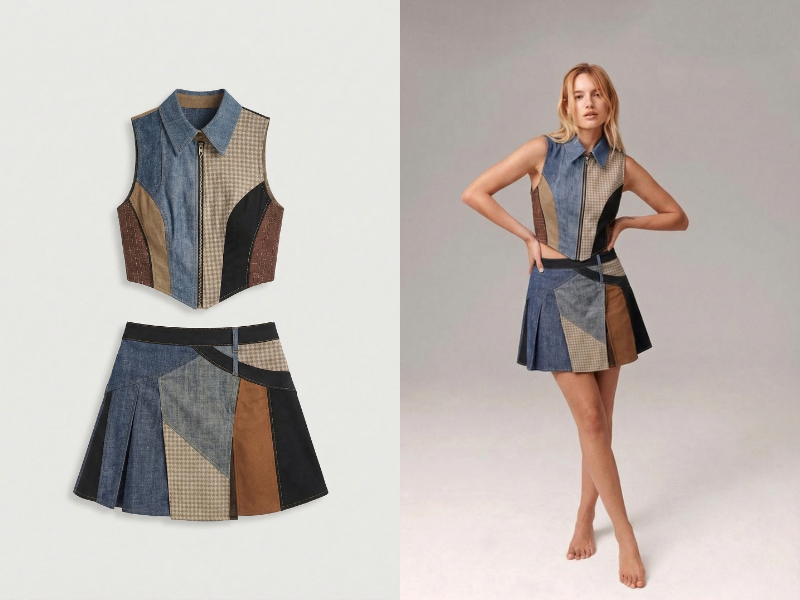
On the other hand, traditional photoshoots still play an important role—just in more specific situations. When brand image and storytelling matter more than scale, the control of a real shoot is hard to replace.
Traditional works best for:
- Campaign shoots and lookbooks
- High-end or luxury branding
- Editorial content
- Collaborations with influencers or celebrities
In reality, most brands are moving toward a hybrid approach. They use AI to handle the bulk of content production, while reserving traditional shoots for key moments that require a stronger visual impact.
Fashion Diffusion make this balance easier to manage. You can rely on virtual try-on for everyday content, and still complement it with occasional studio shoots when needed.
In short, AI isn’t here to replace everything—it’s here to take over the parts that slow brands down.
How Leading Brands Are Combining Both
What’s interesting is that most leading fashion brands aren’t choosing between AI and traditional photography—they’re combining both in a much smarter way.
A common approach is simple: use AI for scale, and traditional shoots for impact. Brands rely on AI virtual try-on for product listings, variants, and social content, allowing them to move faster and reduce fashion photography cost. At the same time, they still invest in traditional shoots for campaign, branding, and storytelling.
This hybrid workflow also makes teams more agile. They can launch products instantly with AI-generated images, then follow up with a full shoot when needed. It also enables quick experimentation—testing different looks first, then bringing the best ideas into production.
Tools like Fashion Diffusion fit naturally into this process, helping brands create, test, and scale content without unnecessary cost or delays.
Why Fashion Diffusion Stands Out?
With so many tools entering the space, choosing the best AI virtual try-on tool isn’t just about features—it’s about how well it fits into a real workflow.
Fashion Diffusion stands out by focusing on what brands actually need: speed, realism, and simplicity. Its virtual try-on produces natural-looking fits with consistent lighting, making the results usable for real e-commerce—not just demos.
It’s also highly efficient. You can upload a single garment and generate multiple variations in minutes, without complex setup. This makes it easy to scale content while staying flexible across styles, models, and markets.
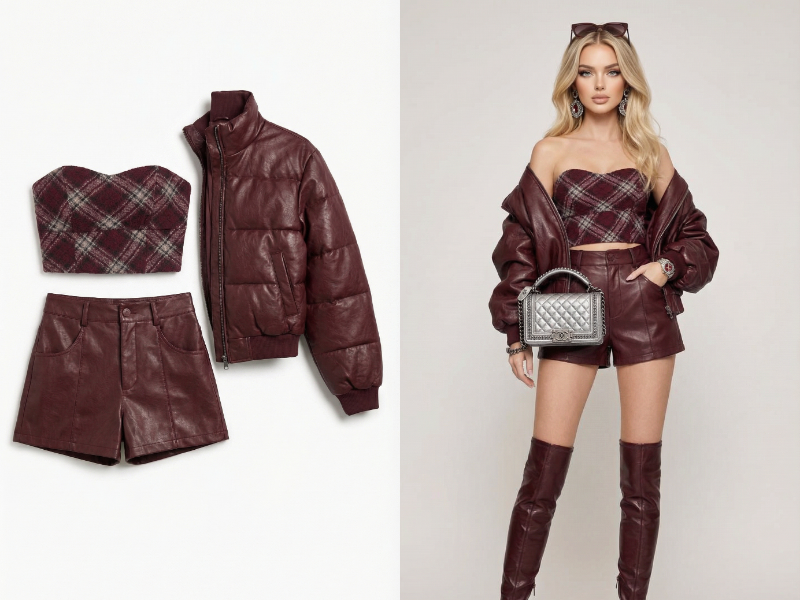
More importantly, it fits perfectly into a hybrid workflow—handling everyday content while traditional shoots are reserved for high-impact visuals.
For brands looking for a practical photoshoot alternative for clothing brands, Fashion Diffusion offers a strong balance of quality, speed, and cost efficiency.
Redefining Fashion Visuals: The AI Advantage
AI virtual try-on is transforming fashion content creation by offering faster turnaround, lower costs, and greater flexibility — all while producing realistic, high-quality visuals. The smartest brands are building a hybrid system where AI-powered virtual models handle volume and traditional shoots handle prestige.
If you want to streamline production and stay competitive, exploring Fashion Diffusion’s virtual try-on feature is a highly practical step forward.
FAQ
Brands typically reduce photography costs by up to 90% for high-volume content, especially when generating multiple SKUs or variations.
Yes. Its interface is designed for simplicity—you can upload a garment image and generate multiple on-model variations within minutes, without coding or advanced design skills.
Absolutely. One of its biggest strengths is flexibility—you can quickly create different looks to suit campaigns, markets, or A/B testing.
Many brands use AI virtual try-on for bulk content first, then complement it with traditional shoots for key campaigns. Fashion Diffusion makes this hybrid workflow smooth and scalable.


