

From hand-drawn sketch to photorealistic rendering — how one of North America’s most celebrated bridal designers brought AI into the heart of the creative process with Fashion Diffusion AI.
What Is Rita Vinieris?
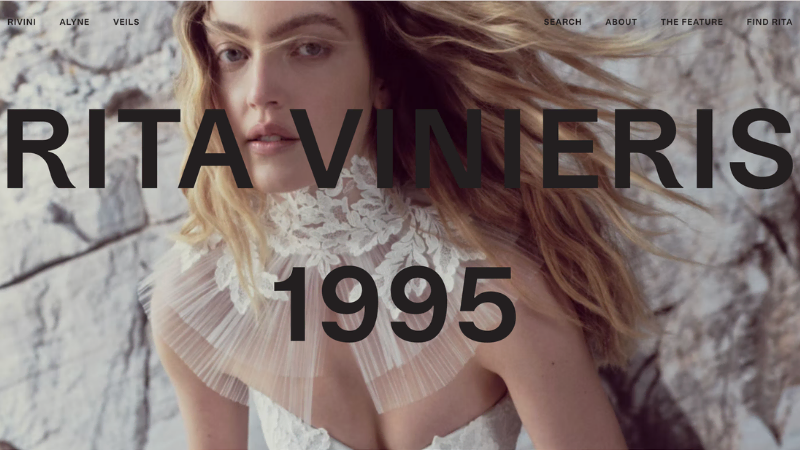
Rita Vinieris is a luxury bridal designer who launched her signature label Rivini in 1995. Over the past three decades, the brand has built a reputation as one of the most respected names in North American bridal fashion. The collection is presented seasonally at Bridal Fashion Week to international buyers and editors, and carried by leading bridal boutiques across North America.
Every Rita Vinieris gown begins as a hand drawing. The design process is rooted in couture tradition: sketches that capture silhouette, construction, and fabric intent before a single piece of cloth is cut. The collection is defined by fluid silhouettes, refined structure, and meticulous attention to detail — a design language that takes shape on paper long before it reaches the atelier floor.
The Challenge: The Gap Between a Sketch and a Finished Gown
In bridal fashion, the design process runs far ahead of production. A sketch approved today may not be sampled for weeks and not photographed for months. In the time between a designer drawing a gown and a bride seeing it in a boutique, the vision exists primarily on paper — and paper has limits.
Why Fashion Sketches Can’t Show How a Bridal Gown Really Looks
A hand-drawn sketch captures proportion, structure, and intent — but it is also an abstraction. It shows how a gown is constructed — not how it looks when light passes through layers of tulle. Not how hand-beaded lace reads at full scale. Not how a fluid silk charmeuse drapes when worn. For a designer like Rita Vinieris, whose work is defined by fabric behaviour and surface detail, that gap is where much of the creative judgment happens — and it has traditionally been bridged by experience alone.
Communicating Gown Intent to Buyers Without a Finished Sample
Bridal collections are presented to buyers before sampling is complete. The traditional tools — sketches, fabric swatches, mood boards — communicate well between experienced professionals, but leave much to interpretation. When a buyer needs to decide which fabric reads better at scale, or whether a structural detail resolves correctly at the neckline, the only reliable answer has traditionally been to make the sample. And samples take time and money.
Bridal Design Iteration Requires Costly Physical Prototypes
Bridal design involves significant iteration. A gown that looks right in sketch may need adjustment once the fabric is cut. A detail that works in one material may not translate to another. Each round of iteration traditionally requires a new physical prototype — a slow, expensive loop that constrains how many design directions a team can explore before committing to a final direction.
How Rita Vinieris Uses Fashion Diffusion AI in the Design Process
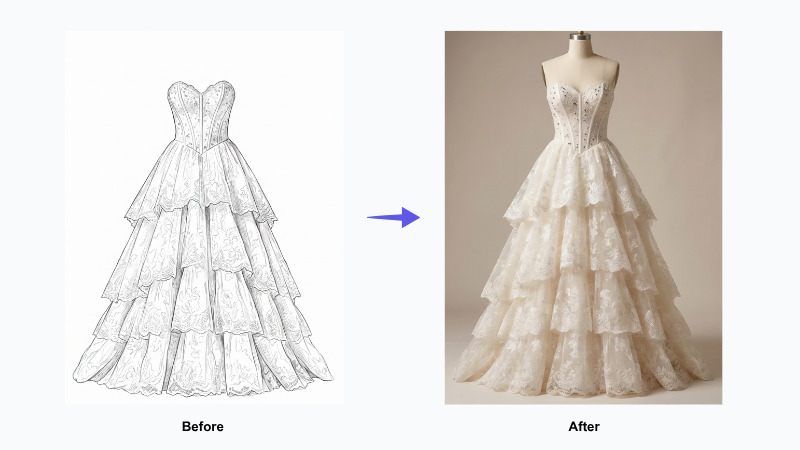
Rita Vinieris uses Fashion Diffusion AI’s Sketch to Render feature to convert hand-drawn design sketches into photorealistic gown renderings. This compresses the gap between a drawn concept and a finished visual — and enables design iteration without physical prototyping.
Sketch to Render — From Line Drawing to Photorealistic Gown
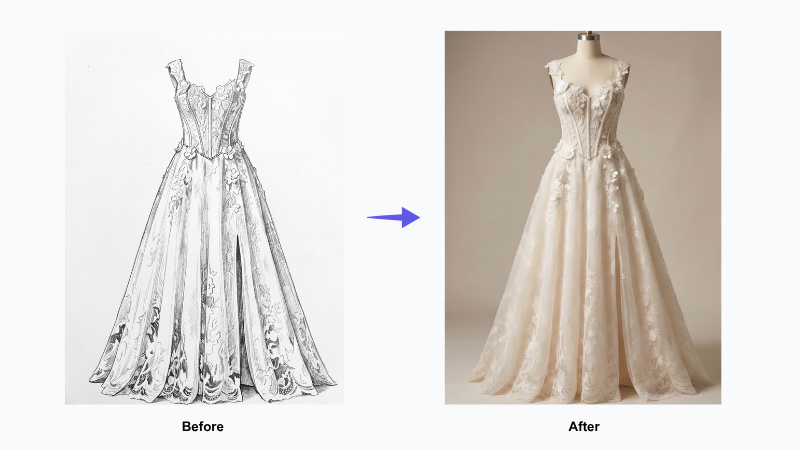
Sketch to Render takes a hand-drawn fashion sketch and generates a photorealistic rendering of the finished garment. Fabric texture, drape, surface detail, and light behaviour are all rendered from the original line drawing — producing an image that shows how the gown will actually look, not just how it is constructed.
For a bridal designer working in couture-level materials — silk organza, Chantilly lace, hand-beaded tulle — the ability to see fabric behaviour rendered accurately from a sketch changes what the design process can explore. Details that would previously require a physical sample to evaluate can be assessed visually before any fabric is cut.
Visualising Design Decisions Before Committing to a Sample
In bridal design, many of the most consequential decisions happen before a sample is made. Which fabric reads better at full scale? How does a structural detail resolve at the neckline? Does a particular silhouette work in a heavy versus a light material? These are questions that experienced designers have traditionally answered through instinct — or by cutting a sample to find out.
Sketch to Render gives those decisions a visual anchor. A sketch rendered in the intended fabric shows how the gown will actually behave. The way a silk organza overlay diffuses light. The way a structured bodice holds its shape. The way a full skirt falls. Design choices that would otherwise wait for a physical prototype can be made earlier, with more visual information and less material waste.
Presenting the Collection Before Samples Are Ready
Bridal collections are shown to buyers at Bridal Fashion Week and in showroom appointments, often before physical samples are complete. A rendered image communicates silhouette, fabric choice, and styling direction with a precision that a sketch cannot. Buyers can assess a collection visually without projecting from a line drawing — and that confidence at the ordering stage reduces ambiguity between designer intent and buyer expectation.
Strengthening the Custom Bridal Consultation
For brides commissioning custom or semi-custom gowns, the design conversation typically begins with sketches and fabric swatches — and asks a lot of the bride’s imagination. A rendered image of the proposed gown, in the intended fabric and silhouette, removes that ask. The bride sees how the gown will look, not just how it is constructed — and that clarity early in the process reduces revision cycles and builds confidence on both sides before the first fitting.
Virtual Try-On — Showcase Finished Gowns on an AI Model Without a Studio Shoot
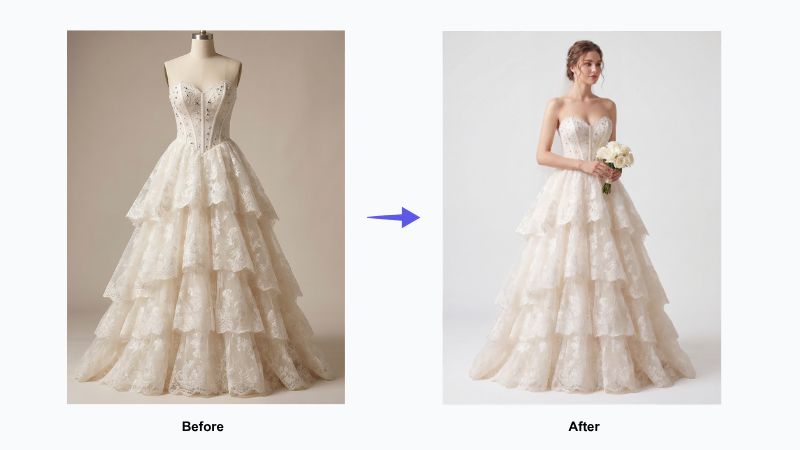
Once a gown moves from design into production, it needs to be shown on a body — for website listings, lookbooks, buyer presentations, and showroom materials. Traditional model photography requires studio booking, model fitting, and post-production before a single image is ready.
Virtual Try-On places a finished gown on a realistic AI model, generating on-model imagery without any of that overhead. For a bridal brand managing multiple collections and styles, this means product imagery can be produced and updated on demand — keeping every gown correctly represented across every channel, without waiting on a photography schedule.
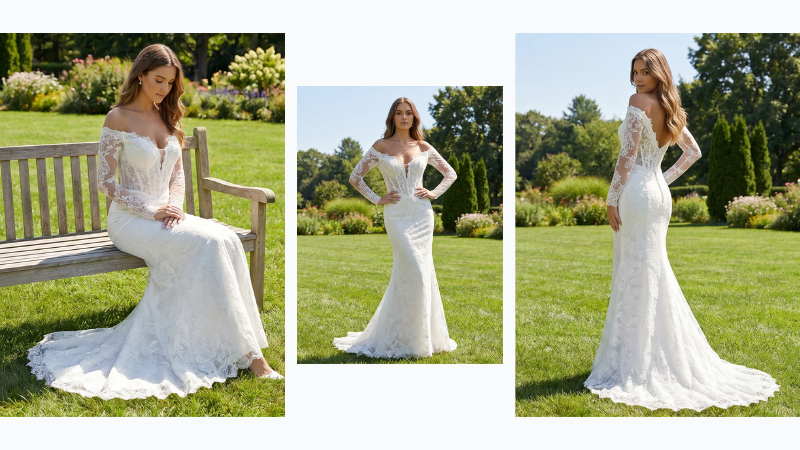
The Results: Faster Bridal Design Decisions, Fewer Physical Samples
The impact of Sketch to Render on a bridal design workflow is felt at two levels: within the creative process, and in how the collection is communicated externally.
More Design Directions Explored Before Production Begins
When rendering from a sketch takes minutes rather than days, the number of design directions a team can explore before committing to sampling increases significantly. Fabric choices, structural details, silhouette variations — each can be assessed visually without cutting a sample. The result is a more informed set of decisions entering production, and fewer costly revisions after the fact.
AI Rendering Aligns Design Intent Across Atelier, Buyers, and Brides
A photorealistic rendering communicates the designer’s intent with a precision that a sketch cannot. For the atelier team, the boutique buyers, and the bridal stylists working with clients — a rendered image removes ambiguity. Each party spends less time interpreting, and more time moving forward.
The best bridal design is already fully realised in the designer’s mind. Sketch to Render gives that vision somewhere to live before the fabric exists.
Fewer Physical Samples, Less Material Waste
Every sample that doesn’t need to be made represents fabric, labour, and time saved. When design decisions that previously required a physical prototype can be made from a rendered image, the number of samples needed to reach a final direction decreases. For luxury bridal brands working with expensive couture materials — silk, hand-beaded lace, layered organza — that reduction has a direct impact on both production costs and material waste. It is a more sustainable way to design, and a more economical one.
Bring AI Into Your Bridal Design Process
Rita Vinieris is one of a growing number of luxury bridal designers using Fashion Diffusion AI to accelerate the journey from sketch to finished visual.
If your design process starts with hand drawings and ends with couture gowns, Sketch to Render gives you a way to see the gown before it’s made. Iterate on the design before a single sample is cut. Once the gown is ready to be shown, Virtual Try-On places it on an AI model for on-demand product imagery. And Apply Fabric lets you visualise different fabric options on a finished silhouette.
Try Fashion Diffusion AI free →
Some details have been presented as representative of typical use patterns and may not reflect the full scope of Rita Vinieris’s operations. If you have questions about the content of this article or would like to clarify any information, please contact us at support@fashiondiffusion.ai.


