

Scrolling through an online store today, you might notice something interesting: the same outfit shown on different models or styles. Yet, there are no obvious signs of multiple photoshoots. This effect comes from AI model swap, a technology quietly changing how fashion visuals are created and scaled online.
In this article, we’ll explain how AI model swap works, how it works with Fashion Diffusion, and why it’s becoming a must-have tool in modern fashion workflows.
What is AI Model Swap?
AI model swap is a technology that uses AI to replace the human model in an image. The product itself stays the same. Clothing, accessories, pose, and lighting remain unchanged—only the model is swapped. It’s part of a broader trend called AI Virtual Models. Digital models can be generated, customized, and reused across multiple visuals.
With AI model swap, brands and creators can reuse a single product image and instantly show it on different models. No new photoshoots or rebuilt assets are needed.
Unlike basic image editing or face swap tools, AI model swap works on the entire model. The AI understands body structure, proportions, and how garments fit different silhouettes.
In fashion and e-commerce, this makes it possible to showcase the same item across diverse body types, styles, and markets. The process is faster, more scalable, and far more efficient than traditional workflows.
How AI Model Swap works?
At first glance, AI model swap might seem like magic. However, behind the scenes, it follows a clear process to keep clothing realistic while seamlessly changing the model.
The workflow typically looks like this:
- Image analysis: The AI scans the original image to identify key elements. It separates the model, pose, clothing, and background.
- Garment preservation: Clothing details—fabric texture, folds, shadows, and proportions—are carefully kept. This ensures the item stays true to the original design.
- Model replacement: A new model is introduced. The AI adjusts body shape, skin tone, and posture, making sure the garment fits naturally on the new silhouette.
- Final blending: Lighting, perspective, and edges are refined. The swapped model looks like part of the original photo, not an obvious AI edit.
Where Can AI Model Swap be Used?
AI model swap is already used across different stages of fashion and creative workflows. From product pages to global marketing campaigns, it helps brands scale visuals faster and more flexibly.
Common use cases include:
- Fashion e-commerce: Show the same product on different models without reshooting. This makes it easier to highlight fit, styling, and versatility across collections.
- Digital marketing and advertising: Quickly generate multiple visual versions of the same campaign, tailored for different audiences, platforms, or regions.
- Localization and inclusivity: Adapt one product image to reflect different body types, skin tones, or cultural preferences. This makes visuals more relevant in global markets.
- Creative content and virtual styling: Experiment with looks, concepts, and styling ideas faster, without being limited by traditional production cycles.
The Advantages and Limitations of AI Model Swap
AI model swap is changing how fashion brands create and scale visual content. By digitally placing the same garment on different models, brands can produce flexible visuals without the time, cost, and logistics of traditional photoshoots. Like any technology, it comes with both advantages and limitations worth understanding.
Advantages
- Higher efficiency: One product image can be reused to create multiple model variations. This cuts down photoshoot time, costs, and production cycles.
- More creative flexibility: Showing the same item on different body types, skin tones, or styling directions helps shoppers imagine how it might look in real life.
- Better global reach: Brands can localize visuals for different markets without coordinating models and shoots across multiple regions.
- Faster testing and iteration: Different looks and visual styles can be tested quickly, making it easier to see what resonates and optimize campaigns.
Limitations
- Image and Garment Constraints: Results depend heavily on image quality and garment complexity. Certain fabrics, details, or lighting conditions can still be challenging for AI to reproduce perfectly.
- Ethical and transparency concerns: As AI-generated visuals become more realistic, brands need to clearly disclose their use and avoid misleading representations.
- Limited human expression: While AI can replicate appearance, it may still fall short when it comes to subtle emotion, movement, or styling nuances that human models naturally bring.
How to do AI Model Swap with Fashion Diffusion?
In today’s digital world, high-quality visuals are key for brands looking to grab attention. Traditional photoshoots? They take time, money, and lots of coordination.
That’s where AI model swap comes in. It lets you showcase the same piece of clothing on different models, poses, and styles with just a few clicks. Stunning visuals—without the usual hassle.
Fashion Diffusion offers two powerful features for AI model swap: Swap Face and Virtual Try-On. Whether you want to showcase diversity or quickly generate multiple visuals for your online store, these tools have you covered.
Swap Face
Swap Face lets you replace the face of the model in your clothing image while keeping the outfit, pose, lighting, and background intact. It’s perfect for showing the same outfit on different types of people, helping your brand feel more inclusive and relatable.
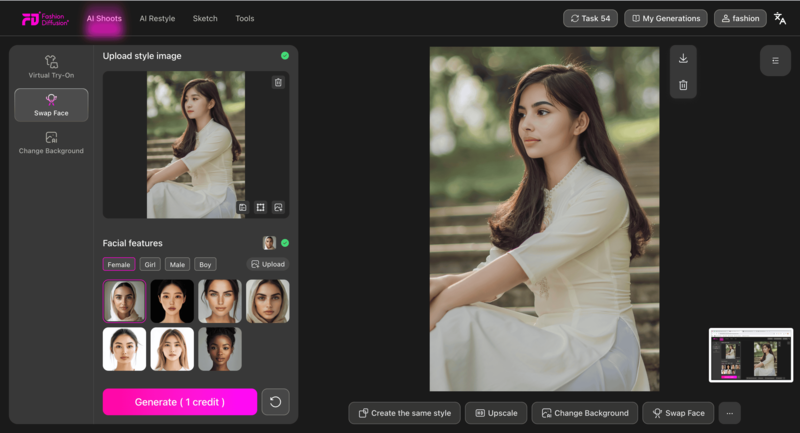
How to do it:
- Upload your clothing photo with a model.
- Choose a model from the platform or upload a custom face.
- Hit “Generate” and watch AI seamlessly merge the new face onto the original image.
Where to use it:
- Regional marketing: Show your clothing on faces that resonate with local audiences.
- Show diversity: Highlight different types of people wearing your products to increase engagement.
- Save on shoots: One base photo can generate multiple model variations without extra photoshoots.
Virtual Try-On
Virtual Try-On lets your clothing “try itself on” different models, generating realistic outfit images. Perfect for e-commerce product pages or pre-launch design previews.
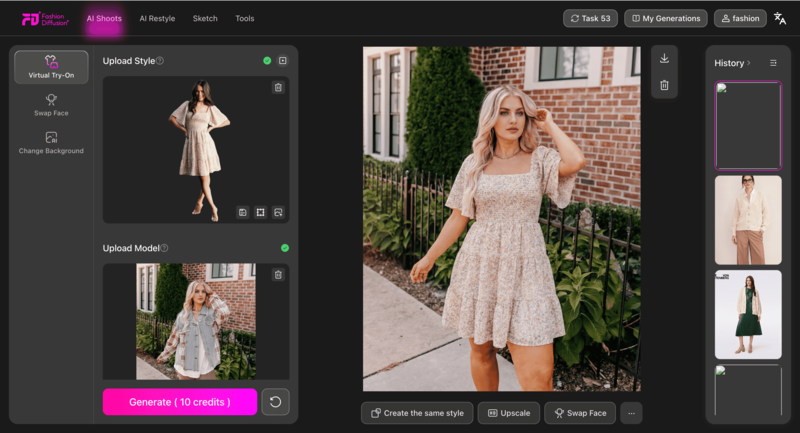
How it works:
- Upload your clothing item (flat lay or design sketch)
- Upload or select a model image (platform model or your own)
- AI automatically recognizes the clothing outline and details, fitting it naturally onto the model.
- Generate multiple images ready to use on product pages, social media, or ads.
Where to use it:
- Boost product pages: Multiple angles and outfit versions give shoppers more confidence.
- Design testing: Preview designs before making physical samples.
- Interactive shopping: Combine with customers’ selfies for a “real-life try-on” experience online.
Example: Virtual Try-On + Swap Face in One Workflow
Imagine a brand launching a new cardigan. Instead of planning multiple photoshoots, they use Fashion Diffusion to create all the visuals digitally.
Step 1: Virtual Try-On
The brand uploads a flat-lay image of the cardigan and selects a base model. Using Virtual Try-On, the AI generates realistic images of the cardigan worn on the model, keeping the fit, fabric, and overall shape natural. This step focuses on getting the outfit itself right.
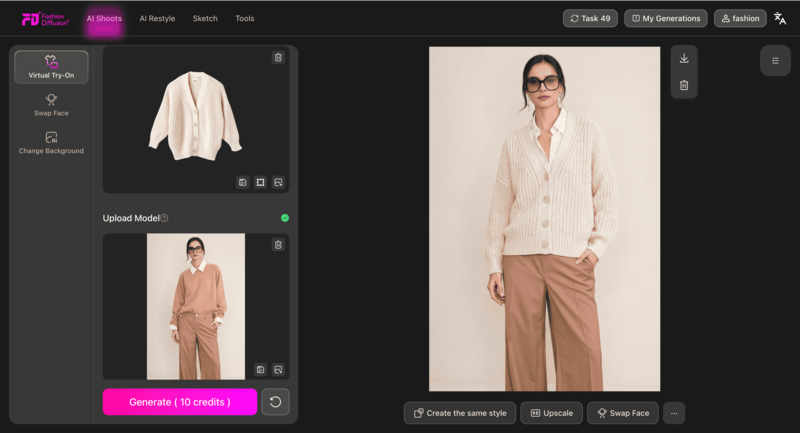
Step 2: Swap Face
Once the outfit looks perfect, the brand uses Swap Face to swap the model’s face while keeping everything else the same. This allows the same cardigan to be shown on different faces for various audiences or markets—without redoing the try-on.
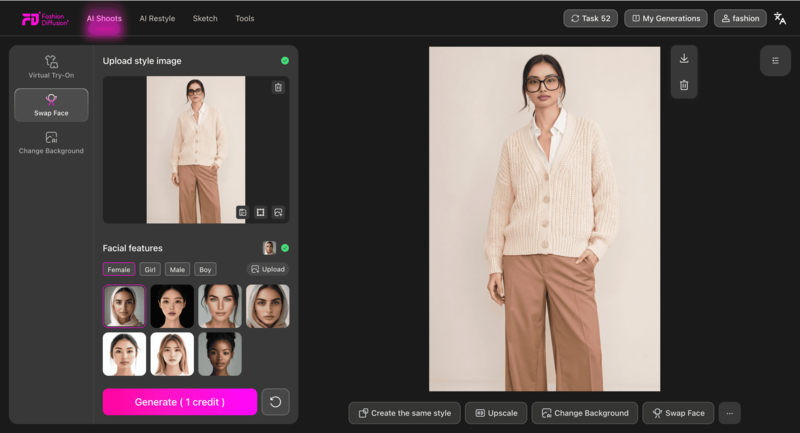
One outfit, multiple model variations, and a full set of visuals ready for product pages, social media, and ads.
The Future Trend of AI Model Swap
AI model swap is still gaining momentum, but it’s already reshaping how fashion brands create and scale visual content. As the technology continues to evolve, it will move beyond simple image generation and become a core part of digital fashion experiences.
More Realistic and Human-Like Visuals
AI-generated models will look increasingly natural, with better facial expressions, posture, and movement. Visuals will feel less “AI-made” and more like real photoshoots, helping brands communicate mood, lifestyle, and emotion more effectively.
Hyper-Personalized Shopping Experiences
Personalization will go further than ever. Shoppers may be able to see outfits on AI-generated versions of themselves, making virtual try-on more interactive and emotionally engaging. This shift will turn online shopping into a more immersive experience rather than a static one.
Stronger Focus on Ethics and Transparency
As AI visuals become harder to distinguish from real images, transparency will matter more. Brands that clearly disclose the use of AI and follow ethical guidelines will build stronger trust and long-term relationships with their audiences.
Deeper Integration with Digital Channels
AI model swap will increasingly connect with AR, social commerce, and live shopping. From AI-enhanced livestreams to shareable virtual outfits, fashion visuals will become more dynamic, interactive, and social.
Start Using AI Model Swap to Scale Fashion Visuals
AI model swap is quickly becoming a practical tool for fashion brands and designers—not just an experiment. It helps turn a single outfit into multiple visuals, adapt content for different audiences, and speed up the creative process without relying on repeated photoshoots.
With Fashion Diffusion, getting started doesn’t require complex setups or technical skills. From virtual try-on to face swap, the platform lets you create realistic, flexible fashion visuals in just a few steps, making it easier to test ideas, update product images, and scale content across channels.
FAQ
An AI model on Instagram is a computer-generated digital personality. It could be an influencer, a character, or even a digital twin of a real person. Created using artificial intelligence, it can post photos and videos and interact with audiences like a human. These AI models often look highly realistic while giving brands full creative control. This reduces costs and allows for endless content variations. However, it can sometimes blur the line between reality and AI-generated content. They are trained on data to generate unique content from text prompts. Brands commonly use them as virtual models for marketing or entertainment.
An AI model is a trained computer program that uses algorithms and large datasets to recognize patterns and learn from them. It can then make predictions, take decisions, or generate new content—without needing step-by-step programming for every scenario. Think of it as a digital brain. Like a child learning to identify animals by seeing many pictures, it can process huge amounts of data and uncover complex patterns that humans might miss.


